
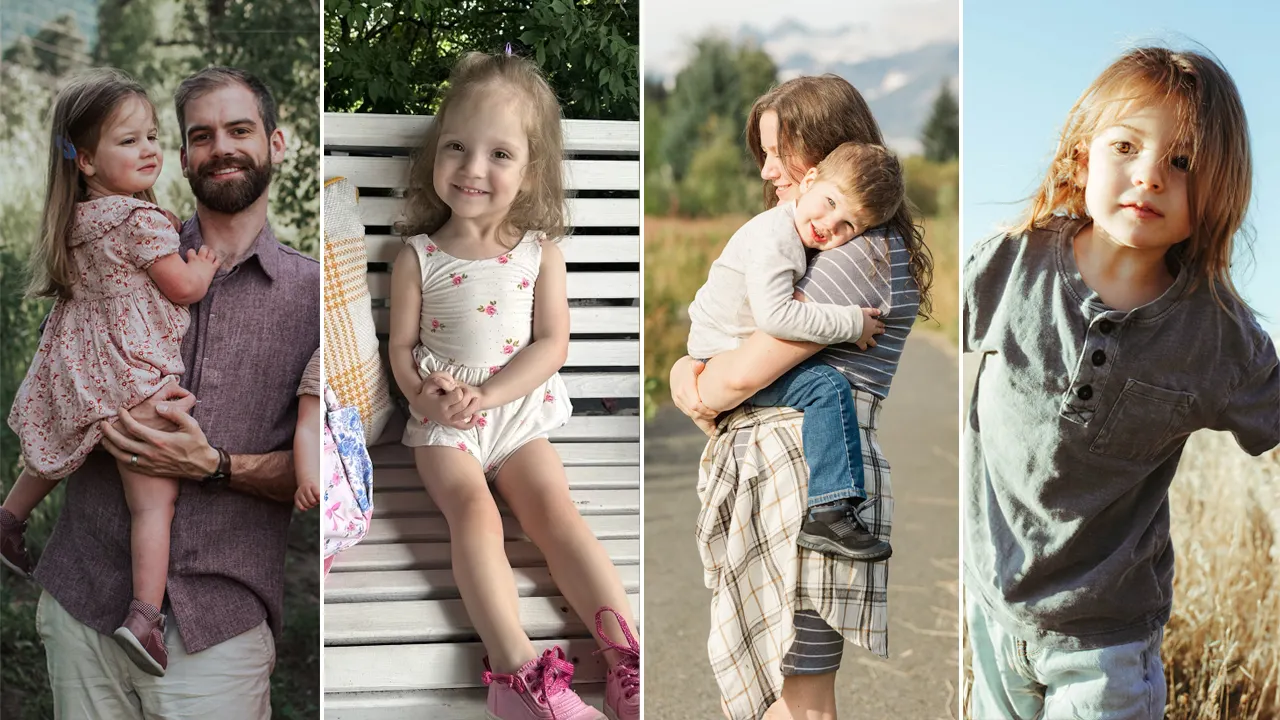
Families Unite to Find Cure for Rare Genetic Disease
Four American families are on a heartbreaking mission to secure a potential cure for their children affected by a rare genetic disorder called spastic paraplegia 50 (SPG50). This disorder impacts fewer than 100 people globally and leads to serious health challenges, including muscle weakness and paralysis. The families need to raise $1.15 million by the end of October to fund a crucial clinical trial.
To support their cause, the families established a nonprofit organization named Jack’s Corner.
What is SPG50?
SPG50 is a progressive neurological disorder that slows down a child’s development, causing difficulties in movement, speech, and cognition, according to the National Organization for Rare Disorders. Affected children may experience delays in reaching developmental milestones, leading to more severe symptoms over time.
Dr. Eve Elizabeth Penney, an epidemiologist at the Texas Department of State Health Services, explained that while the prognosis varies, children often struggle with daily activities as the disease progresses.
Currently, there is no FDA-approved treatment for SPG50, but a hopeful solution has arisen. Terry Pirovolakis, a Canadian father, developed a gene therapy after his son was diagnosed with the condition in 2017.
A Father’s Fight for His Son
Pirovolakis refused to accept the grim predictions for his son’s future and took matters into his own hands. He spent his savings and worked with experts to create a gene therapy that he hoped would save his son. His efforts paid off when, in March 2022, his son received the treatment and has been thriving ever since. Pirovolakis is now seeking to expand the treatment through a Phase 3 trial.
Families Facing Similar Battles
Among the families fighting for their children’s health is Rebekah Lockard from Colorado. Her daughter, Naomi, diagnosed with SPG50 in 2023, struggles with mobility and communication. Meanwhile, her younger son, Jack, received the therapy in an earlier trial, showing significant progress.
“We are thankful Jack received early treatment but feel desperate that Naomi hasn’t been given the same chance,” Lockard shared.
Emma and Dylan Jobsis, from Arkansas, also face the harsh reality of SPG50 with their son, Cade. “Without treatment, he could lose essential skills and independence,” Emma explained.
Jordan and Cody Medeiros from Oregon have noticed their son Lincoln’s ability to walk decline since his diagnosis. “He falls multiple times a day and cannot express his pain,” Jordan recounted.
In Pennsylvania, Jami Wood’s twin daughter, Mila, was diagnosed shortly after she took her first steps. “Without the drug, we’ll watch her slip away,” she lamented.
Looking Ahead
The families’ hope is that a successful Phase 3 trial will lead to FDA approval, making the treatment accessible and covered by insurance. Pirovolakis and his team are working diligently to secure this approval, facing challenges due to the regulatory process that often treats small trials the same as larger-scale studies.
For these families, the aim is clear: they want to secure a brighter future for their children suffering from SPG50. Their heartfelt campaign continues as they reach out to the community for support and awareness.
