
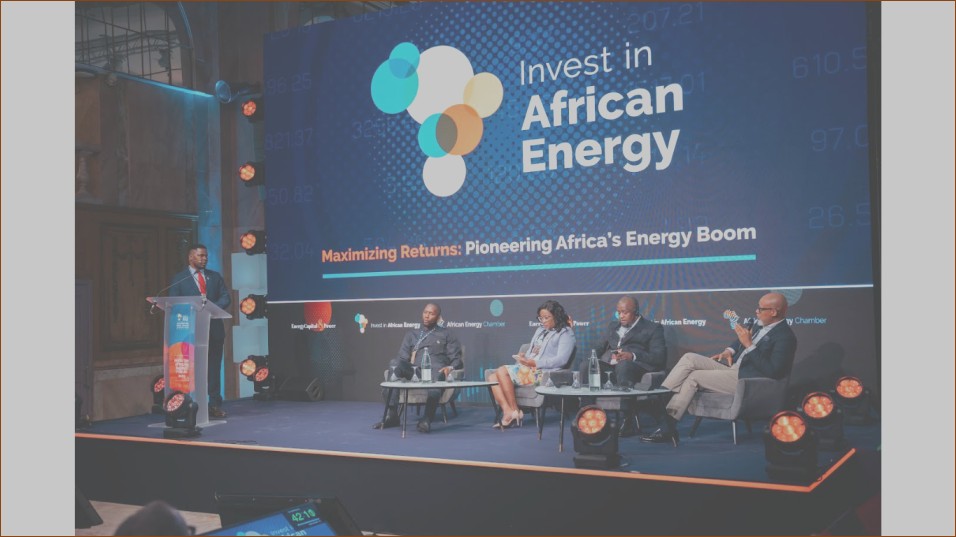
Accelerating Africa’s LNG Ambitions: Key Takeaways from the IAE Forum in Paris
Paris, France: At the recent Invest in African Energy (IAE) Forum, experts discussed how to boost Africa’s liquefied natural gas (LNG) ambitions. They underscored the need for investment, strong partnerships, and local growth to make this happen.
During a session focused on leveraging African gas, Julius Rone, Managing Director of UTM Offshore, highlighted the demand for LNG. “Investment is the key. The market is ready and gas demand keeps rising globally. We need the right investors to help us tap into our gas resources,” he said.
UTM Offshore’s $5 billion Floating LNG project off the coast of Nigeria is currently preparing for construction. Rone pointed out that local companies, like UTM, are equipped to forge successful partnerships and hope to finalize their investment decisions soon, allowing for construction to begin and potential expansion into other African regions.
Starting Strong at the Wellhead
The viability of LNG projects in Africa depends on affordable resources and clear legal guidelines, according to Federico Petersen, Chief Commercial Officer of Golar LNG. He noted Africa’s geographical advantage for access to global markets but emphasized that projects need to be financially viable from the outset.
“If Africa can offer more cost-effective solutions than the U.S. from the wellhead, we can ensure competitive liquefaction, especially since we’re closer to Europe and Asia,” Petersen stated. He also mentioned that having the right technical skills and financial backing is essential for large-scale projects.
Prioritizing Infrastructure Development
Denis Chatelan, Head of Business Development at Perenco, stressed that building gas infrastructure should come before focusing on LNG exports. His company emphasizes domestic gas utilization as a stepping stone for future liquefaction projects, citing examples in Gabon and Cameroon.
“We started with developing gas resources rather than jumping directly into liquefaction. It’s important to strike the right balance between investment, returns, and infrastructure,” Chatelan explained. He noted that to achieve significant rewards, some level of risk is necessary, particularly around infrastructure.
Community Involvement for Lasting Success
Jiří Rus, Sales and Business Development Director at Neuman & Esser, pointed out that having in-country operational support is crucial for sustaining LNG and gas projects. He emphasized the need for local service centers, such as the one in Port Harcourt, Nigeria, to ensure long-term success.
Dominique Gadelle, VP of Upstream & LNG at Technip Energies, echoed these sentiments, highlighting the importance of supporting local economies and power generation before engaging in international exports. “Exploring various ways to monetize gas, such as through fertilizers, is vital. We also need to foster regional cooperation and invest in local skills, jobs, education, and training,” he added.
This forum showcased the opportunities and challenges in advancing Africa’s LNG landscape, emphasizing a collaborative, localized approach to ensure sustainable growth.
