
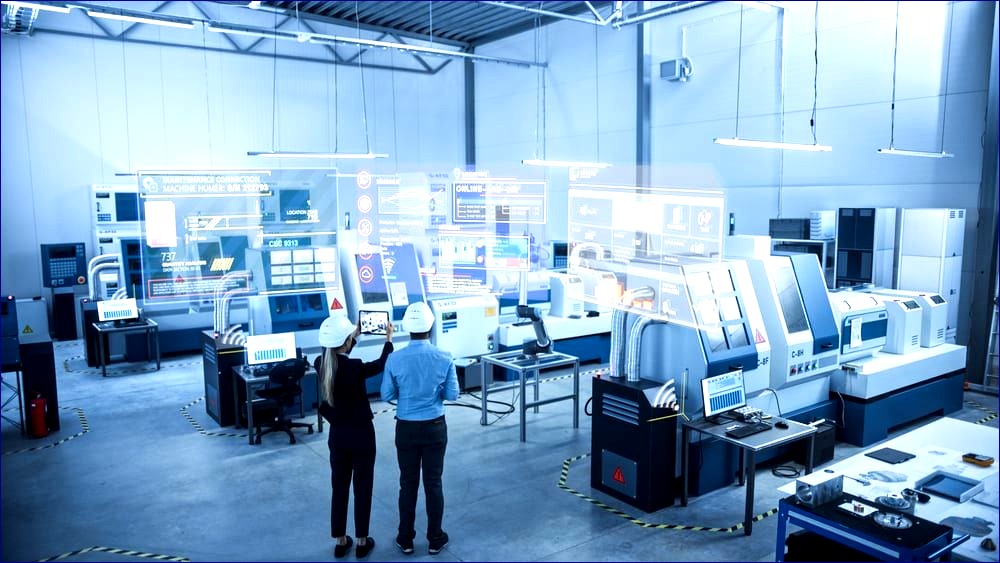
UK manufacturing is evolving beyond traditional methods, moving towards a future where artificial intelligence (AI), virtual simulations, and automated factories are common. This shift is driven by increasing global competition and the need for efficiency.
Leaders from Lloyds Banking Group, David Atkinson and Steve Harris, shared insights on current trends and challenges in manufacturing, highlighting how the bank is aiding UK businesses through investment and awareness of new technologies.
Harnessing Data
Predictive maintenance, enhanced by AI, is becoming essential in smart factories. By analyzing real-time data from machines, AI can predict failures before they happen, helping to minimize downtime. This shift from reacting to problems to anticipating them is enhancing productivity, as noted by Atkinson.
In tandem with AI is the Industrial Internet of Things (IIoT), a network of sensors and devices that stream data to cloud platforms. This helps manufacturers make smarter decisions about everything from energy use to production quality, leading to more efficient operations and better control over costs and waste.
Atkinson explained that there are effective strategies to help smaller manufacturers access similar advanced insights using low-cost data collection tools to monitor specific processes.
Embracing Automation
Advanced robotics and automation are stepping in to fill the gaps caused by skilled labor shortages. From collaborative robots, known as ‘cobots,’ to fully automated factories, UK manufacturers are adapting their processes to work more quickly, reduce errors, and lower costs. These technologies are not meant to replace human skills but to support them.
Atkinson emphasized the need for balance, stating that introducing technology in one area of production shouldn’t create delays in another. Digital twin technology, which creates virtual models of factories, is helping to optimize workflows and layouts before any physical changes are made.
Additive manufacturing, which was once mainly for prototypes, is now part of full-scale production. Atkinson pointed out that this method allows for complex designs that were previously difficult to achieve. It’s particularly valuable in sectors like aerospace, automotive, and healthcare, enabling faster innovation and more sustainable products.
A Focus on Strategy
Aside from technology, UK manufacturers are addressing key global issues such as sustainability, cybersecurity, and supply chain resilience. With rising cyber threats, strong digital defenses are crucial. According to Atkinson, the manufacturing sector is now the primary target for cyberattacks in the UK, surpassing even healthcare and finance.
To manage risks, manufacturers are bringing critical supply chains back to the UK and investing in new materials like graphene for added flexibility.
The UK’s Manufacturing Technology Centre (MTC) serves as an example of how government initiatives can support industry innovation. The center collaborates with Lloyds to promote skills development and technology adoption, aiming to train over 6,000 engineers and graduates by 2030.
Lloyds has recently extended its partnership with the MTC until 2029, committing £15 million to foster collaboration between manufacturing and technology. This investment is crucial to addressing the current skills shortage within the sector—around 75,000 vacancies are reported, many of which remain unfilled for over a year, as Atkinson noted.
Harris echoed the concern, stressing the importance of attracting skilled workers alongside necessary investments for the industry’s future.
Support for UK manufacturing is essential not only for modernization but also for fulfilling environmental and social commitments. A 2024 report showed that while many manufacturers are facing requests related to environmental, social, and governance (ESG) issues, fewer than half have the resources to act on them.
Atkinson highlighted the critical need for manufacturers to lower carbon emissions and waste to stay appealing to supply chains and meet consumer expectations.
In addition to its partnership with the MTC, Lloyds sponsors events promoting the manufacturing sector, like the National Manufacturing Summit and the MACH exhibition, which gathers about 26,000 industry players every two years.
Reaching Potential
Success in modern manufacturing isn’t just about adopting new technology; it’s about using it intelligently, investing in people, and creating an environment that nurtures innovation and resilience.
Atkinson remarked on the UK’s outstanding reputation for quality and the caliber of its universities, highlighting the need to connect innovative ideas with effective manufacturing processes to unlock new opportunities.
The factories of the future are taking shape, and even amidst various challenges, the UK is making strides to establish a strong digital foundation for this industrial transformation.
David Atkinson leads manufacturing at Lloyds, while Steve Harris heads the technology sector at Lloyds SME & Mid-Corporates.
Lloyds has dedicated relationship managers eager to support the growth of the tech industry. For more guidance, reach out to discuss how they can assist your business.
