
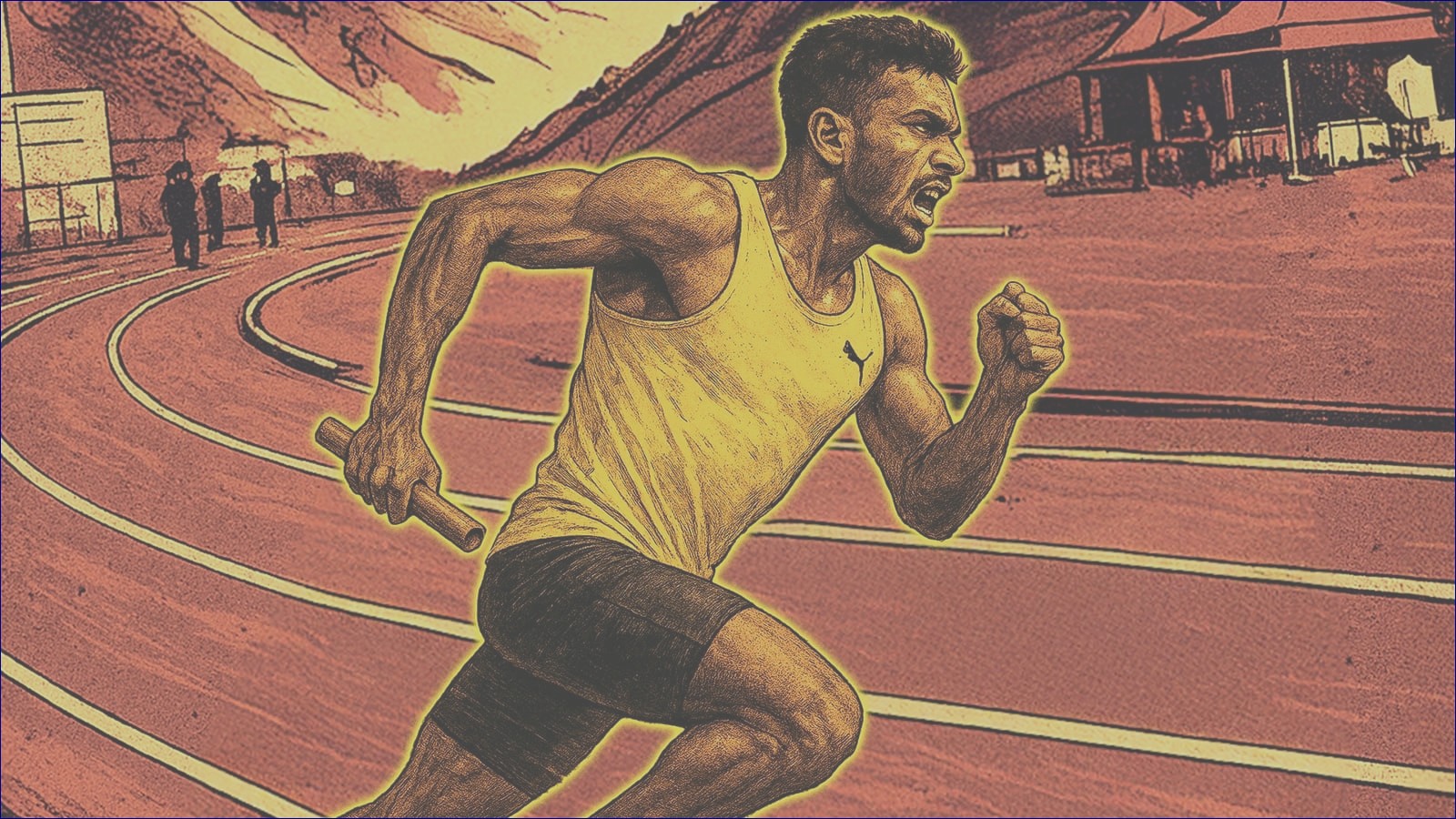
In an exciting turn of events, India’s sprinting scene has reached new heights with four remarkable athletes generating a buzz for possible medal wins at upcoming competitions. Meet Gurindervir Singh, Animesh Kujur, Manikanta Hoblidhar, and, in the final push, Amlan Borgohain. Together, they showcase an incredible blend of speed and energy.
The journey began at the 2025 Relay Classic in Chandigarh, held on a scorching April 30 afternoon. As the temperature soared to 39 degrees, anticipation filled the air. About 500 spectators gathered to watch as the two teams prepared for the highly anticipated 4x100m final. Earlier, the Reliance team, consisting of Gurindervir, Animesh, Manikanta, and Amlan, made waves by clocking in at 38.93 seconds, just shy of the national record of 38.89 seconds set 15 years ago.
Right after the heats, the sprinters enthusiastically gathered around James Hillier, the Reliance Foundation’s Athletics Director, sharing words of encouragement. “Let’s break that record!” they urged one another. Manikanta, feeling optimistic, stated, “This is our day to set a new record.”
Just ten days before, at the Federation Cup in Kochi, Animesh had broken the 200m national record with a time of 20.40 seconds, despite the humid conditions that had affected the rest of the team.
In March, Gurindervir set a new national record in the men’s 100m at the Indian Grand Prix in Bengaluru, clocking an impressive 10.20 seconds, beating Manikanta’s previous record of 10.23 seconds. Hoblidhar himself also improved his personal best to 10.22 seconds.
As the relay final approached, nerves ran high, especially after Odisha’s false start delayed the race for a few minutes. Nevertheless, when the race began, Gurindervir took off like a bolt, smoothly passing the baton to Animesh, who expertly accelerated the pace. Manikanta took the curve with finesse, handing over to Amlan, who sprinted ahead, securing victory with a new national record of 38.69 seconds.

TIME FOR A MEDAL?
Considering that China won silver at the last Asian Championships with a time of 38.87 seconds, India’s new record puts them in a strong position for a medal. This may finally break a 46-year-long dry spell. What if they dream of gold—a feat yet to be achieved by India in this relay event?
India has previously won bronze medals at the Asian Athletics Championships in 1973, 1975, and 1979, but it’s been a long wait without a podium finish since then. Just 4th place has been the highest finish in the last ten championships.
This team isn’t just about speed; they embody a renewed hope for the future of the men’s relay. Each runner brings something special—Gurindervir demonstrates a determination to win, Animesh finds motivation in his serene ambition, and Manikanta exudes a relaxed confidence. Amlan, the final leg, charges forward with incredible energy.

Alongside these four are other talented runners like Pranav Gurav, Tamil Arasu, and Ragul Kumar, all heading to South Korea for the Asian Athletics Championships. While each of them shows promise, success in relay races relies on how well they work together during the race.
Relay racing poses unique challenges, as highlighted by a New York Times article discussing the U.S. men’s team that did not qualify for the Tokyo Olympics. They faced the dilemma of running too fast, risking a baton drop, or being overly cautious, which could hamper their time.
Despite having some of the fastest sprinters, the U.S. team faced setbacks. For India, approaching times of ten seconds would mark a significant achievement and elevate their relay demands on the world stage. Hillier emphasizes that breaking through these barriers is crucial and believes it’s possible with teamwork and strategic training.
Abdul Najeeb Qureshi, who was part of the previous record-holding team, stresses the importance of collaboration. He recalls how their seamless baton exchanges led to their impressive times, even if they were not the fastest individually.
After their national record-setting run of 38.69 seconds, the four athletes celebrated together, reflecting on the ‘perfect exchanges’ that were essential to their success. Amlan expressed a keen desire for the team to earn medals in upcoming championships, and Gurindervir optimistically predicted great individual times for the group moving forward.

As they celebrated, it was clear they were a united team, filled with excitement and appreciation for each other’s efforts. Now, it’s back to hard work in training, as they collectively push toward their goal of winning medals and setting new records.
