
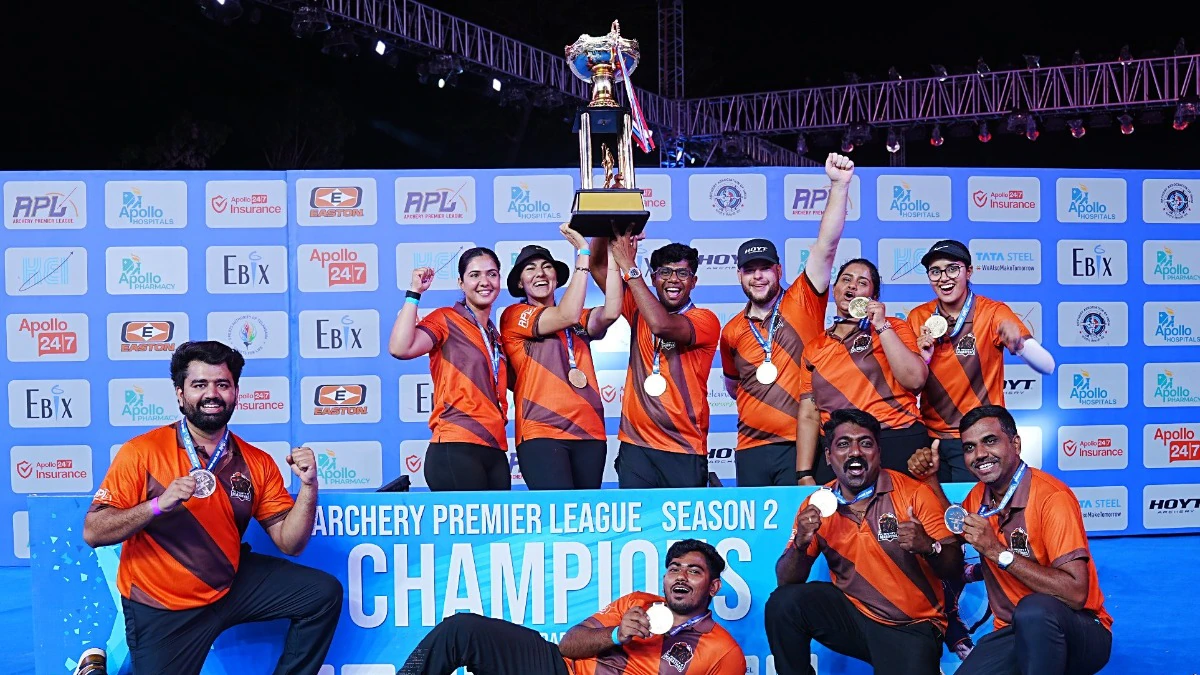
Indian Archers Aim for Olympic Glory with Premier League
India’s archers have made a name for themselves in global competitions, earning medals in various championships, including World Cups and continental events. However, the Olympics present a tougher challenge that they have yet to conquer. To bridge this gap, the Archery Premier League (APL) has been created, aiming to steer Indian archery towards Olympic success.
In its second season held in Hyderabad, the APL not only provided Indian archers a chance to compete for their teams but also allowed them to face some of the best archers in the world. This season introduced a quicker format and tested athletes’ skills in demanding conditions, providing invaluable experience.
Anil Kamineni, the chairman and director of the APL, shared insights about the league’s inception. “We’ve been doing great in other competitions but struggling at the Olympics. We asked ourselves what we were missing,” he explained. After analyzing successful sports leagues, the decision was made to create a league for archery, hoping to replicate those successes in the sport.
Competing with the Best
A major goal of the APL is to have top international archers compete alongside India’s best. Young Indian athletes can learn from these seasoned professionals by observing their shooting techniques and their approach to handling pressure. Conversely, international archers have appreciated the chance to compete with athletes from different backgrounds, enriching their experiences as well.
The APL has also uniquely combined recurve and compound archers in the same events, fostering collaboration and camaraderie among athletes who usually compete in different formats. This mixed-discipline setup aims to attract a larger audience and create more opportunities for archers.
Quickening the Pace
One of the standout changes in the APL’s format is the reduced time for shooting. Teams now have 120 seconds to shoot eight arrows, averaging 15 seconds per arrow, which is five seconds less than the typical format. This quicker pace encourages athletes to make faster decisions and find their rhythm more efficiently.
Kamineni noted how some archers who adapt to this faster pace are seeing success, while others are learning to improve their speed without sacrificing accuracy. Each team consists of four archers—two men and two women—bringing the focus onto teamwork and the ability to perform under pressure collectively.
Facing Natural Challenges
The shooting conditions in Hyderabad added to the competition’s intensity. Positioned next to Hussain Sagar Lake, the venue faced natural winds that made shooting tough at times. Archers had to adjust to fluctuating wind conditions, all within the tighter time constraints of the APL.
The league also featured a nail-biting shoot-off, which was used to determine the winner in tied matches, leaving little room for mistakes. Star archer Dhiraj Bommadevara faced this pressure directly. Despite missing an important shot that could have secured his team’s victory, he bounced back impressively, helping his team excel in later matches.
Promoting Young Talent
Kamineni expressed his excitement about the younger talent on display during the league. The performances of sixteen-year-old Gatha Anandrao Khadake and others like Kumkum Mohod and Chikita showcased the promising future of Indian archery.
With the APL selecting participants based on their performances in national trials, it gives young archers a platform to compete with seasoned professionals, helping them grow in a high-pressure environment.
Kamineni believes that the early outcomes from the league show promise. Indian archers have seen success in various international competitions soon after participating in the APL. While proving the league’s direct impact on Olympic success may take time, it is a crucial piece of the larger development puzzle in Indian archery.
The ambition behind the APL is clear—it aims to create a tougher competitive landscape for Indian archers while fostering international collaboration. As Indian archery continues to gain recognition globally, the ultimate test will be translating this success into Olympic achievements in the future.
