
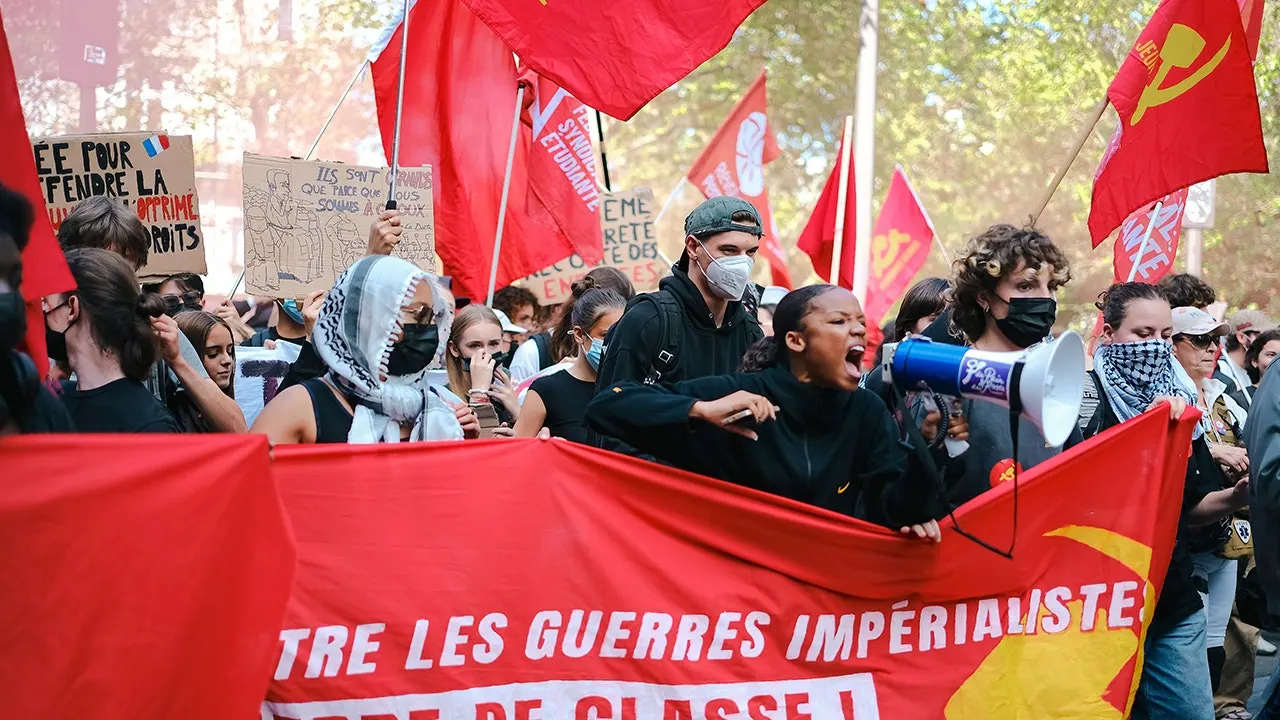
Student Protests Ignite Across France Amid Educational Struggles
Massive protests among students have erupted across France, fueled by frustration over poor school conditions and a lack of funding. The unrest, which began in France’s struggling suburbs, has seen more than 5,000 individuals arrested and nearly 200 injured as chaos spreads through the nation.
Experts attribute the violence to a coalition of far-left groups and radical factions that are using the anger over educational issues to advance their agendas. Nathalie Szerman, a researcher on radicalization in France, highlighted that while the protests started organically due to concerns about inadequate classrooms, they have evolved into expressions of anger toward the government and the existing system. Vandalism and blockades have become common as participants demand change.
“The protests began in immigrant, underserved areas but are now showcasing a deep-seated frustration with the system itself,” Szerman explained. In particular, she noted that many protesters carried flags from pro-Palestinian organizations, which have called for a month of activism. This has further complicated the dialogue over educational demands, with critics suggesting that these protests are becoming intertwined with broader political issues.
Simone Rodan-Benzaquen, an expert on European affairs, acknowledged students’ valid concerns about overcrowded classes and teacher shortages. However, she questioned the relevance of global politics to local educational issues, saying, “The far-left has made opposition to Israel a focal point, which influences the educational protests.”
Former U.S. Assistant Attorney General Theo Wold pointed out that these protests reflect broader societal challenges in France, with rising tensions partially stemming from mass immigration. He warned that these frustrations could lead to increased societal damage if not addressed properly.
As the unrest continues, many observers are closely watching the political implications for upcoming elections. With President Emmanuel Macron unable to run again, the potential for a face-off between far-left leader Jean-Luc Mélenchon and right-wing candidate Marine Le Pen looms. Rodan-Benzaquen suggested that whichever way the protests progress, Mélenchon stands to gain politically, whether from voter disillusionment with the far-right or by rallying support himself.
Current estimates indicate that around 500 high schools were closed in France due to the protests, a number down from earlier reports. In an effort to de-escalate tensions, the Ministry of Education is shifting to crisis management meetings rather than regular teaching, providing staff time to address the unrest.
While spending on education in France has increased recently, comparisons with neighboring countries reveal ongoing issues. France currently allocates about 5% of its GDP to education, which is higher than Germany’s 4.5%, yet concerns around the conditions students face persist. With ongoing protests and governmental scrutiny, the future of France’s educational environment hangs in the balance.
