
High taxes, unreliable utilities, expensive loans, county fees, land issues, and climate challenges are making it tough for investors in Kenya. This situation is putting a strain on Kenya’s attempt to attract private investment and create more jobs.
A recent report from the World Bank highlights that problems in governance, regulations, and the overall structure are hindering private investment in the country. The Kenya Country Private Sector Diagnostic, released in September 2026, indicates that while Kenya has strong potential for growth driven by the private sector, turning economic growth into real investment, productivity, exports, and formal job opportunities has been a struggle.
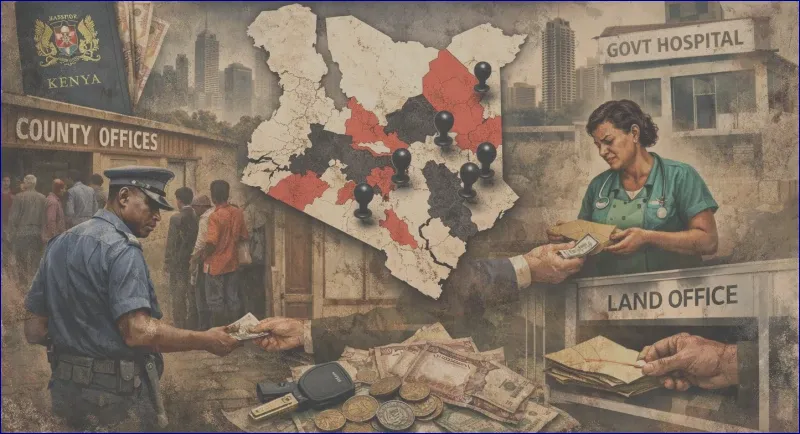
Investors are particularly worried about governance and corruption. The report reveals that one in three businesses faced requests for bribes, and over 25% of firms saw business licensing and permits as major issues.
According to the World Bank, weaknesses in governance are shaking investor confidence just when Kenya needs more private funds to boost its economy. The report describes Kenya’s business climate as limited by uncertain regulations, high costs to comply, and governance problems.
Businesses are dealing with numerous national and county-level fees, frequent changes in taxes, complicated administrative processes, and perceptions of unfair treatment. The 2025 World Bank Enterprise Survey found that 64% of firms considered high tax rates a major or severe issue, while 38.6% pointed to challenges with tax administration.
While Kenya’s corporate tax rates are generally similar to those in the region, the overall tax system is often seen as uncertain due to multiple taxes, frequent updates, and complex administrative requirements. The report notes that “frequent changes in the tax system” significantly limit private investment.
It also mentions the National Tax Policy of 2023, which is non-binding and allows for continual changes through annual Finance Bills. The devolution of powers has added more complexity, with business permits, property rates, market charges, and other fees differing greatly from one county to another.
This inconsistency is creating an uneven playing field for businesses that operate in multiple areas. The report highlights that these requirements “can vary greatly” across counties, increasing the business costs.
New laws like the County Licensing (Uniform Procedures) Act of 2024 aim to simplify licensing and promote digital processes. However, the World Bank points out that even where such laws exist, their execution is often slow.
On top of regulatory challenges, businesses also face hefty costs due to unreliable basic services. Electricity prices at about $0.26 per kilowatt-hour are among the highest in the region, and around 75% of businesses report frequent power outages. Nearly 60% of companies own or share a generator, adding even more to their expenses.
Water shortages are another critical issue, with over 37% of businesses reporting insufficient water supply, compared to just 17.2% in lower-middle-income countries. Despite improvements in transportation infrastructure like roads and ports, these existing weaknesses in infrastructure continue to escalate operational costs for businesses.
