
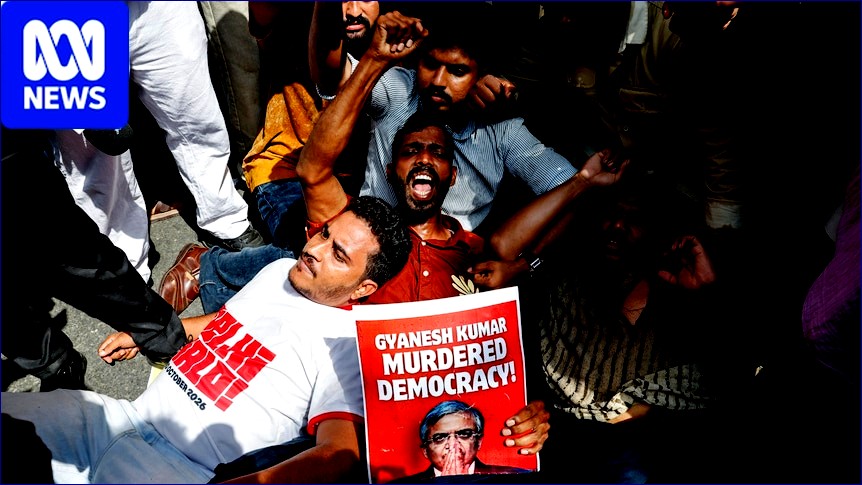
Protests Erupt in India Demanding Election Chief’s Resignation
India’s Prime Minister is under increasing pressure as thousands of protesters, led by the Cockroach Janta Party (CJP) and various activist groups, have taken to the streets. They are calling for the resignation of the chief of the Election Commission due to a disputed revision of the voter rolls.
These protests represent a significant escalation in a growing controversy that has cast doubt on India’s Election Commission, an organization traditionally seen as one of the nation’s most reliable institutions. The rally in Mumbai is part of a series of planned nationwide demonstrations.
In a separate incident, police in New Delhi prevented student and civil society groups from gathering at Jantar Mantar, a recognized protest area, to demand the resignation of Election Commissioner Gyanesh Kumar. Authorities detained several opposition leaders attempting to reach the site, which was barricaded.
Opposition Demands Action Against Election Chief
Protesters allege that the Election Commission has altered voter lists to benefit Prime Minister Narendra Modi’s Bharatiya Janata Party (BJP). Saurav Das, convenor of the CJP, stated in an interview that their ability to demand change is limited if their right to vote is compromised. “We will only end the protest after Gyanesh Kumar resigns,” he emphasized.
The main opposition party, Congress, has gone further, calling for criminal charges of treason against Mr. Kumar. Both Kumar and the government have disputed these claims.
The pressure on the Election Commissioner intensified following reports that his two deputies expressed concerns multiple times about the voter-list revisions and commission procedures over the past several months. The Election Commission has defended its actions, stating that differing opinions are a normal part of internal discussions and that all procedures are lawful.
Concerns Over Voter Verification
Political analysts suggest that around 130 million names may have been removed from voter rolls during the latest revision cycle, which started last year. This significant change could affect millions of voters in the upcoming elections.
Nearly 650 million people cast their votes in the last national election in 2024. The Election Commission has asserted that the revisions aim to eliminate duplicate or ineligible names and enhance the accuracy of voter lists.
However, political scientist Rahul Verma noted that while many of those removed might be dead or moved, the complexities involved in verifying voter eligibility have caused distress among many citizens.
The current round of voter roll revisions began in Bihar but has now spread to many states across India. While updating voter lists is typically a routine task, this time it has faced backlash as many individuals found themselves unable to vote due to their names being omitted from the rolls.
Political Landscape and the Call for Reform
Verma pointed out that public trust in the Election Commission has been shaken, highlighting the unusual level of public unrest since the revisions began.
The CJP, led by Abhijeet Dipke, is a youth movement that gained traction earlier this year, primarily focusing on issues related to education and employment. Despite their prior successes in mobilizing young voters, it remains uncertain whether the current protests over voter roll revisions will garner the same level of enthusiasm and sustained action.
While the chief commissioner can only be removed through parliamentary impeachment, analysts believe this is unlikely given the current balance of power in the opposition. Nonetheless, given the CJP’s past influence, the situation remains fluid.
As political tensions rise, it remains to be seen how the government and the Election Commission will respond to these mounting challenges.
