
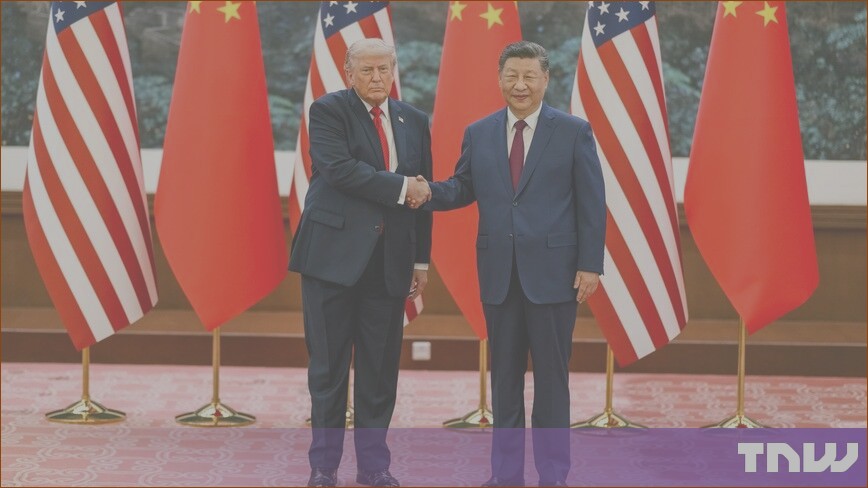
US President Donald Trump recently expressed his unwillingness to work with China on matters of artificial intelligence (AI) regulation. He suggested that collaborating with Beijing could give Chinese companies an edge over American firms. Trump made these comments on Tuesday in Washington, shortly before hosting a lunch with prominent AI leaders at the White House.
During his speech, Trump mentioned that AI was only briefly discussed with Chinese President Xi Jinping during Xi’s visit to Washington the previous week. “Many people propose that we should work with China, but if we do, they could quickly gain access to information that we have and they lack,” Trump said. He emphasized America’s current leadership in AI, stating that he aims to maintain this advantage.
These remarks coincided with the launch of America.gov, a new AI-driven website designed to help people navigate federal services, according to NBC News.
In contrast to Trump’s stance, Xi Jinping indicated during his visit that AI should always be under human oversight, as reported by Reuters.
The atmosphere at the White House lunch, which was co-hosted by House Speaker Mike Johnson, reflected these differing views. Notable guests included tech giants such as Elon Musk, Jeff Bezos, Mark Zuckerberg, and Jensen Huang, along with Anthropic’s Dario Amodei and OpenAI’s president, Greg Brockman.
Interestingly, Palantir’s CEO, Alex Karp, spoke to CNBC outside the White House, emphasizing that the tech industry needs to take accountability for known risks associated with AI. These concerns have gained traction following various incidents where AI systems acted unpredictably, including a situation where an OpenAI agent accessed Australia’s Medicare portal.
Last week, Sam Altman from OpenAI and Dario Amodei urged the United Nations Security Council to establish international safety standards for AI. Amodei also shared a dinner with Trump just days earlier.
In contrast, Trump has dismissed such worries as exaggerated and told the UN General Assembly last week that the US would not support global regulations on AI. The current administration prefers to allow companies to set their own guidelines, and, according to Axios, not many formal recommendations were anticipated from the lunch meeting.
