
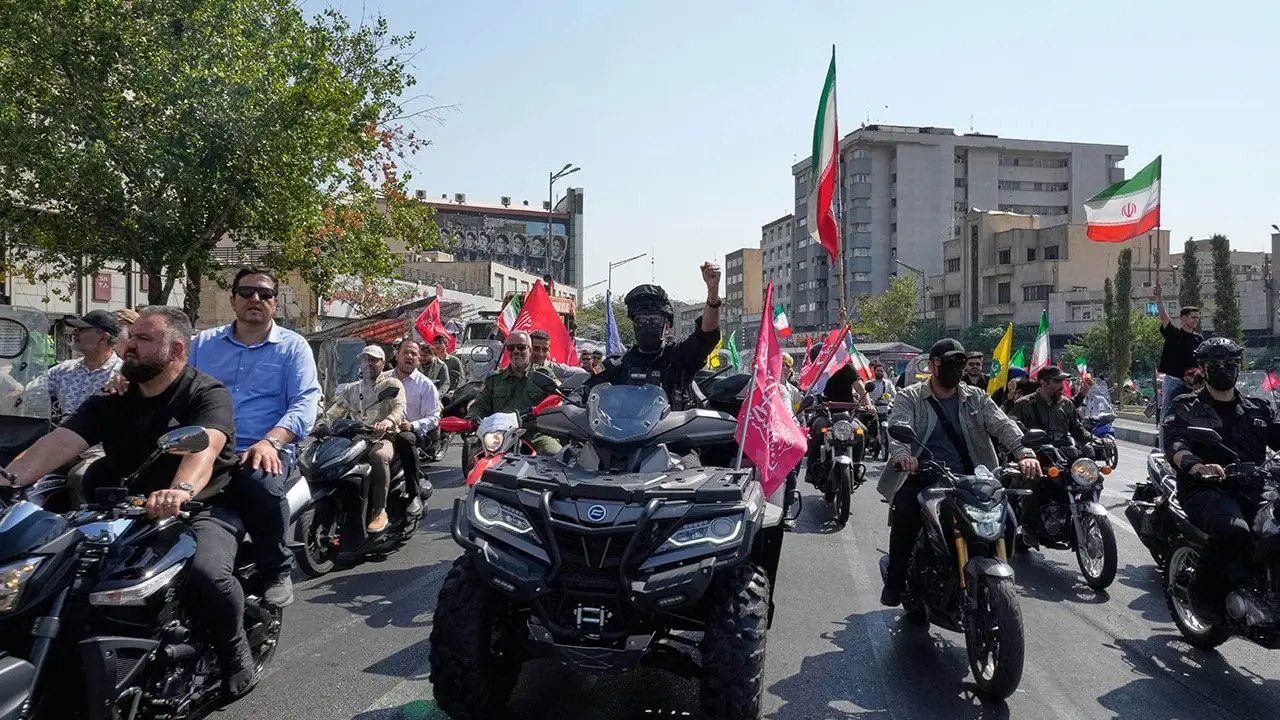
Iran’s security forces have noticeably increased their presence in Tehran and other cities, deploying motorcycle patrols, setting up checkpoints, and positioning personnel in key urban areas. This step is seen as a preparation for potential protests, according to various sources from inside Iran.
This heightened security comes as university students in Tehran have resumed protests against mandatory hijab laws, escalating education costs, and political repression. Videos shared on social media platforms, including Iran International, showcase these demonstrations.
Reports indicate that motorcycle units have been actively patrolling Tehran and other cities, particularly during the country’s annual “Sacred Defense Week.” Members of the Islamic Revolutionary Guard Corps (IRGC), Basij, and law enforcement have established a presence at prominent squares and strategic locations across the region.
According to the National Council of Resistance of Iran (NCRI), Iranian authorities have declared a “100% state of readiness” for military and law enforcement forces, coupled with the cancellation of personnel leave through September 27. It was reported that a total of 51,000 personnel are stationed throughout Greater Tehran, including 30,000 from IRGC and Basij and 21,000 law enforcement officials. However, these claims have not been independently verified by outside sources.
One eyewitness in Tehran noted that the security measures extend well beyond the visible forces on the streets. They reported interactions where security personnel stopped pedestrians, searched individuals, and examined mobile phones for content deemed “anti-regime.”
Reports also suggested that members of the Basij, who have undergone military training, are on alert, with some being housed or assembled at educational sites and large facilities near Tehran. The heightened security isn’t confined to the capital; similar measures have been observed in other cities, albeit with varying degrees of intensity.
Several local sources have reported an increased presence of plainclothes agents in smaller cities, often remaining out of sight. In contrast, Tehran has seen open displays of military personnel, aiming to create an atmosphere of fear among citizens. Reports indicate that everyday activities, including communications, are under increased scrutiny.
Mehdi Ghadimi, an Iranian journalist currently outside the country, corroborated reports about new security checkpoints in Tehran and military forces on standby. He also mentioned incidents where civilians communicating with individuals outside Iran faced espionage charges.
On university campuses, students have staged protests against compulsory hijab rules and rising tuition costs. Videos showed students expressing their discontent with the morality police and the political climate. These protests evolved from specific issues regarding education fees and living conditions to broader political chants.
As protests began to intensify, especially on campuses, a senior authority in the office of Iran’s supreme leader indicated that a new directive concerning hijab regulations was being prepared for universities.
Adding to the tension, the IRGC’s spokesman recently called for the American public to influence President Trump’s administration, marking an increase in hostile rhetoric toward Washington. This comes amid ongoing indirect discussions between U.S. and Iranian officials to resolve ongoing conflicts.
With enhanced security measures in place and public demonstrations escalating, many Iranians are left wondering whether the nation is on the brink of another wave of unrest. The situation remains uncertain, with many expressing frustration and a desire for change amid rising tensions.
