
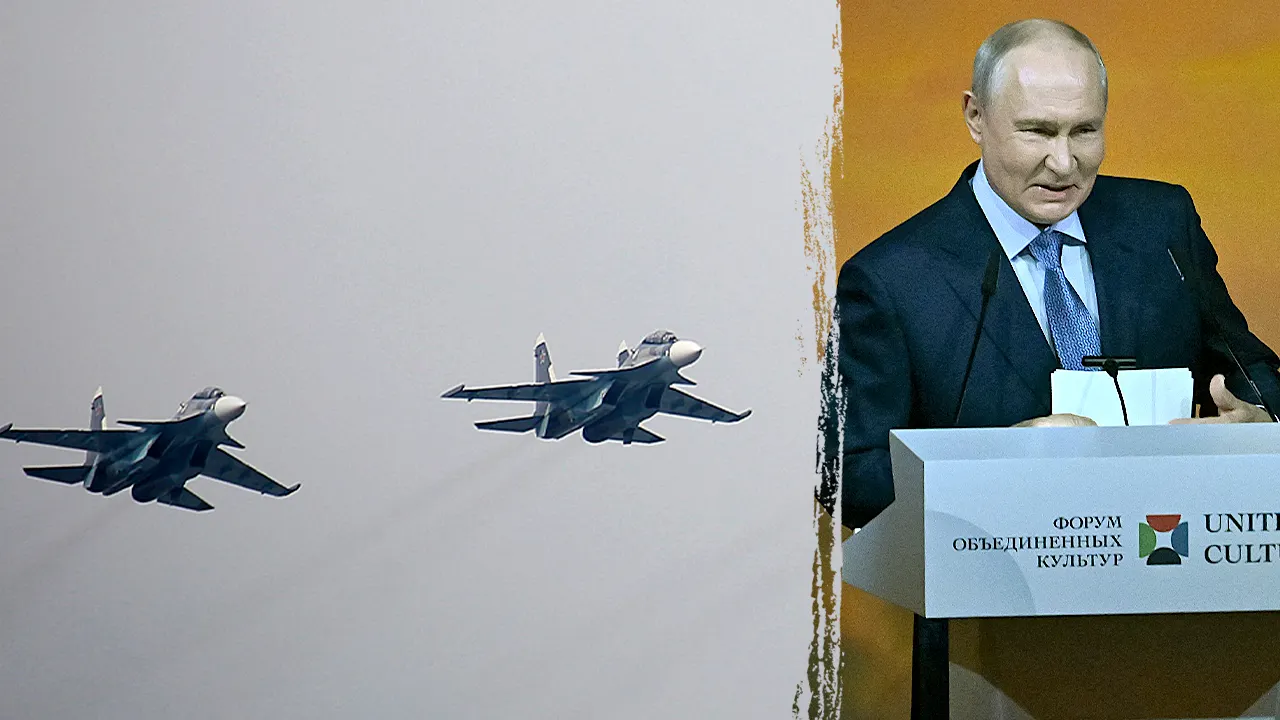
Fighter Jets Intercept Russian Aircraft Amid Rising Tensions
On September 24, Finnish and Swedish fighter jets took to the skies for the first time to intercept Russian military planes flying over the Gulf of Finland. This operation highlights a significant moment in defense cooperation between the two Nordic countries, especially as geopolitical tensions with Russia escalate.
The scramble was prompted by the detection of Russian aircraft in international airspace, according to reports from the Swedish Armed Forces. The Russian fleet included a Tu-134 transport aircraft, MiG-31 interceptors which are equipped for long-range threats, and Su-30 fighter jets that can engage in both air and ground combat.
“This is what close cooperation looks like in practice,” said Major General Jonas Wikman, the commander of the Swedish Air Force. He emphasized the seamless operation between the two nations, built on years of trust and strong personal relationships.
Concerns about Russian military actions along NATO’s eastern border have intensified, especially following a series of airspace violations. Instances include Russian drones breaching Polish airspace and armed jets entering Estonian territory. Recently, NATO aircraft intercepted Russian jets on September 18.
In Estonia, Defense Minister Martin Herem has expressed alarm, stating that Russia could potentially use military force against Estonia within the next year. Meanwhile, Prime Minister Kristen Michal indicated that the government is prepared to close border crossings quickly if security assessments change.
In a recent speech at the St. Petersburg International United Cultures Forum, Russian President Vladimir Putin dismissed European fears about a potential attack. He stated that Russia is not preparing for military action against Europe and criticized the alarmist rhetoric coming from Estonia, labeling it as “political clowning.”
The Gulf of Finland region has heightened security, particularly after the various military incidents involving gas pipelines and other hybrid threats since the onset of the conflict in Ukraine in 2022. NATO has committed to ensuring protection for its eastern members in various domains, including cyber defense.
Finland joined NATO as its 31st member in April 2023, and Sweden followed in March 2024. Estonia has been a member since 2004, enhancing the alliance’s northern and eastern defenses amid the complex security landscape.
NATO Secretary General Mark Rutte emphasized the importance of unity within the alliance, stating that any attack against a member would elicit a strong response. He also highlighted the intertwined relationship between the United States and Europe, warning that any missteps by Russia would meet with serious consequences.
Recent intelligence reports suggest that while a full-scale Russian invasion of a NATO country is unlikely, the risk of hybrid campaigns from Moscow is increasing, prompting continued vigilance among allied nations.
