
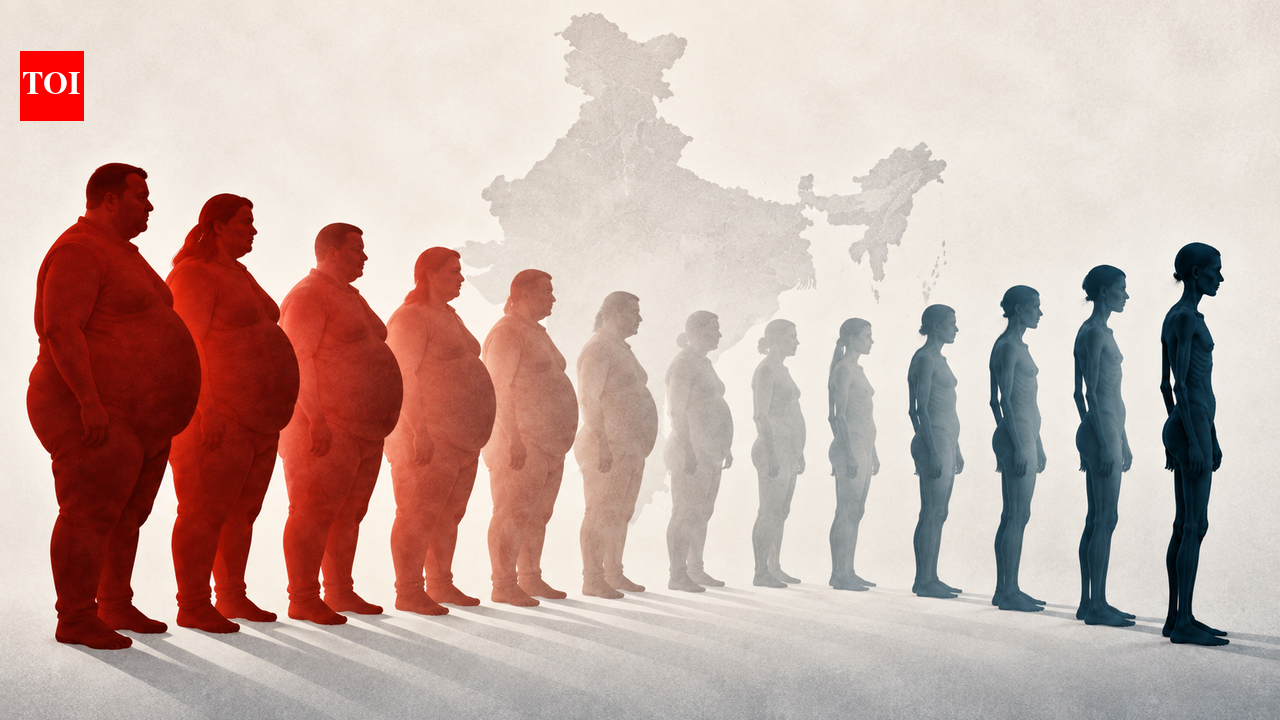
India is facing a growing health crisis marked by both rising obesity rates and persistent malnutrition. This situation calls for careful attention from policymakers. Recent data from the National Family Health Survey (NFHS-6) reveals that while obesity is on the rise, the number of individuals classified as underweight remains concerning.
The NFHS-6, which spans from May 2023 to December 2024, surveyed almost 680,000 households across 715 districts. It provides crucial insights into health and nutrition trends across India, with a focus on a variety of indicators.
Among women aged 15 to 49, the percentage with a below-normal body mass index (BMI) has slightly increased from 18.7% in the previous survey to 19.7% now. In contrast, those classified as overweight or obese jumped sharply from 24% to 30.7%. As a result, the proportion of women with a normal BMI fell from 57.3% to 49.6%.
Similar trends are seen in men aged 15 to 49. Their share of below-normal BMI rose from 16.2% to 19.7%, while overweight or obesity climbed from 22.9% to 27.3%. Consequently, the segment of men in the normal BMI range decreased from 60.9% to 53%.
BMI, or body mass index, is calculated by dividing weight in kilograms by height in meters squared. The NFHS defines below-normal BMI as being below 18.5 and overweight as having a BMI of 25 or above.
This latest survey marks a significant shift, as it is the first time both men and women have seen an increase in low BMI. Previously, the rates for below-normal BMI had been declining. Notably, among women, this figure dropped from 35.6% in 2005-06 to 18.7% in 2020-21. For men, it decreased from 34.2% to 16.2% over the same period. Both genders now report a concerning rise in low BMI.
When comparing state data, the survey shows that 20 out of 35 states recorded increases in low BMI among women and 27 among men. In contrast, overweight or obesity rates climbed in 33 states for women and 28 for men. Alarmingly, some regions show that both overweight and underweight issues are prevalent simultaneously.
For instance, Rajasthan experienced the highest increase in low BMI rates, with women rising from 19.6% to 27.3% and men from 14% to 24.7%. Conversely, Lakshadweep reported the steepest rise in obesity, with women’s rates soaring from 33.5% to 50.1%.
The divide between urban and rural populations is stark. In urban areas, 13.2% of women have below-normal BMI, while 42.8% are overweight or obese. Rural women show a higher percentage—22.5% have low BMI, with 25.5% being overweight or obese. A similar trend is noted among men.
Dr. Sadajit Banerjee, a specialist in Kolkata, emphasizes the growing concern over rising obesity in urban centers, where many patients seek assistance for weight management. He observes a lack of motivation for lifestyle changes among the urban populace. Meanwhile, rural communities face challenges in accessing adequate nutrition.
While many countries are experiencing a decline in underweight individuals, India’s situation is distinct. The number of overweight adults is increasing, but the share of those underweight is not declining. In 2021, India ranked second to China for the number of adults dealing with overweight or obesity.
The survey findings highlight a complex health landscape. Rising obesity and persistent malnutrition are evident across regions, requiring focused public health strategies. Both conditions reflect broader nutritional issues, prompting a more comprehensive view of malnutrition beyond just weight measurements. Addressing these dual challenges will be critical for improving health outcomes in the country.
