
Russia Holds State Duma Elections in Occupied Ukraine Amid Criticism
Russia began its State Duma elections on Friday, marking the first voting since the country’s invasion of Ukraine in 2022, which included regions it currently occupies. Critics view this as an attempt to showcase public support for Russia’s military actions and its annexation of eastern Ukraine.
Observers from the Organization for Security and Co-operation in Europe (OSCE) were not invited to oversee the elections, indicating a lack of commitment to free and fair democratic practices, according to critics. Pere Joan Pons, head of the OSCE Parliamentary Assembly, stressed the importance of independent monitoring and stated that Russia’s refusal is a serious violation of its international obligations.
Following the invasion, the Russian government imposed strict censorship rules, punishing dissent and controlling information about the conflict. Lev Shlosberg, a prominent opposition figure, was sentenced to over 11 years in prison for critiquing the war. His party, Yabloko, has been barred from participating in the elections.
A total of nine parties are on the ballot, all aligned with President Vladimir Putin, including his ruling United Russia party. Since the invasion, Russia annexed parts of Ukraine’s Donetsk, Luhansk, Kherson, and Zaporizhzhia regions, proceeding to set up elections there. However, both Ukraine and the wider international community do not recognize Russia’s claims over these territories.
Critics argue that these elections serve as propaganda for Putin, reinforcing a narrative that justifies the invasion and territorial expansion. Keti Korkiya, from the Foundation for Defense of Democracies, commented that while many Russians might publicly show support for the government, they are reluctant to take personal or economic risks associated with the war.
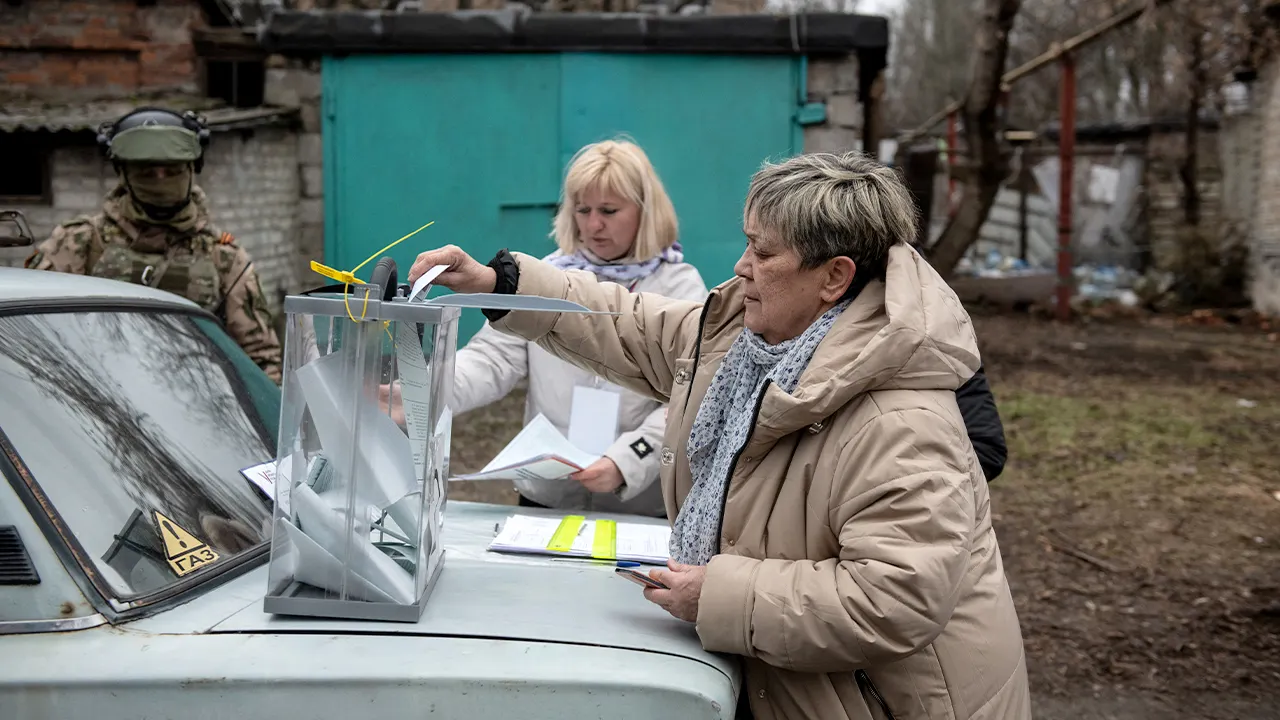
The election environment is characterized by fear and manipulation. Research fellow Jaroslava Barbieri described it as a regime of terror, emphasizing the lack of freedom in the electoral process. Past elections in these regions have raised concerns over legitimacy, with reports of coercion, including Russian soldiers accompanying election officials to intimidate voters.
Putin sees these elections as a way to project stability and resilience against foreign aggression. The Kremlin hopes to portray a democratic facade while controlling the narrative surrounding the war.
Russia’s Central Election Commission has introduced new voting regulations for the occupied territories, emphasizing early and home voting to minimize large gatherings. The Russian Foreign Ministry announced that preparations for overseas voting have been finalized, with polling stations set up in various countries.
Ukrainian Parliament member Volodymyr Ariev urged residents in the occupied regions to boycott the elections, denouncing them as illegal. He advised local citizens to leave their homes during the voting period to avoid coercion.
As the election dates approach, experts suggest that these votes are designed to create an illusion of public approval for Putin’s actions as Russia faces increasing military challenges in Ukraine. The three-day voting period ends on September 20.
