
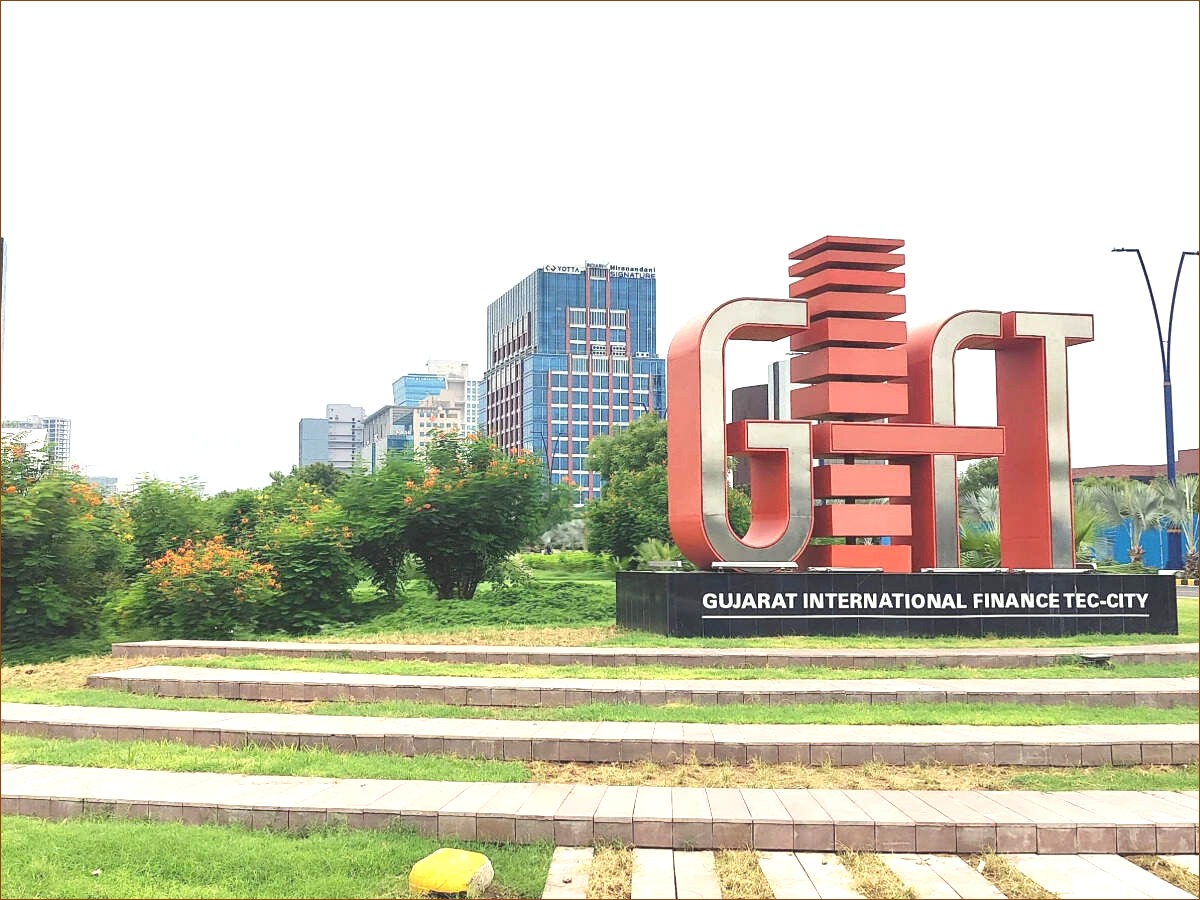
HSBC Holdings Plc and ICICI Bank Ltd. in GIFT City have become the leading lenders to India’s large diaspora through a special foreign-exchange swap program. This highlights GIFT City’s increasing importance in attracting global capital to India.
Between June and August, these two banks, located in Gujarat International Finance Tec-City—popularly known as GIFT City—distributed a total of $19.3 billion. This was made possible through the Reserve Bank of India’s special concession on foreign-currency non-resident deposits, as reported by the International Financial Services Centres Authority (IFSCA).
The Reserve Bank’s initiative has significantly increased foreign-currency funding in India, boosting activities in GIFT City. The success of HSBC and ICICI Bank may inspire other lenders in the area to expand their wealth management services and attract more money from non-resident Indians.
Prime Minister Narendra Modi sees GIFT City as a potential competitor to well-known financial hubs like Singapore and Hong Kong. Under the RBI’s program, HSBC provided $10.9 billion while ICICI Bank issued $8.4 billion. Other banks, including Bank of Baroda and State Bank of India, also participated. Overall, twenty banks in the GIFT City zone collectively lent $52.8 billion through the RBI’s scheme.
GIFT City has attracted major players like HSBC and Standard Chartered, making it an appealing location for raising international capital due to its tax exemptions and relaxed regulations. India’s efforts to engage with its overseas nationals have resulted in a record $127 billion in inflows, surpassing expectations and strengthening the country’s financial position against external pressures. The Reserve Bank is taking on some currency-hedging risks, enabling banks like HSBC to offer loans worth up to 19 times the initial deposit.
K. Rajaraman, chairperson of IFSCA, noted that banks are expected to boost their wealth management services to connect with the global Indian diaspora. He mentioned that banking assets in GIFT City are projected to grow from $120 billion at the end of August to over $150 billion by the end of September, with the number of depositors rising significantly from around 4,000 three years ago to about 32,000.
Rajaraman highlighted that the onboarding process for new retail customers in GIFT City is competitive with that of major financial centers like Singapore and Hong Kong, typically taking two to three days. While verifying new customers currently takes 10 to 12 days, this timeframe is expected to shorten as regulations are streamlined.
Additionally, video KYC (Know Your Customer) services are already available for non-resident Indians, and unassisted biometric face authentication is expected to be implemented by the end of 2026. GIFT City’s advanced infrastructure also allows for quick interbank transfers and offers a simplified tax system, making it an attractive destination for international capital.
