
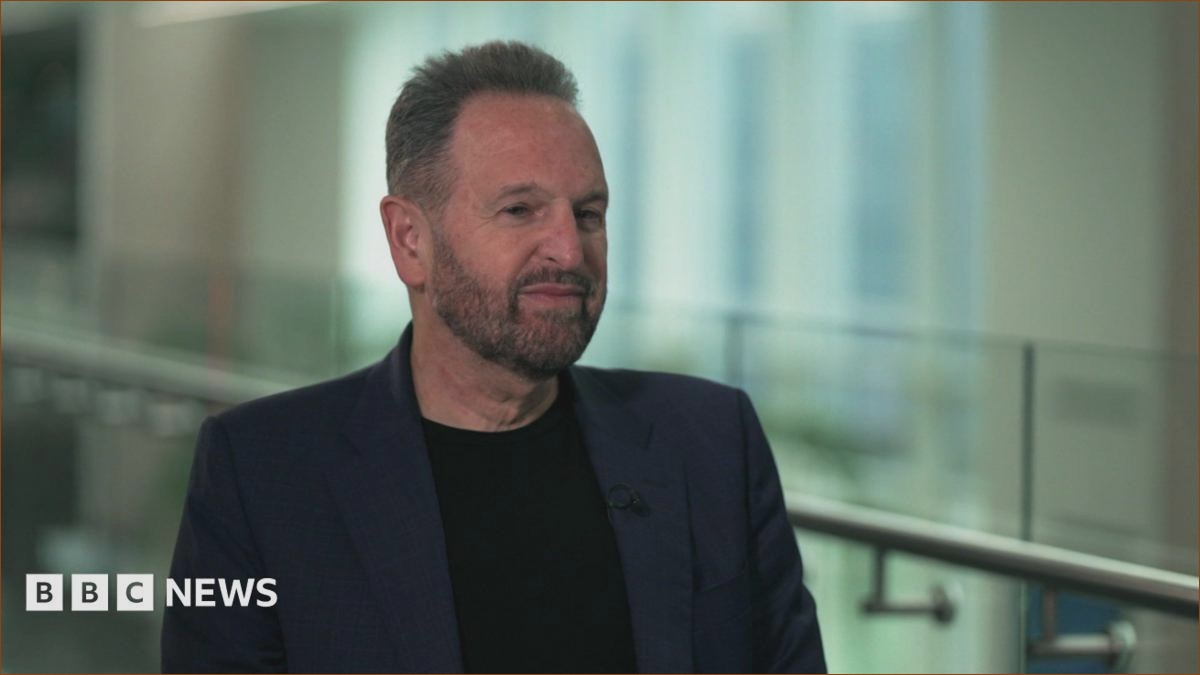
The CEO of the largest tech company based in the UK has made an intriguing statement about the future of cancer treatment. Rene Haas, who leads Arm Holdings in Cambridge, believes that artificial intelligence (AI) will eventually discover a cure for cancer—something that may be beyond human capability in our lifetime.
Haas explained that understanding the effects of cancer on DNA is currently too complicated for both humans and today’s AI systems. However, he is optimistic that as technology advances and more data is processed, computers will be able to unravel these complex issues.
In an interview on a podcast, he also mentioned that we could see humanoid robots become commonplace in the next five years, although he noted that the rapid growth of AI technology is currently limited by a shortage of chips required for building data centers.
Arm Holdings is responsible for designing the brains of microchips found in numerous devices, including smartphones, cars, and smartwatches, which are used worldwide. Earlier this year, the company’s surge in share prices during the AI boom made it the most valuable UK company ever in terms of cash.
Haas, who recently stepped down from the board of AstraZeneca, expressed his belief in the potential of AI to transform cancer treatment. He said, “AI is going to find a cure for cancer that today you and I, other humans could not in our lifetimes.” He emphasized the need for ongoing development, stating that as more data is fed into these advanced systems, breakthroughs will likely follow.
Prof. Chris Bakal from the Institute of Cancer Research in London shared his thoughts, noting that the focus should not just be on whether AI is used, but also on the quality of the data provided to it. His team is training AI using data generated directly from patient samples rather than relying on broader internet resources. He pointed out that the future of medical AI will depend on having the right measurements, not just the largest computing power.
Bakal believes that this targeted approach could dramatically reduce the time needed to develop new treatments, leading to real advancements for patients in need.
