
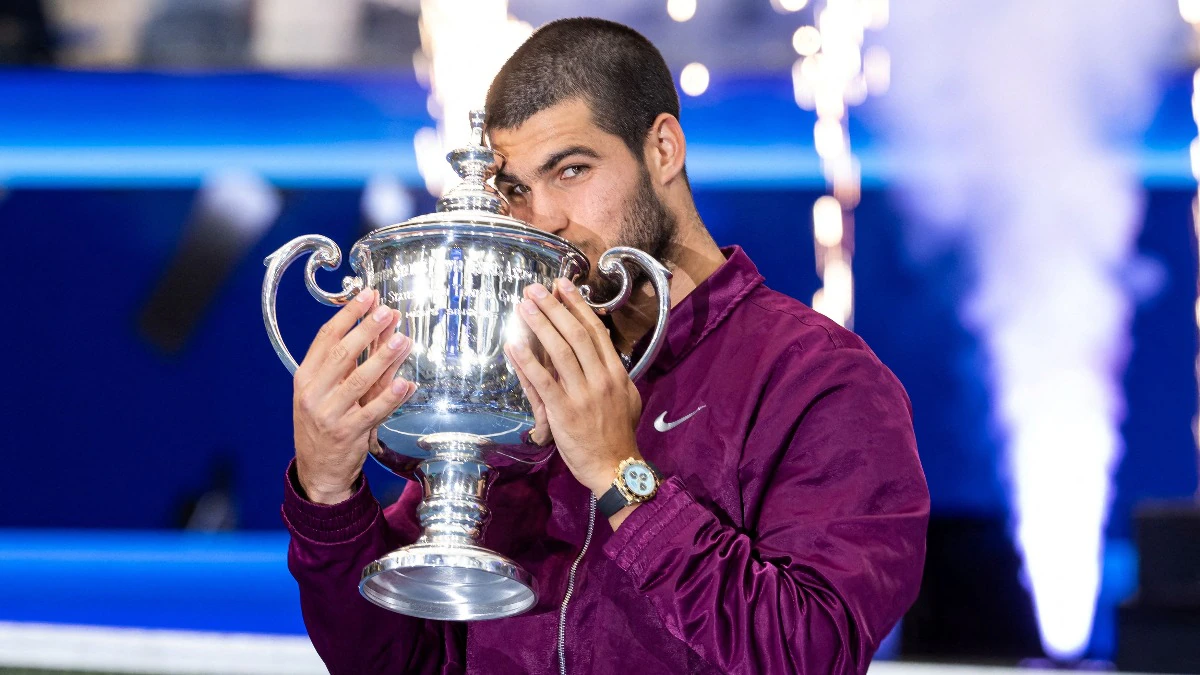
The US Open is gearing up to break records with the highest prize money ever seen in Grand Slam tennis. This year, both the men’s and women’s singles champions will walk away with an impressive $5.5 million each. In total, the United States Tennis Association (USTA) has announced that the player compensation for this year’s tournament will reach a staggering $108 million, marking a 20% increase from last year and a 44% rise from 2024.
Even players who simply make it to the 128-player singles main draw will earn $140,000, which is the largest first-round payout in tennis history. Players reaching the quarter-finals will pocket $780,000, while those advancing to the semi-finals will earn $1.45 million. The runners-up in the singles competition will receive $2.8 million.
This year’s champions’ prize money is up from last year’s $5 million, which was awarded to Aryna Sabalenka and Carlos Alcaraz. The total prize pool in 2025 was $90 million.
Doubles events will also see generous payouts. The champions in men’s, women’s, and mixed doubles will share $1 million, while the runners-up will earn $500,000. Winners of the wheelchair singles event will receive $104,000 each.
In addition to the increased prize funds, the USTA has introduced a new player support initiative. This program will have an initial budget of $2 million, shared equally between male and female players, to provide extra benefits alongside current pension plans.
USTA CEO Craig Tiley emphasized that this investment is just the start of a broader effort to support athletes in the sport. He remarked that the US Open will continue to offer significant financial rewards while catering to players, fans, and commercial partners.
“This is an important first step in a multi-year initiative aimed at benefiting athletes, as the US Open remains the best financial opportunity for players and a valuable platform for everyone involved,” Tiley stated.
The new support program will be shaped with input from the newly formed Grand Slam Player Council, which has been established to give players a greater voice in decision-making and ensure they receive a fair share of revenue from the four Grand Slam tournaments.
– Ends –
