
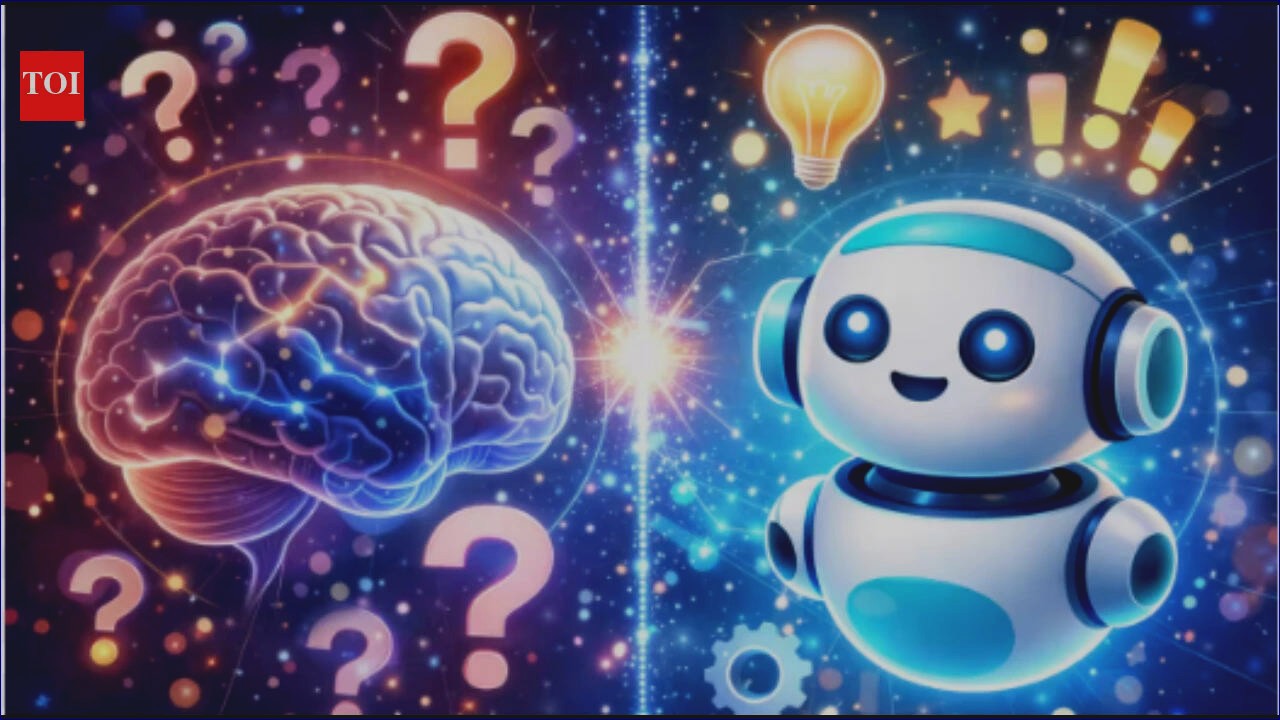
Are We Losing Our Creativity to AI?
Have you ever found yourself staring at a blank page, hoping for inspiration to strike? You sit down with good intentions, your drink in hand, ready to create. But before you know it, your cup is empty, and your ideas feel just as sparse. Instead of productive brainstorming, you might end up scrolling through your device, wondering if you were ever creative in the first place. This is when you might turn to an AI tool like ChatGPT or Claude for help. You feed it your scattered thoughts, and voilà—suddenly, you have an elaborate piece of writing. After a few tweaks, you feel ready to claim it as your own.
While this can be a quick fix to your creative block, it raises a crucial question: Are you sacrificing your unique creative voice by relying too much on AI?
The Effects of AI on Our Creativity
At first glance, AI appears to be a helpful tool that makes expressing our thoughts easier. However, there are concerns that it’s slowly taking away our natural creative instincts. Research shows that while AI can help generate ideas, it might also limit our imagination.
A study investigated how participants tackled creative tasks with and without AI. Those using ChatGPT produced ideas that were rated higher in quality but also less original. For example, when asked to design a toy using simple items like a paper bag and a brick, the majority of unaided human ideas were totally unique, while only a small fraction of ideas generated with AI could make the same claim.
Exploring the Roots of Original Thought
To understand why we’re becoming more dependent on AI, we can look at how creativity is nurtured from a young age. Debraj Mookerjee, an English professor, points out that many students are taught to simply follow instructions rather than explore their own ideas. He believes that instead of placing limits on students, educational systems should encourage them to develop their own unique thoughts.
What AI Can’t Teach You
True originality often comes from our human experiences. Ramesh Menon, who leads creative writing workshops, emphasizes the importance of tapping into our senses. In his classes, he encourages students to engage physically and emotionally with their surroundings, using their experiences as a source of inspiration. His rule? No AI allowed. Menon believes that genuine creativity springs from personal experiences rather than relying on artificial intelligence.
Balancing AI Use in Creative Work
Today, many creators are adopting AI to help them with their projects, but it’s essential to draw a line. Aashish Mall, a filmmaker behind India’s first AI feature film, insists that every emotional aspect of his work must first be crafted without any AI assistance. He stresses the difference between technical beauty and emotional depth, reminding us that only humans can add meaning to art.
Ensuring Your Work Stays Unique
To maintain control over your creative output, it’s crucial to focus on your individual taste and experiences. Tanmay Gaur, a filmmaker, argues that rather than allowing AI to dictate your work, use it as a tool that complements your creativity. Your choices, shaped by personal beliefs and experiences, should guide you as you create.
Overcoming Creative Blocks
In a world that often pressures us, nurturing our creativity can be a tough challenge. A good starting point can be as simple as writing daily in a free-form style. This technique allows you to express your thoughts without worrying about perfect grammar or structure, helping you break free from self-doubt. Embrace the messiness of the creative process, and don’t be afraid to share your raw work with others. Constructive feedback can guide your growth, promoting originality in your future projects.
Before you rush to seek shortcuts, remember that the joy of creativity often lies in enduring the struggles of the process. Embrace this journey, and honor the curious child within you that isn’t afraid to create.
