
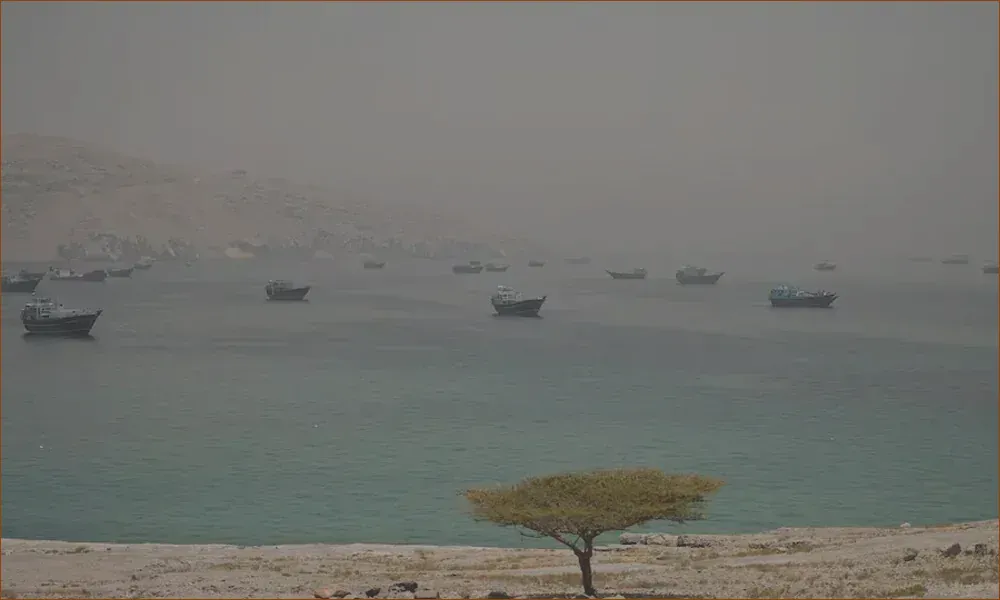
Iran’s Foreign Minister in Oman to Discuss Safe Shipping Routes
WASHINGTON/CAIRO: Iran’s Foreign Minister, Abbas Araqchi, traveled to Oman on Saturday to talk about ensuring safe passage for ships through the Strait of Hormuz. This comes as Washington is looking for a public assurance that transit will remain free and secure.
US President Donald Trump announced on Friday that the US and Iran would keep engaging in discussions, despite rising tensions earlier in the week. He also declared the end of a brief ceasefire, although there were no reports of attacks on Friday or Saturday morning.
According to Iranian news sources, Araqchi’s visit to Oman is part of efforts to mediate a resolution to escalating conflicts in the Gulf, which have caused instability and increased global prices since the US and Israel began airstrikes against Iran on February 28.
Major figures in the US government, including Vice President JD Vance and Secretary of State Marco Rubio, are reportedly set to negotiate with Araqchi, though it’s unclear whether those discussions will take place in person in Oman or virtually.
Araqchi has accused the US of breaching the ceasefire agreement, pointing out that a US decision to revoke a license allowing the sale of Iranian crude oil followed the recent strikes on tankers. He emphasized the need for mutual adherence to agreements on social media, raising concerns after several commercial tankers came under fire earlier this week.
While Iran has not publicly taken responsibility for the attacks, analysts suggest that it often uses such incidents to strengthen its bargaining position.
In recent discussions, US officials claimed that Iran attributed the attacks on shipping to a malfunction within their systems, a statement aimed at reducing tensions. However, uncertainty about the future of an interim agreement designed to resolve the conflict has grown, pushing oil prices higher— a concern for Trump as November congressional elections approach.
On social media, Trump stated that the US is ready to resume talks with Iran but made it clear that the ceasefire was no longer in effect. Iran, however, has countered that it did not request talks; instead, it agreed to host a mediator from Qatar. Qatari representatives were in Iran on Friday to discuss de-escalation and the status of the Strait of Hormuz.
Trump also mentioned his order for the US military to be on high alert for potential strikes against Iran in response to any threats against his life. Reports have suggested that Israel has informed Washington of alleged Iranian plans to harm Trump.
During the funeral of Iran’s Supreme Leader Ayatollah Ali Khamenei on Thursday, mourners displayed banners calling for retribution against Trump following Khamenei’s death in an airstrike at the war’s outset.
Positive Discussions Between the US and Iran
US officials are asking Iran to publicly commit to ceasing attacks on shipping in the Strait of Hormuz. They want assurances that all shipping lanes will remain open without tolls—a critical point for global oil trade, as this strait is a major conduit for oil worldwide.
While Iran has maintained control of the strait during the conflict, which has now lasted five months and resulted in significant casualties and disruption to global energy supplies, conversations between US and Iranian officials have reportedly been constructive in recent days.
The Iranian foreign ministry has warned that any breach of agreements by the US will trigger reciprocal measures. Last month’s interim deal aimed to pave the way to peace amid concerns over a potential global economic crisis fueled by ongoing violence.
The renewed hostilities in the Gulf have impacted US consumers, as crude oil prices saw their biggest weekly increase in eight weeks, following a period of steady decline.
