
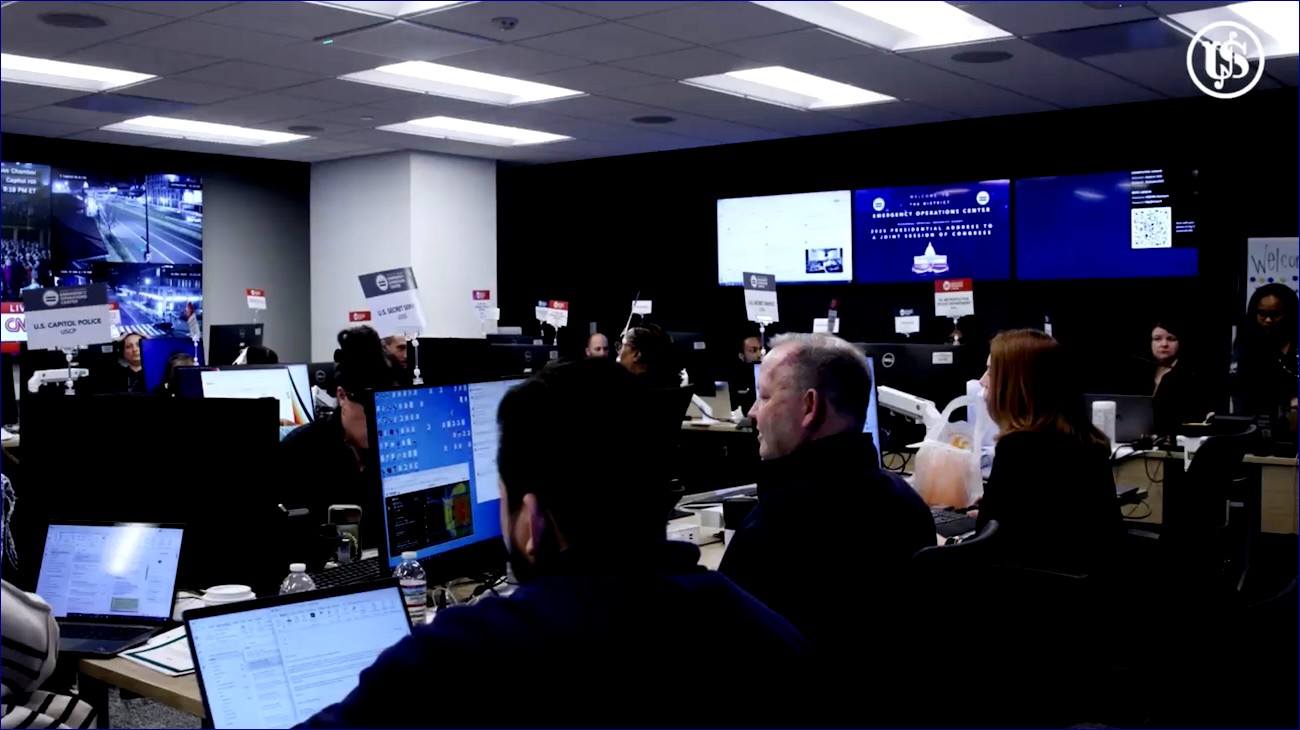
Over the weekend, Washington, D.C. buzzed with excitement as a series of major events and the America 250 celebrations attracted large crowds. Behind the scenes, effective communication and smart decision-making from the city’s technology office and the Homeland Security and Emergency Management Agency (HSEMA) ensured that everything went off without a hitch.
In addition to the massive festivities for America’s 250th Independence Day, the city hosted a plethora of activities all summer long—ranging from free concerts and cultural parades to vibrant night markets. Clint Osborn, the director of HSEMA, noted that the number of overlapping events this July was truly unique.
“This summer is different because we have so many events packed into a short time from May to August,” Osborn explained. “Instead of building up and breaking down between events, we’re keeping the whole downtown area active for a longer stretch.”
Osborn emphasized that while technology plays a crucial role, the city is treating these events as part of its ongoing emergency preparedness strategy. Stephen N. Miller, the district’s chief technology officer, echoed this sentiment, highlighting that technology is consistent across events, even if the scale differs.
“Each event isn’t drastically different from what we’ve done before,” Miller said. “We just get better with practice. We have to ensure systems are ready and that data is shared efficiently. So while it’s a significant summer, we’re well-prepared.”
### A Unified Effort
Miller explained that the city has established a network of systems designed to smoothly support large events. For emergency communications, the Office of the Chief Technology Officer (OCTO) operates AlertDC, a text messaging service to keep residents informed about emergencies.
In collaboration with AT&T, HSEMA and OCTO also deploy temporary cell boosters around high-traffic areas to ensure first responders and the public stay connected during events.
Osborn mentioned the importance of having backup plans in place. They follow a strategy known as PACE, which stands for primary, alternate, contingency, and emergency plans to reduce the risk of communication failures.
“This planning model helps all agencies work better together,” Osborn noted. “Every system we implement aims for continuity even in crises.”
### Leveraging Technology
The smooth coordination of various agencies relies on OCTO’s ongoing network and security operations, including the use of artificial intelligence (AI) for cybersecurity and managing city services. AI helps the city gather performance data to fine-tune operations during large gatherings.
The collaboration also extends to a data platform managed by OCTO, which houses thousands of datasets for internal use. While the city has over a thousand open data records available to the public, many more can be accessed by different agencies to guide decisions.
To enhance situational awareness, Osborn and Miller frequently use Esri’s ArcGIS mapping platform, layering information about events, emergency calls, and infrastructure for effective public communication.
“We’ve invested in this platform to provide better and faster services,” Miller explained. “Our goal is to ensure everyone knows how to use it effectively.”
### Keeping the Community Informed
All data collected is funneled into the city’s Joint Information Center (JIC), a key hub during emergencies. This center helps to synchronize communication across all levels of government during significant events.
Osborn emphasized the importance of clear messaging, particularly this summer with a new website dedicated to coordination around the Independence Day festivities. “We must have one unified message across all platforms,” he said.
When the JIC isn’t active, the city relies on its 24/7 Emergency Operations Center, which continuously monitors various data points, including 911 calls and network statuses, to ensure a constant flow of information.
“Our aim is to have a central location always focusing on the city’s operations,” Osborn stated. “We’re gathering data from all sources to make informed decisions.”
This center also supports a citywide notification system that provides real-time alerts about severe weather and public safety.
Osborn and Miller agree that while the technology aids in operations, the real strength lies in the relationships among city workers who have built solid routines over years. This groundwork enables quick and efficient collaboration during critical situations.
“We have to be accurate, not just fast,” Osborn remarked.
Miller added, “Knowing who to talk to and having established trust is what makes everything run smoothly when it matters most.”
