
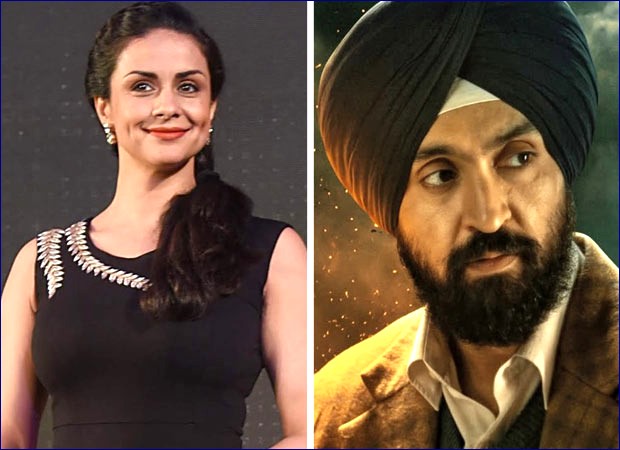
The controversy surrounding the film Satluj, starring Diljit Dosanjh, continues to escalate. The movie faced a sudden drop last weekend but was reinstated just two days later, sparking a flurry of reactions across social media. Amidst this chaos, actress Gul Panag has stepped forward to express her backing for the film, emphasizing the need for artistic freedom and the value of confronting challenging historical events.
In a series of posts on X (formerly Twitter), Gul, who grew up in Punjab during a tumultuous time, reflected on her experiences. She shared her thoughts on why stories that delve into difficult parts of history should be told instead of silenced. She recalled a time when fear loomed large in her community, as many were affected by violence, with innocent people often caught in the crossfire.
Gul stated, “I grew up in Punjab during the brutal years of militancy. I remember reading headlines about buses being stopped, and innocent passengers being pulled out and killed. Those memories are a reminder that we should not avoid telling stories about our history simply because they make us uncomfortable.”
In another tweet, she highlighted the importance of discussion around films rather than opting for censorship. According to her, “A film isn’t a history textbook. It tells a story from one perspective. Debate it, critique it, but banning it is always counterproductive.”
Her remarks come as Satluj remains at the center of a heated public discussion. The film is based on the life of Jaswant Singh Kalra, a human rights activist known for exposing alleged secret killings in Punjab during the 1990s. Initially titled Punjab ’95, this project has faced several delays and challenges in securing approval from the Central Board of Film Certification due to its sensitive themes.
Despite the excitement surrounding the film, it has yet to be officially released on any platform. Directed against the backdrop of one of Punjab’s most intricate historical periods, Satluj features a strong cast, including Diljit Dosanjh, Arjun Rampal, and Surinder Vicky. As the discussion around this film unfolds, the themes of artistic expression and the depiction of history on screen remain at the forefront.
