
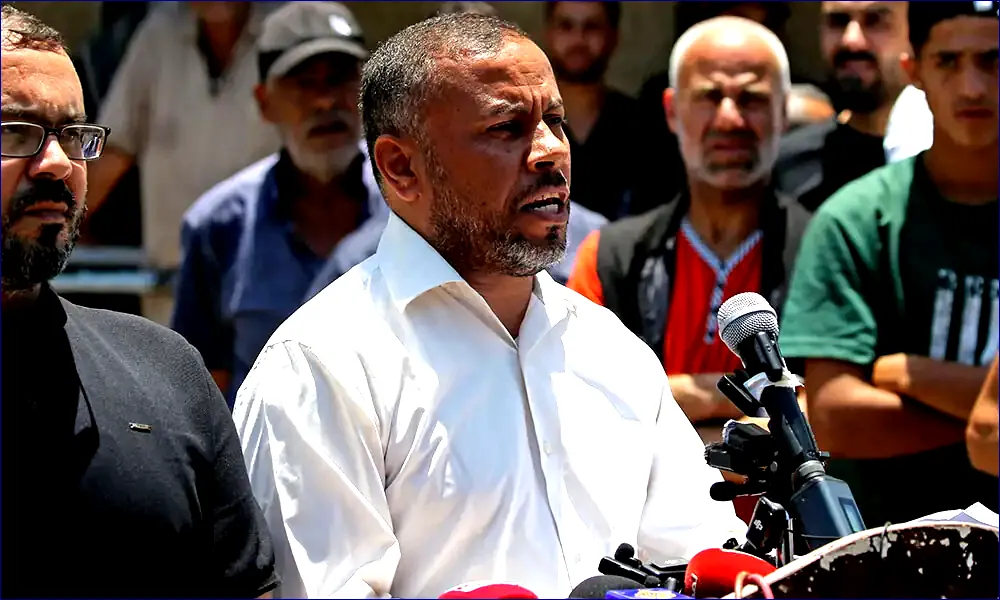
GAZA CITY: On Monday, Hamas, the Palestinian movement, declared the end of its governing body that has been in control of the Gaza Strip for nearly 20 years. This decision opens the door for a new technocratic committee to take charge of civilian governance.
This marks a major political change for Hamas, which has led Gaza since seizing control from its rival, Fatah, back in 2007 after winning elections in 2006. Following a ceasefire between Hamas and Israel last October, the group indicated it was willing to step back from daily governance, although the issue of disarmament remains a challenge.
Ismail al-Thawabta, who heads Hamas’ media office, confirmed that Mohammed al-Farra, the head of the emergency committee, has officially resigned, paving the way for a transition to the National Committee for the Administration of Gaza (NCAG). This committee was established by a peace initiative driven by former U.S. President Donald Trump.
Hamas spokesperson Hazem Qassem shared that this decision is a significant step towards reducing any justifications for ongoing Israeli occupation. He expressed hope for the NCAG’s prompt entry into Gaza and assured that Hamas is prepared to transfer governance to facilitate a successful transition.
In recent discussions in Cairo, Hamas informed other Palestinian factions about its decision, which was met with support. Factions described this move as a serious step towards allowing the NCAG to govern.
The dissolution of Hamas’s governing body sets the stage for the NCAG, led by technocrat Ali Shaath, to take over administrative duties. However, the NCAG has been based in Cairo for months, reportedly due to opposition from Israel regarding its access to the devastated Gaza territory.
Political expert Mkhaimar Abusada noted that Hamas’s move appears to be more of a “symbolic gesture.” He emphasized that the real challenge lies in the issue of disarmament, which remains contentious.
Hamas and other factions have held multiple rounds of negotiations in Cairo to address disagreements, especially regarding disarmament as part of the ceasefire agreement. A diplomatic source observed that this announcement indicates progress from Hamas and highlights what they perceive as Israel’s failure to fulfill its commitments.
The first phase of the ceasefire led to the release of the last Israeli hostages held by Hamas in exchange for Palestinian prisoners. However, movement toward the second phase, which involves disarmament and a gradual Israeli withdrawal from Gaza, has been stalled for months. In fact, Israeli forces have increased their presence in Gaza, controlling nearly 70% of the territory.
Hamas is insisting on the formation of a Palestinian administration before agreeing to disarm. Governance in Gaza post-conflict remains a key concern in the negotiations for the second phase of the truce. Israel, meanwhile, opposes allowing Hamas back into power and also rejects a direct takeover by the Palestinian Authority based in Ramallah.
Both sides have accused each other of violating the ceasefire. According to Gaza’s health ministry, which operates under Hamas, at least 1,072 Palestinians have died since the ceasefire began, while the Israeli military reports five soldier casualties and one contractor lost during the same period.
