
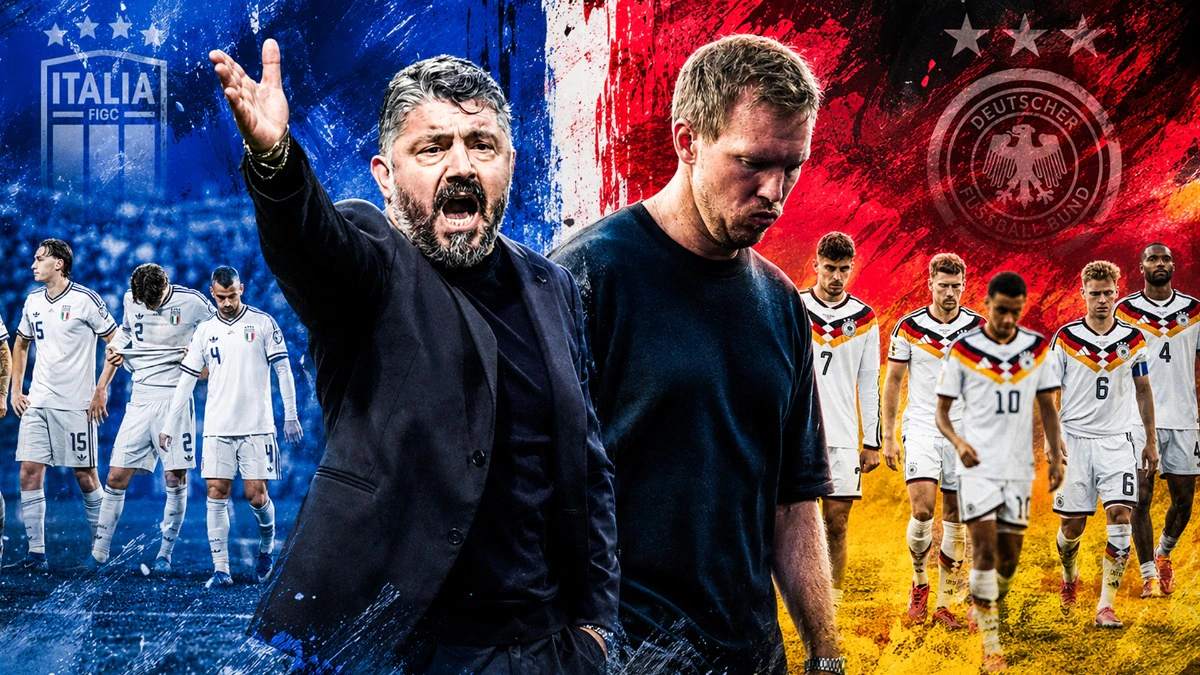
Football’s Fallen Giants: Germany and Italy
In the world of football, few moments have resonated as deeply as the infamous score of 7-1. This score represents a historic semifinal match in the 2014 World Cup, where Germany defeated Brazil on their home turf. It was a stunning upset that left Brazil, the host nation, reeling in humiliation. Four days later, Germany went on to claim the World Cup title, a highlight in their football history.
Fast forward to this summer’s World Cup, where the dynamics have changed drastically. In a shocking turn of events, Paraguay’s Jose Canale, making his debut, stepped up to take a penalty against Germany’s legendary goalkeeper, Manuel Neuer. Canale scored, leading Paraguay to a 4-2 penalty shootout victory. This moment marked not just a loss for Germany but a significant blow to their long-standing reputation.
As Germany grappled with this defeat, Italy faced its own challenges. The Italian national team is now facing a harsh reality—they missed their third consecutive World Cup, having lost to Bosnia and Herzegovina in a qualifying playoff. This marked a painful moment for a country rich in football history and pride.
Germany’s Dilemma
Germany’s football identity seems in jeopardy. While they have shown glimpses of potential, they have consistently struggled to maintain a winning formula. Under the guidance of coach Julian Nagelsmann, Germany appeared promising in initial matches but ultimately faltered during crucial moments. This defeat has sparked intense discussions about their strategies and team dynamics.
Many critics have pointed to Nagelsmann’s frequent changes in tactics as a key issue. The team has lacked the continuity necessary to thrive on the international stage. Former captain Philipp Lahm voiced concerns about this, indicating a need for a more stable approach. Commentator Ashley Westwood highlighted the importance of focusing on players’ strengths rather than constantly adapting strategies.
Italy’s Long-standing Decline
Italy’s struggles run deeper and have been brewing for over two decades. Once a dominant force in football, Italy’s Serie A league was once regarded as the best in the world. Despite winning the World Cup in 2006, the aftermath of significant scandals weakened the league. The fall from grace has been slow but steady, leading to a lack of competitiveness on the international front.
The club structure in Italy has further complicated matters, with financial constraints impacting youth development. Renowned footballer Roberto Baggio attempted to initiate change years ago but faced resistance. The recent exit from the World Cup is a symptom of a much larger issue.
Different Paths Ahead
While both nations face challenges, their situations warrant different considerations. Italy’s problems stem from a systemic decline, with age-old stadiums and insufficient focus on youth talent. Germany’s obstacles, meanwhile, seem more tactical and philosophical, reflecting a need to rediscover their winning identity on the pitch.
Interestingly, both countries now find themselves in the same tough spot: evolving competition. Football across the globe is advancing, and teams are investing heavily in youth development and training. As a result, both Italy and Germany must adapt or be left behind.
The Future for Germany and Italy
Germany’s recent defeats have already led to significant changes, with Nagelsmann stepping down and discussions around bringing in Jurgen Klopp. Fans hope he can revive the national team. On the other hand, Italy is at a critical juncture, with new development plans emerging. But can they turn this around after years of neglect?
As both nations work towards rebuilding their footballing legacies, the magnitude of their challenges reveals that patience, strategy, and commitment are crucial. While they have the history and talent to return to glory, the path back will require diligent effort over the coming years. Only time will tell if they can reclaim their once-untouchable status in the footballing world.
