
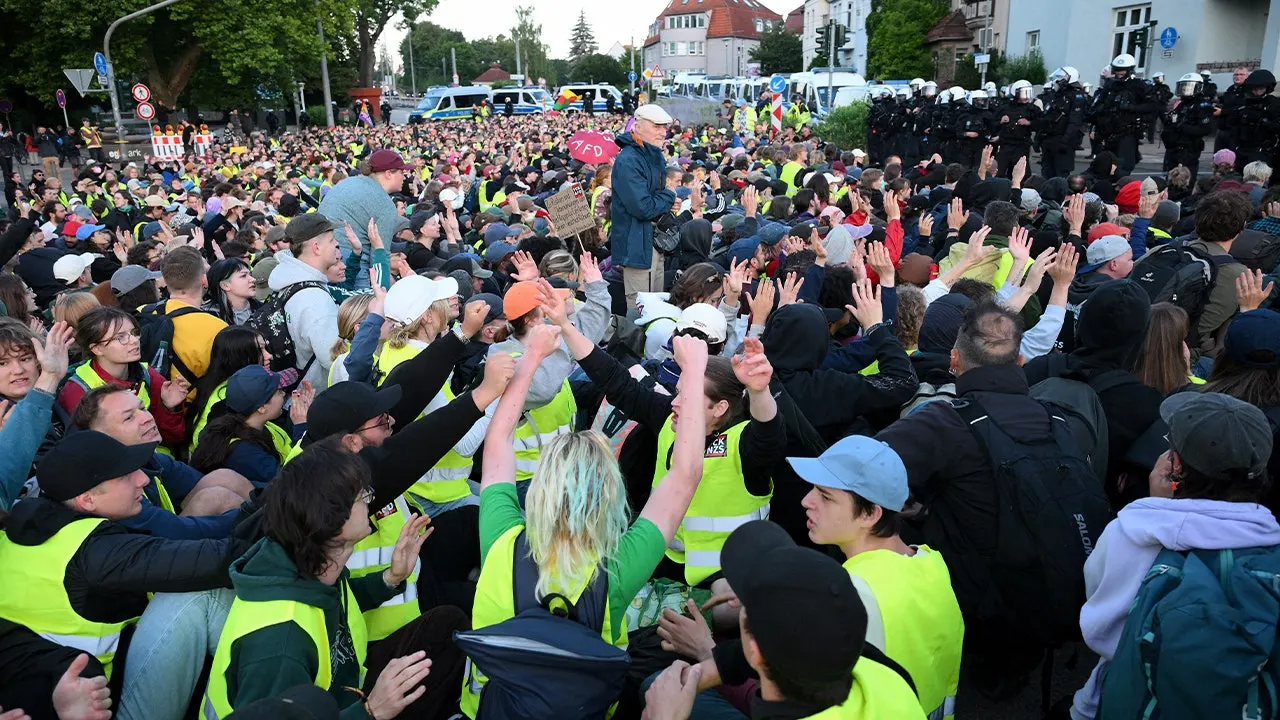
Mass Protests During Alternative for Germany Party Convention in Erfurt
On Saturday, thousands of left-wing protesters filled the streets of Erfurt, Germany, clashing with police as they voiced their opposition to the conservative Alternative for Germany (AfD) party.
Reports indicate that more than 30,000 people participated in the demonstrations, holding up signs that read “Stop AfD Nazis” and “For Diversity, Against Nazis.” As tensions rose, police were seen using batons and anti-riot measures to manage the crowd. However, authorities later stated that the protests were largely peaceful, with around 100 minor legal violations mainly attributed to graffiti.
The protests coincided with the AfD’s party conference where Alice Weidel and Tino Chrupalla were re-elected as co-leaders. The demonstrations delayed important voting processes, prompting Chrupalla to criticize how protesters expressed their discontent. He expressed that these actions were anti-democratic and undermined the party’s right to assemble.
A spokesperson for the local anti-fascist group widersetzen confirmed that their aim was to disrupt the AfD convention. The spokesperson described the party’s policies as fascist, accusing them of promoting mass deportations and failing to address real societal issues. “We strive for a society where everyone has equal opportunities and security,” she emphasized.
Despite facing accusations of extremism, the AfD insists that they are being unfairly targeted by other political parties. The party has gained significant support in recent years, capturing over 20% of the vote in the 2025 federal elections and is currently among the most popular parties in Germany.
Chrupalla expressed confidence, saying, “We will win. Perhaps we will even govern alone soon,” indicating hope for greater political influence. Supporters of the party openly align with conservative ideals similar to those of former President Donald Trump, highlighted by a attendee wearing a “Make Germany Great Again” cap at the conference.
The event showcased deep divisions in German politics and reflects ongoing tensions over immigration and nationalism in the country.
