
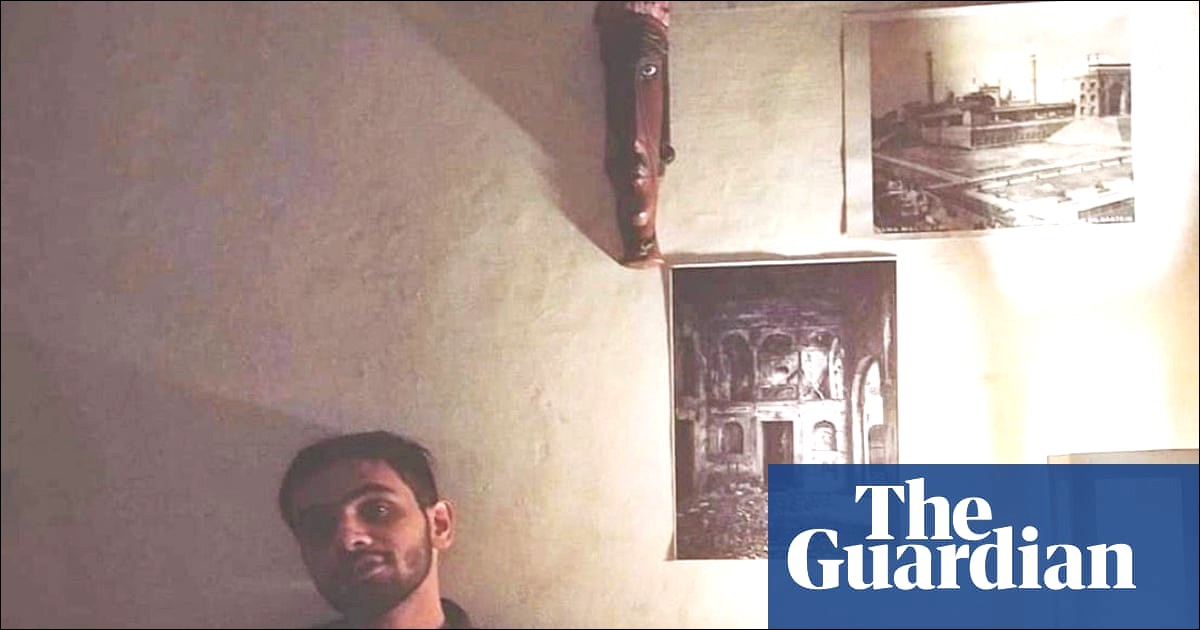
A Glimpse Inside Tihar: Umar Khalid’s Story
As the sun sets behind the walls of Tihar prison, one can’t help but feel the weight of confinement weigh heavier on the minds of its inmates. Among them is Umar Khalid, known as prisoner number 626714, who has been grappling with deep feelings of dread since his incarceration in 2020.
Recently, Khalid found resonance in the words of a political prisoner, who lived over 150 years ago. “Even Dostoevsky speaks of this feeling at sunset in his prison memoir,” he shared. “Maybe it’s because you realize another day in your life is gone, spent in captivity.”
Khalid, a well-known activist, became a prominent figure in India’s recent political landscape, particularly for his role in protests against the government led by Narendra Modi. By September 2020, he faced serious accusations, including being a “key conspirator” in violent religious riots in Delhi. This has made his name a household mention in India, whether on news channels or at rallies.
Though there are many who criticize him, particularly political opponents and media, his supporters see him as a symbol of dissent against increasing governmental repression. For rights groups, Khalid represents those who are suffering under what they perceive as a political crackdown.
Khalid, a Muslim and left-leaning advocate for human rights, has directly criticized BJP’s direction toward a more Hindu-centric society. He believes this change is not merely political but is impacting the everyday freedom and safety of Muslims and other minority communities. The BJP, on the other hand, denies these allegations of discrimination.
Notably, Khalid has spent nearly six years behind bars without a trial. This situation has drawn widespread condemnation from international human rights organizations. In a show of support, New York’s mayor even wrote him a note, which sparked anger from the Indian government. The government claims the judiciary is impartial and that Khalid’s legal troubles are not politically motivated.
Because of prison protocols, it was not possible to meet Khalid directly for an interview. Instead, his thoughts were shared through family and friends. He expressed the challenge of maintaining his identity amidst the extreme polarizing views surrounding him. “When you become just a name, it’s hard to keep your humanity intact,” he noted, highlighting how this situation has affected his mental well-being over the years.
Despite these struggles, he remains firm in his stance against the current regime, criticizing the normalization of hate speech in society. “India is nearing a point of becoming a post-truth society,” Khalid remarked.
Reflecting on his youth in Jamia Nagar, a Muslim-majority neighborhood in Delhi, he recalls seeing the rise of Hindu nationalism and its effects on society. “Growing up in a community facing oppression was hard,” he said. “It impacts you deeply.”
While pursuing his PhD at Jawaharlal Nehru University, he became deeply involved in student politics. However, he faced challenges as right-wing activists targeted the university for its progressive reputation. His outspoken nature led to his arrest in 2016, branded as a threat to the nation by a sensationalist media.
The situation escalated dramatically in 2019 when the government introduced a citizenship law deemed discriminatory towards Muslims. Khalid emerged as a leading voice against this law, urging peaceful resistance to violence and spreading love amid hate.
However, protest actions were met with brutal police responses, culminating in deadly riots in Delhi. Khalid was unjustly accused of orchestrating the violence, even though he was miles away at the time. He firmly denies these allegations, describing them as absurd and dystopian.
Khalid’s path to justice has been rocky, with repeated delays and denials of bail. Each rejection has chipped away at his hope. “Without hope, survival in prison is incredibly tough,” he said.
Currently, there is no clear end in sight for his legal ordeal as the investigation continues. Khalid feels isolated and disappointed by the silence of opposition groups and activists who once stood for change, believing it has emboldened the regime to act against dissenters.
Despite the difficulties, he finds solace in the quiet moments of night, scrawling his thoughts and reflecting on words of great leaders. Next to a portrait of revolutionary Bhagat Singh, he wrote, “I am that mad soul who is free even in captivity.”
