
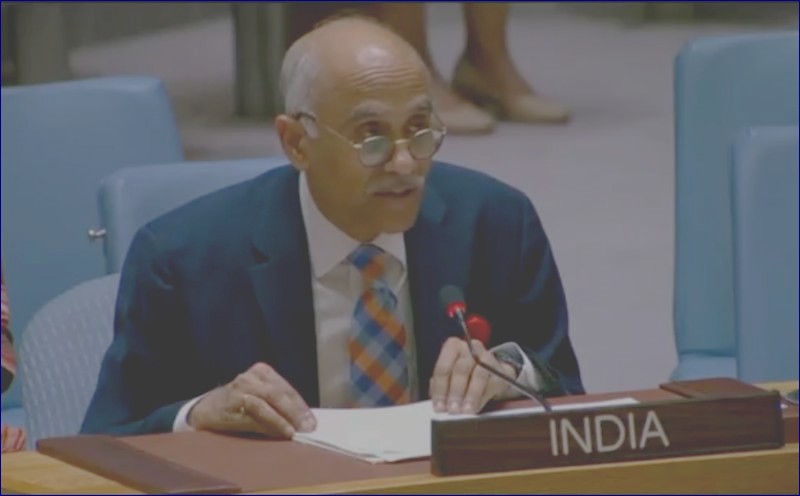
India Calls for Strong Action Against Terrorism Financing
India has expressed concerns over certain countries questioning the credibility of the Financial Action Task Force (FATF), suggesting that these criticisms stem from a “fear of scrutiny.” In a recent address at a UN event focused on counter-terrorism financing, Parvathaneni Harish, India’s Permanent Representative to the United Nations, emphasized the importance of the FATF in global efforts against terrorism and money laundering.
During the event titled “Joining Forces to Counter Terrorism Financing in the Context of Evolving Threats and Emerging Technologies,” Harish stressed that the FATF’s work is crucial and based on internationally accepted standards. He urged countries facing scrutiny to proactively address their shortcomings and enhance their efforts against terror-financing networks.
Harish noted, “The road to addressing FATF concerns is through genuine compliance, not politicized actions in international forums.” He underscored that nations allowing their territory to be exploited for terrorism must prioritize international peace and security.
His comments subtly pointed to Pakistan, which had been under the FATF grey list since 2018 but was removed in 2022. Harish declared that he was speaking from India’s long experience of dealing with cross-border terrorism and highlighted the complexities introduced by new technologies in financing terror.
As a member of the FATF since 2010, India is committed to combating terrorism financing. Earlier this month, Vivek Aggarwal was appointed Vice-President of the FATF for the next term. Harish noted that modern technology, including crowdfunding and social media, has become a significant element in funding terrorist activities.
He explained that terrorists adapt to available technology, which often allows them to operate more efficiently. “Our response needs to be based on risk, aligned with FATF standards,” he added, emphasizing that the risks posed by terrorist financing have often been associated with state actors.
Harish also stated that regulations should encourage financial inclusion and humanitarian efforts, rather than punishing legitimate activities. He mentioned India’s firm commitment to integrating virtual asset service providers into its anti-money laundering strategy and enhancing verification processes.
Moreover, India hosted a significant meeting in late 2022 focused on using new technologies in counter-terrorism, resulting in the “Delhi Declaration” that lays out guiding principles for tackling these challenges.
In parallel, UN Secretary-General Antonio Guterres highlighted the urgent global instability leading to conditions ripe for terrorism during his comments at the Fourth High-Level Conference on Counter-Terrorism. He noted that the rise of extremist narratives and new technologies poses severe threats, making it easier for terrorists to organize and finance their operations.
Guterres emphasized the necessity of international cooperation in understanding and addressing the underlying issues that contribute to the rise of terrorism, stating that it is a global challenge that no single nation can solve alone.
