
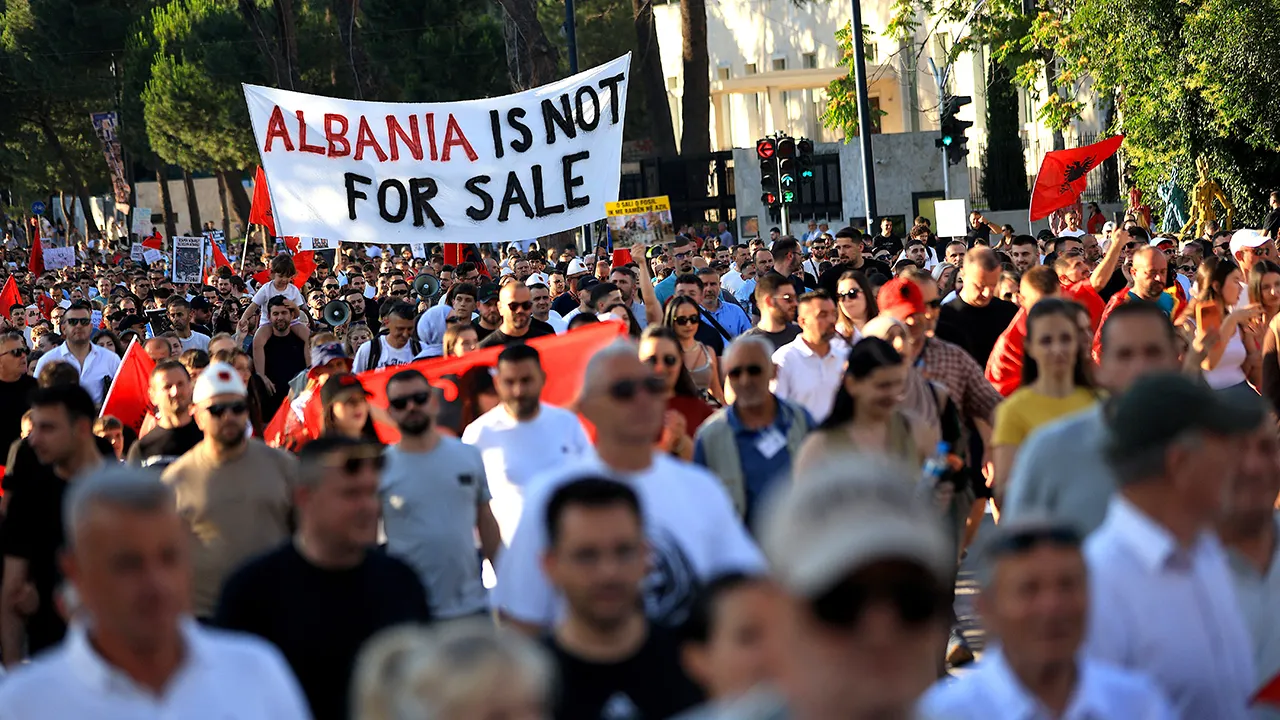
Albanian Protests Demand Government Change Amid Corruption Claims
On June 20, 2026, thousands of people took to the streets in Tirana, Albania, calling for changes in the government over ongoing corruption issues. Initially sparked by plans for a luxury resort, the protests have since expanded to address broader dissatisfaction with the leadership.
Prime Minister Edi Rama and opposition leader Sali Berisha are facing mounting pressure from the public, who have criticized their long-standing ties to corruption that date back to the fall of communism in 1991.
The protests originally focused on a controversial multi-billion-dollar resort project led by businessman Jared Kushner. This development aims to build two large resort properties along Albania’s coast, adding thousands of hotel rooms. One planned site is on Sazan Island, which once housed a Soviet military base, while the other is located in Zvërnec, home to the Vjosa-Narta protected landscape, known for its wildlife.
The protests have been a significant challenge for Prime Minister Rama. Former ambassador to the U.S. and the UN, Agim Nesho, stated that the protests are not against foreign investors like Kushner, noting that they could bring much-needed jobs and economic opportunities to Albania. Nesho argued that the real issue is the government’s failure to address years of corruption and alleged election fraud.
Eric Czuleger, editor of a local news outlet, observed that this marks a new level of public pressure on Rama’s administration. Initially, the government downplayed the protests, but as they grew in size, it shifted its narrative, suggesting foreign interference.
Despite the public outcry, Rama has not altered his support for the resort development. The government has defended its actions, claiming the land in question is privately owned and asserting that the projects will undergo thorough environmental assessments.
As the protests continue, the European Parliament has called on the Albanian government to halt construction on protected lands, signaling international concern over the situation.
Local voices, including actor Florjan Binaj, emphasize the unprecedented scale of the protests, asserting that they reflect a deep-seated desire for change. Many fear that if Rama’s leadership doesn’t change, corruption may persist, and there are worries about the potential for worse leadership should the government fall.
Nesho concluded that the protests highlight the struggle against a government that has failed to be accountable, fueling the call for early elections overseen by international monitors. As tensions rise, it remains to be seen how the government will respond to the demands of its citizens.
