
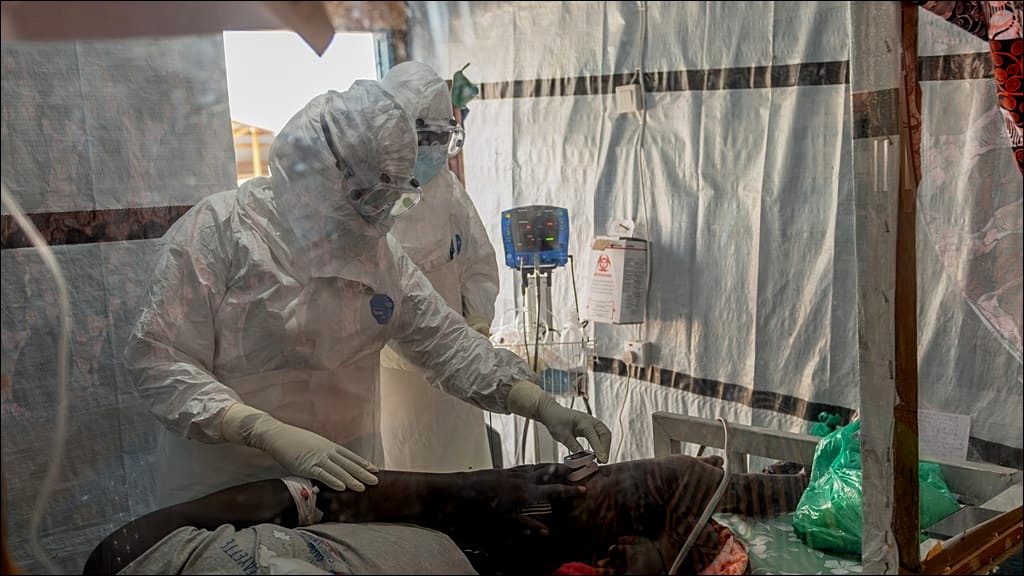
Doctor Tests Positive for Ebola After Returning to France from Congo
A doctor who recently returned to France from a humanitarian mission in the Democratic Republic of Congo (DRC) has tested positive for Ebola, according to an announcement from the Ministry of Health. This marks the first confirmed case of Ebola in Europe linked to the ongoing outbreak in Central Africa.
Upon arrival in France, the health authorities acted swiftly, isolating the patient and transferring him to a specialized hospital to ensure safety and prevent any risk of spreading the virus.
To further curb the potential for local transmission, officials have begun an investigation to identify anyone who may have had contact with the doctor. Those identified will be reached out to immediately, instructed to self-isolate for 21 days, and monitored closely during that time.
The health ministry has assured the public that the risk of Ebola spreading within the community is “very low.” The European Centre for Disease Prevention and Control (ECDC) has echoed this sentiment, stating that the likelihood of infection remains low for European residents and travelers visiting regions with active transmission. It’s important to note that Ebola is not airborne; it spreads through direct contact with the bodily fluids of infected individuals.
Current Situation in the DRC
The outbreak in the DRC has been severe, with over 1,000 confirmed cases and at least 260 deaths reported since the outbreak’s official start in mid-May. This has become the largest outbreak recorded in its first month.
The disease is caused by the Bundibugyo strain of the Ebola virus, which currently lacks an approved vaccine or treatment. Medical teams are facing challenges in the Ituri province, the outbreak’s epicenter, particularly due to movements of people linked to ongoing conflicts that complicate medical efforts.
As of now, just over half of the individuals at high risk have been identified and are under monitoring. The origin of the outbreak is still a mystery, causing additional concern, especially in overcrowded displacement camps where the risk of infection is heightened.
The World Health Organization (WHO) has expressed fears that the crisis could extend to neighboring regions, as several cases have already been identified in Uganda.
