
NEW DELHI: India’s water minister has announced plans to ensure that “not a single drop of water” will reach neighboring Pakistan. This statement follows the suspension of a significant treaty last year.
Pakistan has previously warned that any attempt to alter the flow of shared rivers would be seen as an “act of war.” They maintain that the 1960 Indus Water Treaty (IWT) is still active since there is no way to withdraw from it unilaterally.
Minister of Water C.R. Patil shared this message with ANI late Tuesday, emphasizing India’s commitment to these plans after receiving instructions from Prime Minister Narendra Modi. The treaty outlines how water from six major rivers, which begin in India but flow into Pakistan, should be used. These rivers are vital for millions living in the region.
The Indus River runs through a highly sensitive area between India and Pakistan in the disputed territory of Kashmir, which both nations claim entirely. In May 2025, India announced it was stepping back from the IWT, accusing Pakistan of supporting a deadly attack on tourists in Indian-administered Kashmir, a claim that Pakistan denies.
The two nuclear-armed neighbors engaged in a four-day conflict previously, with significant exchanges of drone and missile fire that resulted in the loss of nearly 70 lives on both sides. Since then, water-related issues have continued to be a divisive topic.
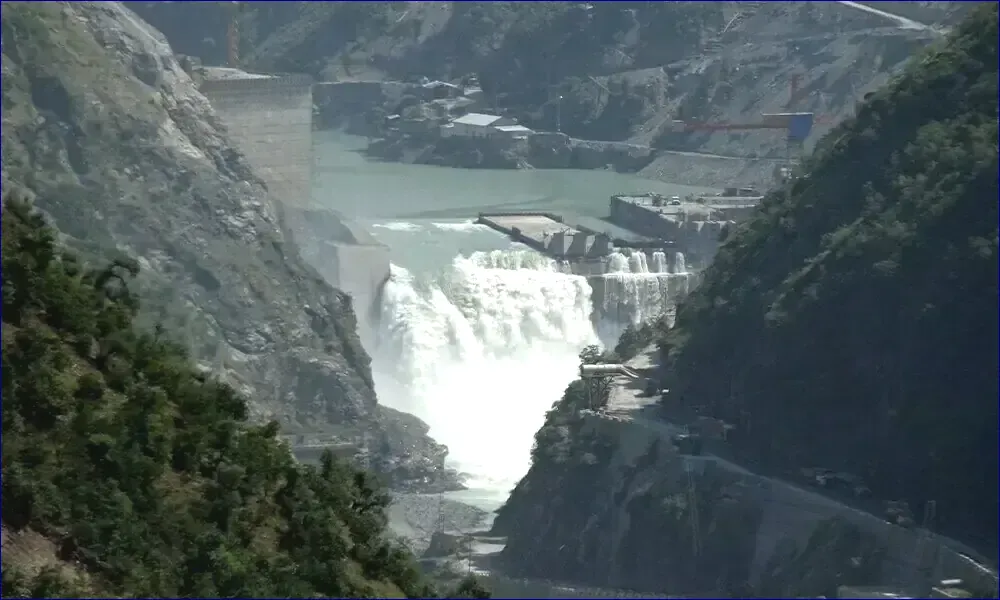
Recently, Pakistan accused India of trying to “weaponize” water following two initiatives from New Delhi concerning the Chenab River. In May, India’s National Hydroelectric Power Corporation published a tender for a project to build a tunnel that would redirect water from the Chenab River to the Beas Basin. Earlier in January, India’s power ministry announced plans for “sediment removal” at the Salal Power Station on the Chenab, citing the end of the Indus Waters Treaty.
Experts suggest that India’s current dams cannot completely block or redirect water but can control the timing of its release. Reducing water flow could have serious consequences for agriculture and the economy in Pakistan, though any such projects would take several years to show effects. Officials in Indian-administered Kashmir mentioned that any work would likely begin no earlier than mid-2027, with at least five years required for completion.
