Close Menu
  • Home
  • World News
  • India News
  • Business News
  • Health
  • Sports
  • Indian Diaspora In US
  • Technology
  • Bollywood
  • Education
Facebook X (Twitter) Instagram
Monday, September 7, 2026
Breaking News
  • Rescue Efforts Conclude Following Delhi Building Collapse That Claimed Seven Lives
  • Grady Health Announces Upcoming Pay Adjustments Due to Cuts in Federal Healthcare Support
  • Longevity Expert Reveals 4 Simple Habits for a Longer, Healthier Life
  • Jose Mourinho Dismisses Extra UEFA Champions League Pressure Ahead of Real Madrid Clash with Inter Milan
  • Disparities in Regulations for Foreign vs. Indian MBBS Graduates in India
  • AfD Sets Sights on Leading First Far-Right Government in Germany Following Saxony-Anhalt Victory
  • Dubai Introduces Record-Breaking Silver Bar Tokenization, Allowing Investors to Purchase Fractional Shares via DMCC-VARA Initiative
  • Can Tech Giants Tame the Water Hunger of AI Data Centers?
Facebook X (Twitter) Instagram
India Bulletin
Advertisement
  • Home
  • World News
  • India News
  • Business News
  • Health
  • Sports
  • Indian Diaspora In US
  • Technology
  • Bollywood
  • Education
India Bulletin
Home»India News»Operation Sindoor Marks India’s Inaugural Standoff Weapon Warfare
India News

Operation Sindoor Marks India’s Inaugural Standoff Weapon Warfare

May 7, 20262 Mins Read
Facebook Twitter Email
Share
Facebook Twitter Email


Operation Sindoor: A New Era in India’s Military Strategy

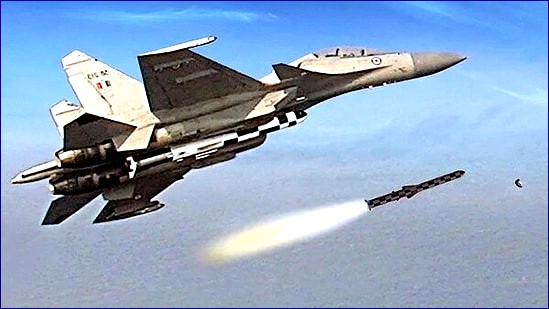
India has successfully conducted a four-day military operation known as Operation Sindoor, marking a significant shift in its approach to combat. This operation involved the use of advanced long-range weapons, including SCALP, Rampage, Crystal Maze, and BrahMos missiles, as well as advanced artillery like the 155 mm Ex-Calibur howitzer shells. Unlike previous operations, such as the 2018 Surgical Strikes, this initiative did not require crossing the Line of Control (LoC).

During Operation Sindoor, the Indian armed forces focused solely on long-range missile strikes targeting nine terror camps across Pakistan and Occupied Kashmir. Key targets included the Lashkar-e-Taiba headquarters in Muridke, Lahore, and the Jaish-e-Mohammed facilities in Bahawalpur. The operation saw precision strikes with loitering ammunition on camps in Pakistan-occupied Kashmir, and specific missiles were deployed to neutralize key facilities.

In addition, India utilized radar-killing kamikaze drones, like Harpy and Harop, to dismantle Chinese air defense systems located in cities like Lahore and Karachi. This display of military might forced Pakistan to relocate its operational aircraft to bases in Quetta and Peshawar for safety.

The operation also showcased the effectiveness of India’s S-400 and Meteor missiles, which successfully targeted several Pakistani fighter jets and reconnaissance aircraft. Moreover, the air-launched BrahMos missile inflicted damage on various fighter and transport aircraft stationed at 11 air bases.

On the ground, the Indian Army employed Ex-Calibur munitions to target Pakistani bunkers across a 50-kilometer stretch along the LoC, leading to the abandonment of certain positions by the Pakistani army due to the intense firepower.

While the Indian Air Force led the charge with BrahMos missiles, the Army and Navy were ready with their own launch systems. A noteworthy aspect of Operation Sindoor was the Indian air defense’s ability to intercept Fatah-1 rockets and Turkish drones launched by Pakistan, all while minimizing collateral damage.

Following Operation Sindoor, India has made substantial investments in advanced stand-off weaponry and loitering ammunition, aligning with the future of warfare. The Indian Air Force has been advised to take precautions to protect its aircraft from Pakistani radar systems. With advancements such as the 160 km RVV-BD air-to-air missiles and 300 km range rockets like PULS, India is clearly moving toward a future where technology plays a crucial role in military strategy, moving away from traditional large troop deployments.

may 7 Operation Sindoor operation sindoor may 7 operation sindoor may 7 anniversary operation sindooranniversary
Share. Facebook Twitter Email
admin
  • Website

Related Posts

Rescue Efforts Conclude Following Delhi Building Collapse That Claimed Seven Lives

September 7, 2026

Disparities in Regulations for Foreign vs. Indian MBBS Graduates in India

September 7, 2026

Bank of America Calls for Double-Digit Surge in India’s Factory Growth

September 7, 2026
  • Facebook
  • Twitter
  • Instagram
Don't Miss

Rescue Efforts Conclude Following Delhi Building Collapse That Claimed Seven Lives

Grady Health Announces Upcoming Pay Adjustments Due to Cuts in Federal Healthcare Support

Longevity Expert Reveals 4 Simple Habits for a Longer, Healthier Life

Jose Mourinho Dismisses Extra UEFA Champions League Pressure Ahead of Real Madrid Clash with Inter Milan

Started in 2004, India Bulletin is the largest and
most read South Asian publication
in Chicago and surrounding Midwest.

  • Home
  • About Us
  • Contact
  • Advertise With Us
  • Privacy Policy
  • Terms of Use
  • Disclaimer
  • CCPA
News
  • Bollywood
  • Business News
  • Health
  • India News
  • Indian Diaspora In US
  • Sports
  • Technology
  • World News
Facebook X (Twitter) Instagram

Type above and press Enter to search. Press Esc to cancel.

Accessibility Adjustments

Powered by OneTap

How long do you want to hide the toolbar?
Hide Toolbar Duration
Select your accessibility profile
Vision Impaired Mode
Enhances website's visuals
Seizure Safe Profile
Clear flashes & reduces color
ADHD Friendly Mode
Focused browsing, distraction-free
Blindness Mode
Reduces distractions, improves focus
Epilepsy Safe Mode
Dims colors and stops blinking
Content Modules
Font Size

Default

Line Height

Default

Color Modules
Orientation Modules