
India Faces Cooking Gas Shortage: Biogas Emerges as a Solution
In many parts of India, the ongoing energy crisis related to the war in Iran has led to long lines for cooking gas cylinders. However, Gauri Devi, a 25-year-old from Nekpur village in Uttar Pradesh, has found a reliable alternative.
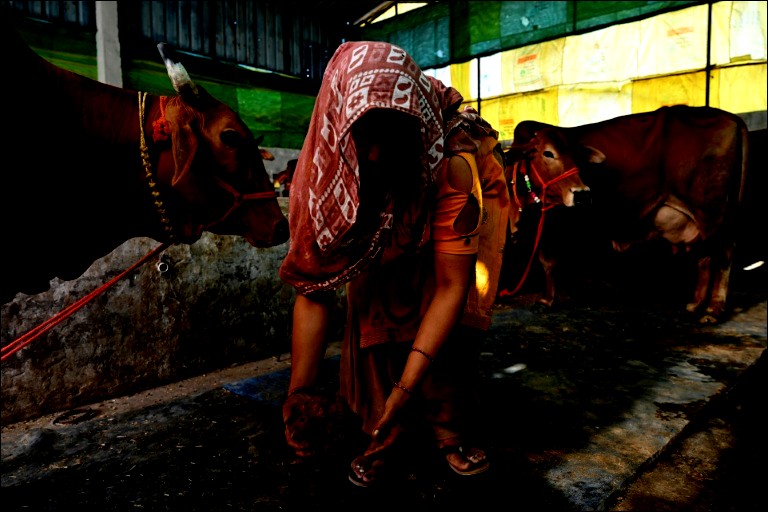
In her courtyard kitchen, she skillfully flips chapatis using biogas, made from cow dung. “It cooks everything,” she shares, noting that if the pressure runs low, a little patience is all it takes to get it working again.
India relies heavily on cooking gas, importing over half of the more than 30 million tonnes it consumes each year. While the government claims there are no shortages, supply delays and panic buying have caused considerable disruption, resulting in extensive queues for gas cylinders.
Since the 1980s, India has encouraged the use of biogas as an affordable energy source in rural areas. The government has subsidized over five million units that transform farm waste into methane for cooking and nitrogen-heavy slurry for fertilizers.
For Gauri, making biogas involves mixing buckets of dung with water and placing the mix in an underground tank that collects methane gas. This setup allows her to use piped biogas regularly, reserving LPG cylinders for emergencies or large gatherings. “It works for everything — vegetables, tea, lentils,” she explains.
The leftover slurry is not wasted; it’s spread on fields as fertilizer, which is more beneficial for plants than raw dung. Farmer Pramod Singh, who uses a larger biogas unit, appreciates the quality of the manure, especially in light of recent global fertilizer shortages.
Local farmer leader Pritam Singh adds, “The real treasure is not just the gas — the slurry is ‘black gold.'” With over 45% of India’s population engaged in agriculture, the push for biogas aligns with the country’s goal of carbon neutrality by 2070.
The government has mandated that biogas must constitute at least 1% of liquid gas used for cooking and vehicles, rising to 5% by 2028. Numerous large biogas plants are being developed, alongside smaller units costing around 25,000-30,000 rupees, often subsidized for rural households.
In a country that reveres cows, using dung as a resource is widely accepted. Pritam has installed multiple biogas plants in his village, and interest has surged due to recent cooking gas shortages. “People who weren’t interested before now ask how they can get a biogas unit,” he notes.
Despite its benefits, biogas still represents only a small portion of cooking fuel, as LPG is viewed as more convenient due to the established supply chains.
“Biogas plants are mini factories,” points out A.R. Shukla, president of the Indian Biogas Association. However, he emphasizes that successful operation requires organized maintenance and community-based support.
Currently, some households face obstacles such as cost, space, and difficulty in managing the upkeep of biogas units. For instance, laborer Ramesh Kumar Singh notes that he and others work all day without land for a biogas setup. Meanwhile, others like 77-year-old Mahendri wait in the scorching heat for a gas cylinder they have been trying to secure for days.
As India navigates this energy challenge, biogas stands out as a promising solution, offering both cooking fuel and high-quality fertilizer, while reducing dependency on imported gas.
