
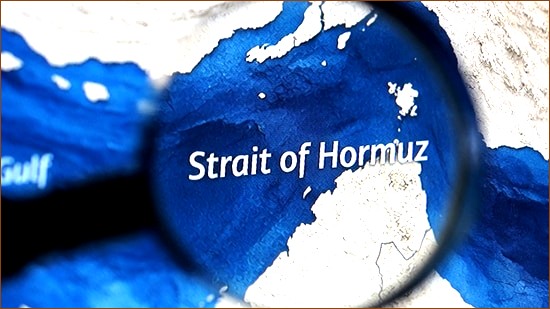
Iran Clarifies Passage for Chinese Ships Amid Strait of Hormuz Tensions
Iran has made it clear that no general approval has been given for Chinese ships to pass through the Strait of Hormuz, a crucial route for oil and gas. This announcement comes amid recent developments in the region, particularly after a Chinese bulk carrier was forced to change its route.
The Iranian consulate in Mumbai shared the news on social media, emphasizing that the bulk carrier, named SUN PROFIT, was not allowed to proceed through the strait. According to their post, the vessel, operated by Chinese nationals, had to abruptly turn back before it could enter the strait. The consulate aimed to clarify any misunderstandings, stating that Iran does not offer blanket permission for Chinese ships.
Accompanying the statement, they provided a screenshot showing the vessel’s navigation path, confirming its change in course. The Strait of Hormuz is significant, as it facilitates the passage of around 20% of the world’s oil and natural gas. The closure of this vital waterway is linked to ongoing conflicts involving Iran and the US, and tensions in the area remain high.
Currently, the Hong Kong-flagged SUN PROFIT is anchored in the Persian Gulf after traveling from Dammam, Saudi Arabia, back to China.
Conflict Involving Indian Ships
Just a day after Iran’s announcement about the Chinese vessels, two Indian-flagged ships reported being shot at near the Strait of Hormuz. The Indian shipping ministry confirmed the vessels involved were the Sanmar Herald, a crude oil tanker, and the Jag Arnav, a bulk carrier. This incident is notable as it’s the first recorded instance of Iranian forces firing upon Indian-registered ships in this region, despite other Indian vessels having passed through without issues recently.
Both vessels changed their course following the gunfire from Iran’s Islamic Revolutionary Guard Corps (IRGC). Fortunately, no injuries were reported. Marine Traffic indicates that the Sanmar Herald was heading to India with crude oil sourced from Iraq, while Jag Arnav was on its way from Saudi Arabia back to India.
In light of these events, India’s External Affairs Ministry quickly addressed the situation. The Iranian ambassador, Mohammed Fathali, was summoned to meet with foreign secretary Vikram Misri. During the meeting, India expressed serious concerns regarding the shooting incident and emphasized the importance of maritime safety for Indian ships.
Misri stressed the need for Iran to prioritize the safe passage of vessels headed to India. The Iranian ambassador assured he would relay India’s concerns to authorities in Tehran.
