
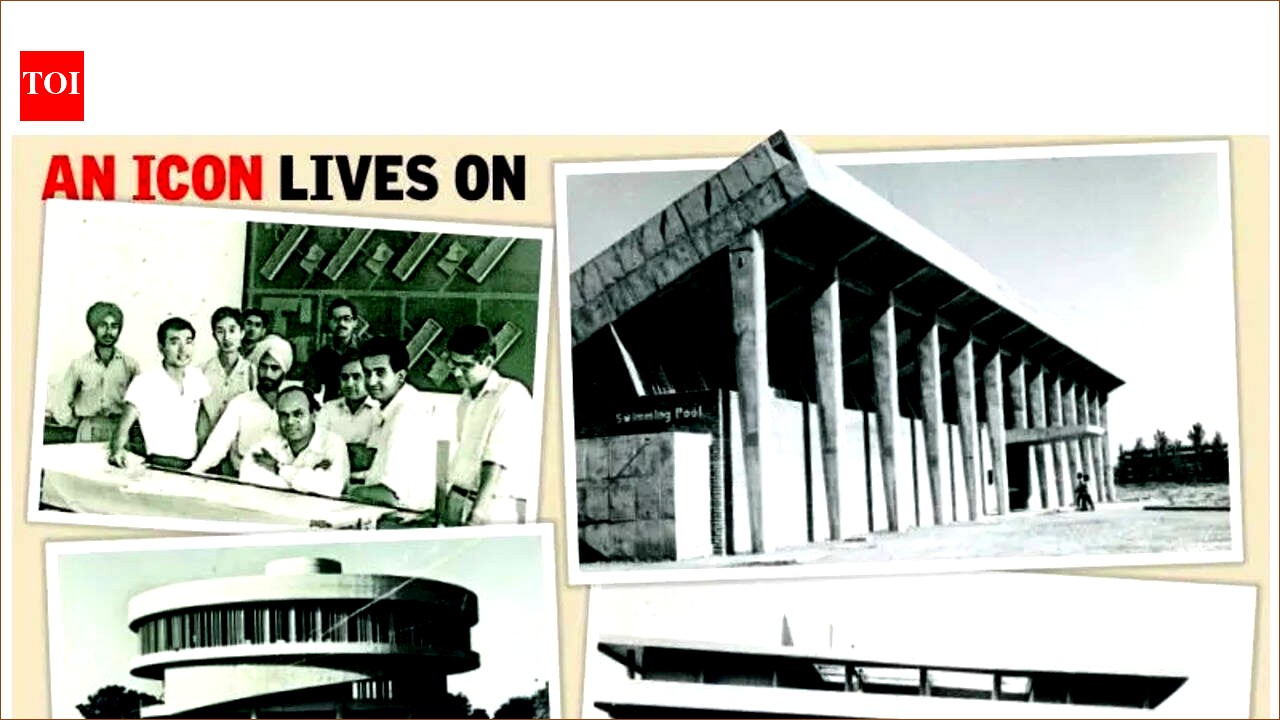
Celebrating B P Mathur: A Pillar of Chandigarh’s Architecture
Chandigarh’s Panjab University, known for its striking architecture, owes a lot to the talent of B P Mathur. He worked alongside Pierre Jeanneret and played a significant role in designing important structures like the Gandhi Bhawan and the university library. Mathur also created several key buildings, including the Students Centre, Museum of Fine Arts, and various hostels.
Mathur graduated from the Delhi Polytechnic in 1951 and later joined the Chandigarh Capital Project as an assistant to Jeanneret. By 1958, he took on the role of senior architect for the university’s Construction Cell. Sadly, his life was cut short when he passed away in 1976 at the age of 50. Despite this, his contributions continue to be celebrated.
His journey into concrete construction began in 1951 with a deep study of Brazilian architecture that showcased the unique qualities of concrete. While at the university, he collaborated with talented engineer Agya Ram, leading to innovative designs that defined Chandigarh’s skyline.
The Students Centre, featuring a sweeping ramp, fits perfectly within its surroundings, providing a lively space for students. The plaza’s open design encourages gatherings and activities. Meanwhile, the Museum of Fine Arts is designed in red sandstone, gracefully complementing the iconic Gandhi Bhawan.
One of Mathur’s major achievements was the Law Auditorium, designed to accommodate 800 people without any columns obstructing views. This was made possible by constructing a unique RCC dome. Additionally, the open-air theatre features softly curved stone walls, creating an inviting atmosphere.
Mathur tackled challenges like the swimming pool, which included an 18-foot diving area and stadium seating. His designs for hostels prioritized comfort and community interaction, each with its own unique style.
In the distance education building, he cleverly designed sun-blocking vertical louvers to prevent heat, avoiding common issues with other shading methods. Although much of the administrative building was designed by Jeanneret, Mathur contributed essential details, like the elegantly curved porch.
His son, Tarun Mathur, recalls how his father meticulously studied geometry to create the porch’s curve, even crafting a model with jute and plaster.
B P Mathur’s work is noted for its focus on detail, clarity, and originality. His architecture is now recognized globally, celebrated for blending grand designs with a human touch. He didn’t just build structures; he helped shape the identity of modern India, showing that contemporary architecture can be ambitious yet culturally relevant.
Currently, an exhibition titled “Chandigarh’s Indian Modernists” is showcasing Mathur’s incredible works at the Government Museum and Art Gallery, reminding us of his lasting influence on Indian architecture.
