
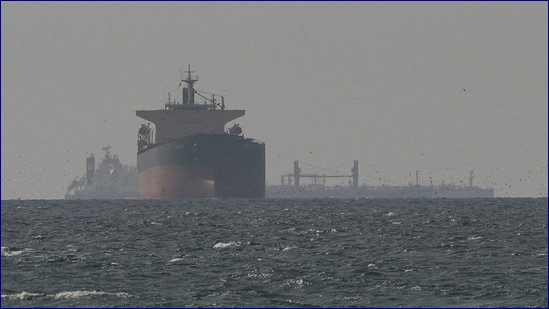
Tensions Rise Over Strait of Hormuz: Impact on India
After weeks of escalating tensions regarding the Strait of Hormuz, the U.S. administration under President Donald Trump has taken a surprising step by enforcing a blockade on this vital waterway. This action comes after failed discussions with Iran, leaving many puzzled by the sudden shift.
Trump had previously declared that he was unconcerned about Iran’s readiness for further negotiations. As a result, he authorized the U.S. Navy to halt all ships attempting to navigate through the Strait of Hormuz, a key route for oil shipments.
The Iranian blockade has already led to a global energy crisis, pushing oil prices skyward. While U.S. Central Command has clarified that only ships traveling to and from Iranian ports will be affected, this blockade poses significant challenges for countries dependent on oil imports, especially India.
How Will Trump’s Blockade Affect India?
India is the world’s third-largest oil importer, relying on the Gulf region for over 85% of its crude oil. Much of this oil passes through the Strait of Hormuz before arriving in New Delhi. The blockade has created substantial disruptions in India’s oil supply.
Thanks to historical ties with Iran, many Indian ships have been allowed to navigate through the Strait despite the blockade. However, India has recently turned back to purchasing Russian oil to mitigate the disruption, having received the necessary permissions from the U.S.
Although the blockade aims to weaken Iran’s economy, Iran continues to export oil, with India being among the countries receiving shipments. China remains a significant buyer of Iranian oil, raising questions about potential U.S. responses if the situation escalates with China.
Reports indicate that Iran has been charging fees for ships crossing the Strait, a move that has frustrated Trump. Recently, Chinese tankers transporting Iraqi and Saudi oil traversed the strait, reportedly paying a toll for safe passage. In contrast, India’s vessels did not face such fees, thanks to good relations with Iran.
India was among the countries that managed to navigate safely through the strait, with its LPG vessel, Jag Vikram, crossing on April 11. However, India’s ability to purchase Russian oil may face obstacles, as the U.S. waiver allowing these imports expired on the same day. While India has requested an extension, there has not been an official announcement regarding this matter.
Failure to secure an extension may strain India’s relationship with the U.S., especially after previous tariffs were significantly reduced as both nations work towards a trade deal.
India’s Assurance of Oil Supply
In a recent governmental briefing, India’s Ministry of Petroleum and Natural Gas assured the public that there would be no shortage of domestic LPG and PNG, as well as CNG for transport. Following the outbreak of tensions between the U.S.-Israel coalition and Iran, India emphasized its commitment to prioritize domestic LPG usage, particularly for hospitals and educational institutions.
The government has confirmed that all LPG distribution centers across India remain stocked, although prices in the gray market have surged for some consumers. As the situation continues to develop, India aims to balance its energy needs while navigating the complex geopolitical landscape.
