
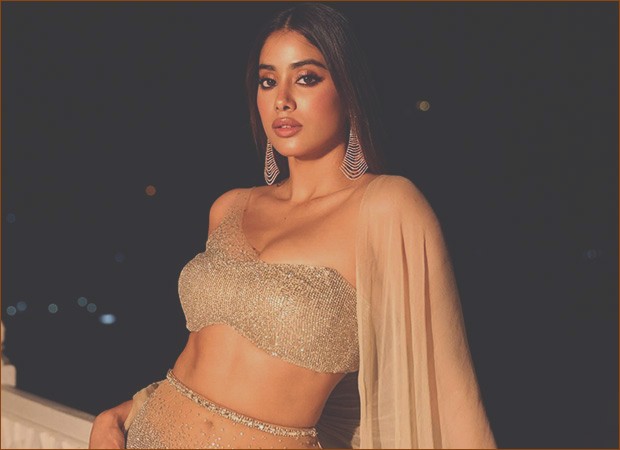
Janhvi Kapoor has openly shared her thoughts on being oversexualized in the media, raising important issues about consent, paparazzi culture, and the misuse of digital content. In a recent episode of the Raj Shamani Podcast, she discussed how these experiences impact her choices both personally and professionally.
Reflecting on a recent encounter with photographers, Janhvi expressed her discomfort: “I told the paparazzi that their actions often feel invasive and disrespectful. Just because we wear certain outfits doesn’t give anyone the right to zoom in on specific parts of our bodies. Ultimately, it reflects poorly on them as they turn a woman’s body into a commodity for clicks and views.”
She acknowledged that while the photographers seemed to understand her concerns, the problems extend much further. “They might have gotten what I said, but the larger issue is about consumption. Content that objectifies women tends to be the most watched worldwide, which perpetuates the cycle. Being in the public eye makes it worse,” she explained.
Janhvi emphasized the critical importance of consent, highlighting the difference between performance and exploitation. “Every time you do something, it’s vital to ask, ‘What did I agree to?’ For example, in my song ‘Bheegi Saadi,’ where I dance in a wet saree, that was meant to be seductive. If someone is attracted to that, that’s acceptable. But sexualizing someone without their permission is not okay,” she stated.
She also discussed how images are often manipulated without her consent. “Things can get edited or filmed in a way I’m not comfortable with. I should have the right to say no without being labeled unprofessional,” Janhvi said. “I used to be more diplomatic and selective about my battles; now, I express my views more confidently while still being polite.”
Janhvi noted the influence of public perception on her career. “I can’t ignore how people perceive me because it directly affects how filmmakers view me and the roles I get offered. If audiences consistently see me in compromising situations, they end up making judgments about my character. It’s unfair, but that’s how it is,” she remarked.
She also pointed out that such perceptions impact casting choices. “Filmmakers often hesitate to cast someone they believe has been overly sexualized in the media. It’s disheartening that people judge you based on your appearance,” she added.
Recently, she has taken steps to manage her public visibility more carefully. “In recent months, I’ve made an effort to avoid being photographed. After three movies released consecutively last year, I felt overwhelmed by how much of me was out there,” she shared.
Despite her attempts to avoid the spotlight, she noted that the volume of media coverage on her remains high. “People often assume actors reach out to the media, but that’s not true for me, except during promotions. There’s so much already out there that it feels like I never truly step out of the limelight.”
Janhvi concluded by acknowledging her ongoing concerns about the potential misuse of her image. “I don’t like how I’m often portrayed, especially with the impact of AI and editing. I find myself overthinking even the simplest posts—wondering if they will be taken out of context or misused. I wish I could say I don’t care, but the truth is, I do.”
For now, she believes caution is crucial. “Right now, I’m not in a position to completely disregard these issues. I have to play it safe until I establish enough credibility to be myself without facing negative consequences,” she said.
