
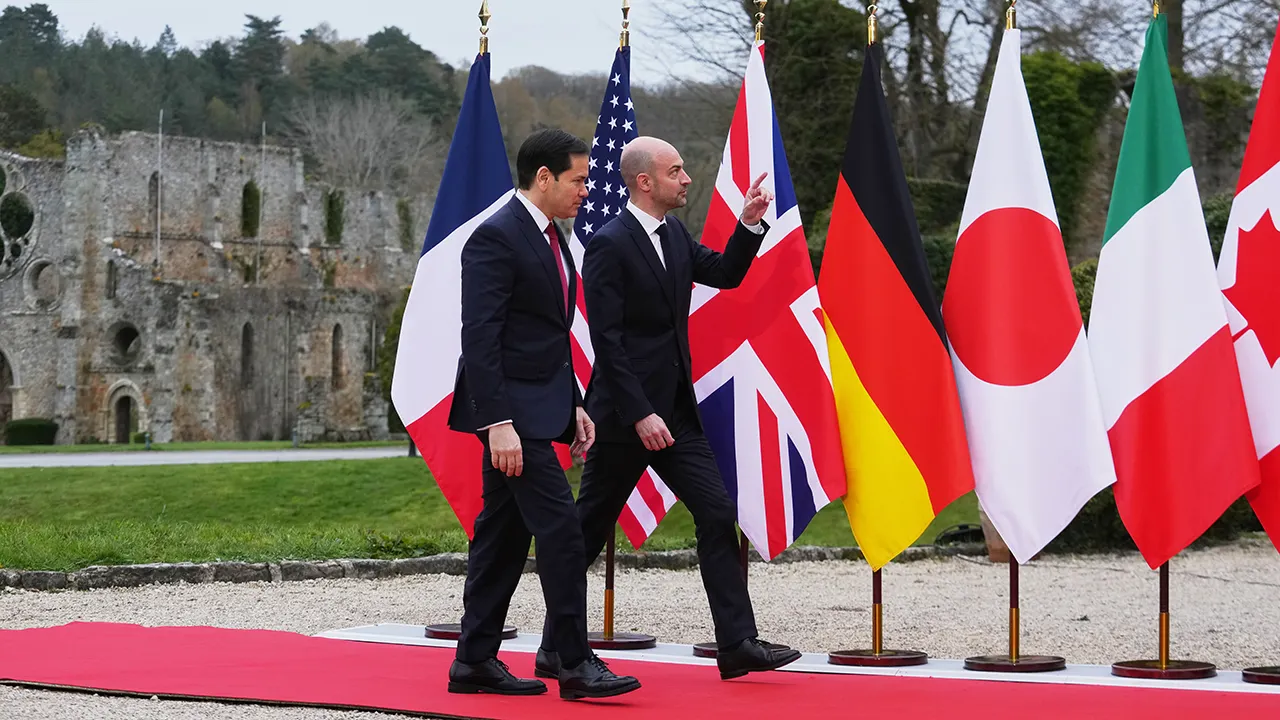
Rubio Arrives in France for G7 Foreign Ministers’ Meeting Amid Iran Tensions
U.S. Secretary of State Marco Rubio landed in France on Friday to participate in the G7 foreign ministers’ meeting, where he aims to present a strong message regarding U.S. priorities in the ongoing conflict with Iran.
In the lead-up to the summit, G7 allies—Britain, Canada, France, Germany, Italy, and Japan—have shown varying responses to the U.S.-Israeli military actions against Iran. Many of these nations have been cautious, opting out of direct military involvement despite disapproving of Iran’s actions.
Before his departure, Rubio emphasized his commitment to U.S. interests, stating, “I don’t work for France or Germany or Japan. The people I’m interested in making happy are the people of the United States.”
President Trump has expressed frustration over the differing stances of U.S. allies, particularly concerning support for securing crucial maritime routes like the Strait of Hormuz. While some countries are open to supporting defensive measures, they have refrained from engaging in direct military attacks.
Trump has pointed out that while the U.S. often steps in to assist allies, responses to America’s needs have not always been positive, referencing ongoing support for Ukraine while other nations see the Iranian conflict differently.
Rubio reinforced the urgency of the situation, stating, “The Strait of Hormuz could be open tomorrow if Iran stops threatening global shipping, which is a violation of international law.”
As Rubio prepares for discussions, there are signs from European officials indicating a more diplomatic approach. Kaja Kallas, Vice President of the European Commission, said during a briefing that discussions should focus on exiting the war rather than escalating it.
The ongoing differences in perspective among U.S. and European leaders reflect the complexities of the meeting. European officials, including France’s Foreign Minister Jean-Noël Barrot, have highlighted the importance of addressing maritime security and stopping Iran’s aggressive actions without escalating the conflict further.
Rubio is expected to touch on broader U.S. interests during the summit, including military operations in both Ukraine and the Middle East, while stressing the need for allies to contribute more actively in areas of conflict and international management.
The summit could expose deeper divisions as officials navigate these contrasting approaches, particularly regarding responses to Iran’s actions and any requests for support from the U.S.
As leaders continue to grapple with these tensions, the focus remains on finding a path forward that ensures maritime security and stable international relations.
