
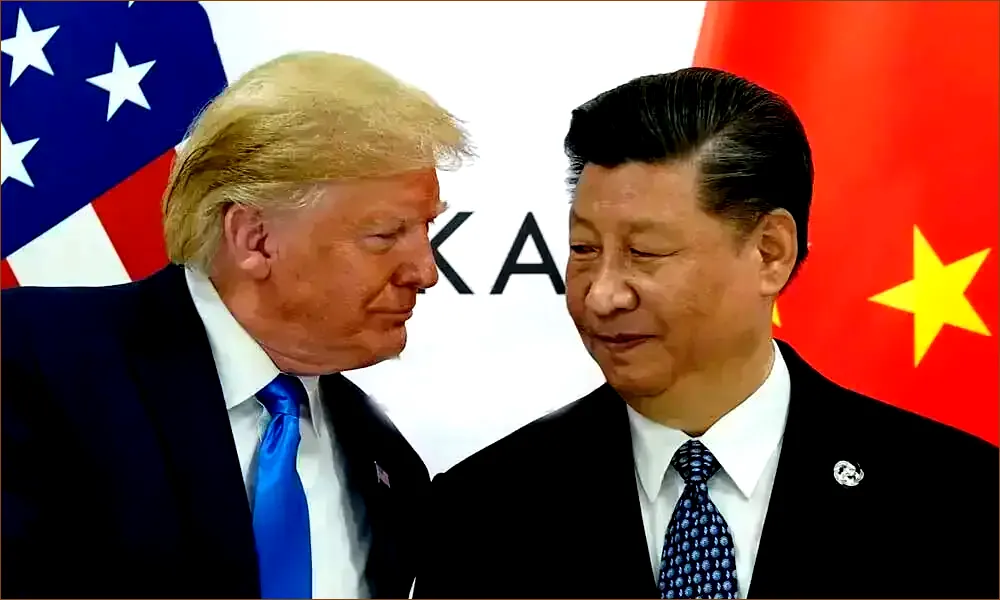
BEIJING: President Donald Trump has decided to postpone the upcoming summit in Beijing with Chinese President Xi Jinping, which raises concerns about the stability of US-China relations. However, analysts believe this delay is not likely to lead to significant problems between the two nations.
This change reflects how the ongoing conflict with Iran has disrupted Trump’s foreign policy, adding new challenges to trade and Taiwan issues between the world’s two largest economies.
The timing of the delay is critical, especially since high-stakes trade discussions took place in Paris just days ago to prepare for Trump’s planned visit, initially set for the end of this month.
These negotiations followed the US’s new investigations into what it claims are “unfair trade practices.” This comes after the Supreme Court recently struck down Trump’s global tariffs, leading the US to apply increased pressure on various countries, including China.
Zhao Minghao, an expert in international relations from Fudan University, noted that while Beijing still wants to hold the summit, the situation is complicated by the US-Iran conflict and the Supreme Court’s ruling. He mentioned that the postponement leaves room for further trade actions and uncertainties that may affect how China strategizes its relationship with the US.
According to a source familiar with the discussions in Paris, China is open to potentially buying more US agricultural products, including poultry and beef. They also talked about the trade of rare earth minerals, which China largely controls, as well as ways to improve trade and investment between the two countries.
A recent editorial in the state-run China Daily called the negotiations “constructive” but cautioned Trump not to confuse China’s willingness to engage as a sign of weakness. It urged the US to avoid actions that could harm the economic relationship, stating that any uncertainty—be it through tariffs or other measures—would not be beneficial.
Alfred Wu from the Lee Kuan Yew School of Public Policy echoed this sentiment, emphasizing that China prefers a more predictable approach, especially amid fluctuating plans for the summit.
US officials have been somewhat unclear about the reasons for the postponement. Trump mentioned to the Financial Times that the meeting might be delayed if China doesn’t assist in securing the Strait of Hormuz. Meanwhile, US Treasury Secretary Scott Bessent indicated that the delay might be linked to coordinating efforts for the ongoing conflict rather than trade issues.
Despite the postponement, both sides continue to prioritize maintaining stable relations and preparing for a successful summit. Analysts pointed out that for China, which heavily relies on exports, managing uncertainty in the global economy is of utmost importance. As Patricia Kim from the Brookings Institution stated, China aims to keep its relationship with the US steady while planning for long-term strategic challenges ahead.
