
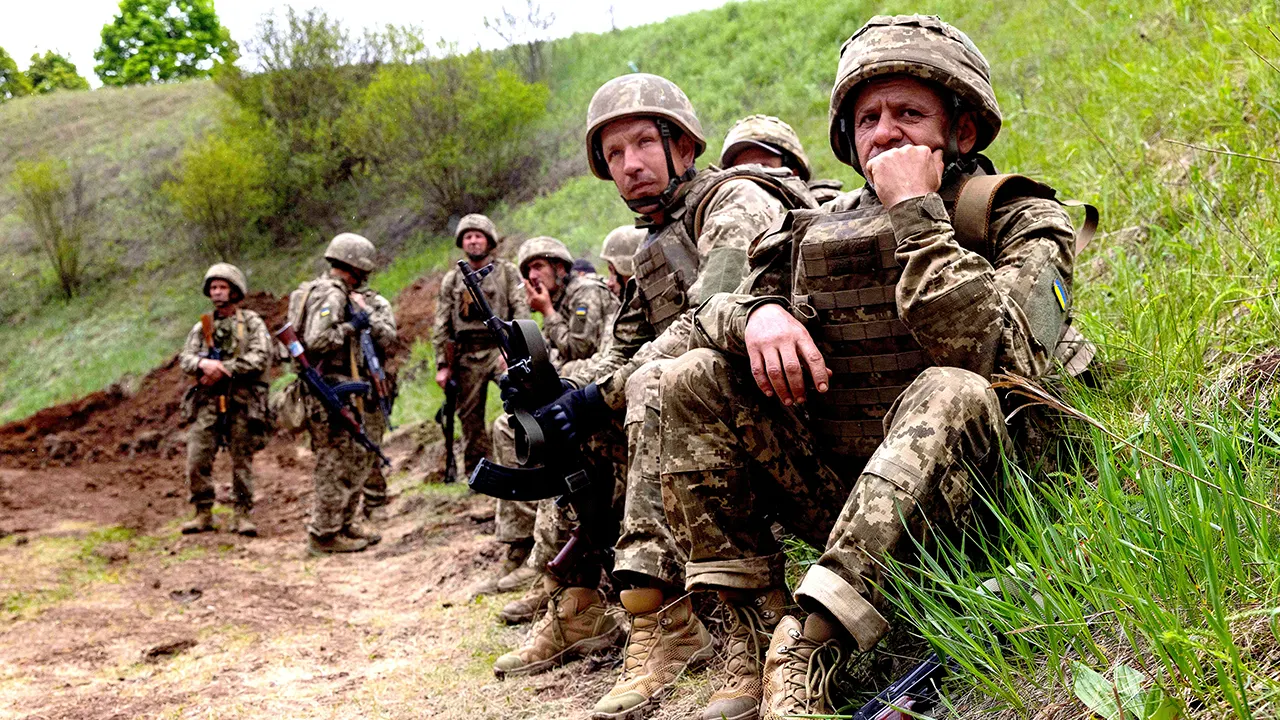
Ukraine’s Role in Shaping NATO’s Future
Lviv, Ukraine – As the conflict with Russia enters its fourth year, NATO officials in Eastern Europe are starting to believe that the alliance’s direction is being heavily influenced by events on the battlefield in Ukraine.
From advancements in drone technology to cyber defense, experts say Ukraine’s military has become a model for how future wars may be fought, changing how NATO views military strategy.
This week, NATO Secretary-General Mark Rutte announced that Ukrainian President Volodymyr Zelenskyy has been invited to the annual NATO summit in Ankara this July. His presence underscores Ukraine’s critical importance to NATO, despite not being a member.
Andriy Sadovyi, the Mayor of Lviv, stated, “Today, the Ukrainian army is the top military force in Europe,” emphasizing NATO’s need for their expertise.
The discussions about NATO’s future intensified as foreign ministers gathered in Sweden, with U.S. Secretary of State Marco Rubio calling the upcoming summit a pivotal moment in NATO’s history. Rubio warned that NATO’s munitions production capabilities are lacking, a sentiment echoed by retired Lt. Gen. Richard Newton, who noted that the Pentagon is closely observing Ukraine’s swift reshaping of its military production capabilities.
Newton remarked, “Many nations are looking to Ukraine’s rapid defense industry growth, both in terms of quality and quantity of arms being produced.”
Rubio also highlighted the importance of U.S. troop presence in Poland, stating that America will maintain its forces at existing levels, which he believes makes Russia’s President Putin uneasy.
There is an ironic twist to the debate about NATO’s evolution. A major concern for Putin before the invasion was NATO’s expansion. Ironically, the invasion has only accelerated NATO’s growth, particularly with Finland joining in 2023 and Sweden in 2024, thereby adding extensive border lengths with Russia.
Now, both Poland and Ukraine indicate that the ongoing war not only redresses NATO’s geographic footprint but also changes the alliance’s structure. “NATO has traditionally focused on expeditionary operations, but modern warfare is dominated by drones,” said Polish Deputy Defense Minister Paweł Zalewski, noting Ukraine’s exceptional grasp of current battlefield conditions.
The war has prompted many to rethink the conventional aspects of military power. Retired Gen. Philip Breedlove, a former NATO supreme commander, stated that the conflict in Ukraine has reshaped how nations globally perceive warfare.
“Ukraine is not just fighting; they are reclaiming territory from one of the strongest military forces in the world,” he claimed.
The transformation is evident across Ukraine. Before the war, the country had a thriving IT sector, which has now pivoted largely to support defense efforts. Sadovyi added, “We had a significant IT cluster in Kyiv prior to the invasion; now, it’s focused on defense.”
Ukraine now has a rapidly growing defense innovation landscape, emphasizing drones, battlefield communication, and decentralized arms manufacturing. NATO officials are keen to learn from these developments.
As Poland boosts its military spending—forecasting nearly 5% of GDP this year—officials assert that the war shows their early recognition of Russia’s threat. “The eastern flank is now robust compared to five years ago,” remarked Polish Deputy Foreign Minister Marcin Bosacki, emphasizing their long-standing concerns regarding Putin’s agenda.
While Ukraine isn’t officially in NATO, many in Eastern Europe believe that the alliance’s future viability is closely tied to the country’s role in the ongoing conflict.
