
South Sudan’s Healthcare Crisis Deepens Amid Ongoing Conflict
South Sudan’s healthcare system is in a dire state after years of corruption and mismanagement. A recent incident involving the governor of Jonglei state, Riek Gai Kok, highlights the seriousness of the situation. He had to travel to Kenya for medical treatment due to high blood pressure—an unsettling sign that reflects the collapse of local healthcare services.
Humanitarian workers describe this as a troubling example of how the nation’s elite, often regarded as one of the most corrupt groups globally by experts, have failed to support essential services. As the country continues to slide back into civil war between rival factions, healthcare primarily relies on foreign donations. Over 80% of the medical support comes from organizations like the International Committee of the Red Cross (ICRC) and Doctors Without Borders (MSF).
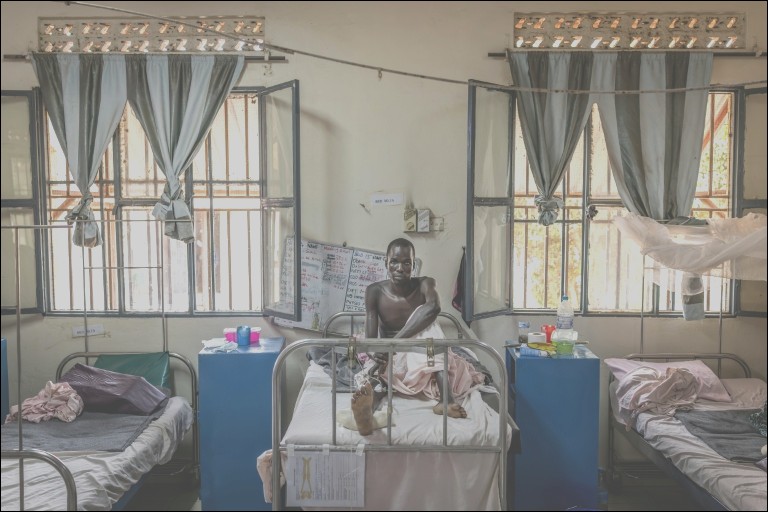
In Juba, the capital, one soldier shared his shocking experience after being airlifted for treatment. Most injured individuals do not receive such care and are often left without help. Ajuong Deng, 33, who was wounded in the leg, thought he wouldn’t survive. Fortunately, the ICRC came to his rescue—not the government—by treating him in facilities at Juba Military Hospital.
An employee at the hospital noted that without unofficial payments, staff would leave. Government salaries, which usually range from $10 to $50 per month, have not been paid in months, putting a strain on healthcare workers. A senior humanitarian worker expressed concern that this situation is not how healthcare should operate.
Cycle of Violence and Limited Resources
Inside the Juba hospital, patients lie on the floors, struggling with various injuries. With ongoing violence, many fear that injured individuals will return to the fighting soon. Clinicians report that some patients are recurrent victims of violence. In a tragic case, one patient returned four times before ultimately succumbing to his injuries.
South Sudan grapples with limited road access, which worsens medical emergencies. Many injuries become infected before patients reach a doctor, leading to frequent amputations. However, amputees often face stigma, as many believe they lose their humanity after such procedures.
The government has not reported on soldier fatalities during the past year, but the UN states that over 5,100 civilians have been killed, and hundreds of thousands have been displaced. Concerns are growing that South Sudan is on the brink of another all-out civil war, reminiscent of the last one that claimed 400,000 lives.
Health Challenges Continue to Grow
While other countries in East Africa have seen improvements in healthcare, South Sudan faces a decline, despite receiving $1.4 billion in international aid—the highest in the world relative to its economy. Life expectancy remains a mere 58 years, with maternal mortality at an alarming rate of 1,223 per 100,000 births. UNICEF estimates that one in ten children in South Sudan does not make it to their fifth birthday.
Despite generating over $25 billion in oil revenues since 2011, only 1% of the current budget is earmarked for health. The UN has indicated that a significant portion of funds does not reach those in need in a nation where 92% of people live in poverty.
Healthcare is incredibly dangerous in South Sudan; MSF has experienced multiple attacks on its facilities in the last year. The ICRC has taken precautions for its surgical unit in Juba, including installing blast doors and stockpiling emergency supplies.
The U.S. has warned that it may withdraw funding if governance doesn’t improve, and many NGOs are reconsidering their support as donations decline and frustrations with local leaders mount. The ICRC has announced plans to scale back operations while aiming to strengthen local healthcare capabilities.
In response to growing challenges, Information Minister Ateny Wek Ateny acknowledged financial “difficulties” but insisted that the government is addressing these issues. He also dismissed Transparency International’s corruption rankings, questioning their criteria for evaluating South Sudan’s corruption levels.
Conclusion
As South Sudan faces a complex web of challenges in healthcare and governance, the need for effective, transparent leadership has never been more critical. With lives hanging in the balance, the world watches closely to see if change can emerge from the current turmoil.
