
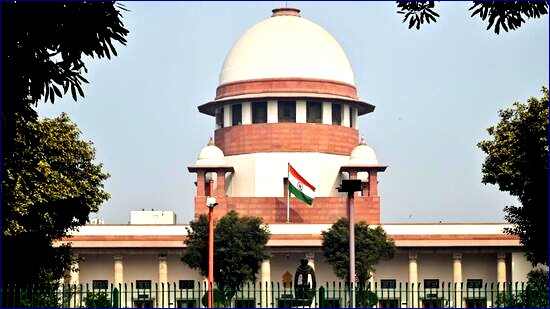
Supreme Court Denies Bail to Activists in Delhi Riots Case
The Supreme Court has denied bail to student activists Umar Khalid and Sharjeel Imam, involved in the 2020 Delhi riots conspiracy case. The court’s decision highlights that the evidence gathered by the prosecution positions Khalid and Imam in significant roles, differentiating them from other accused individuals. Instead of being minor participants, they are seen as key figures in orchestrating the alleged conspiracy.
Key Judicial Findings
In a detailed ruling, the justices indicated that the roles individuals play in such cases are crucial. The bench, consisting of Justices Aravind Kumar and NV Anjaria, noted that decisions around bail should focus on the different levels of involvement rather than just how long someone has been in custody. They found that the prosecution’s narrative depicts Khalid and Imam as ideological leaders, involved in planning and mobilization from late 2019, shortly after the controversial Citizenship Amendment Act was introduced.
On the other hand, those accused alongside them are viewed as local facilitators with limited roles that mainly involved managing protests at specific locations. This distinction underscores a structured approach to the alleged conspiracy by establishing a clear command hierarchy, where decisions were made at higher levels and then executed by others.
Evaluating Roles in a Conspiracy
The court emphasized that being absent from protest sites or not engaging in direct violence does not exempt them from responsibility in a conspiracy case. While neither Khalid nor Imam is accused of participating in violent acts such as arson, their planning and orchestration roles are viewed as essential components of the alleged conspiracy.
The justices noted that in such complex conspiracies, just being physically present at the time of violence isn’t necessary for determining guilt. What matters is whether they were involved in the planning and actions leading to the violence.
Strategy Behind Protests
The ruling also considered how the protests evolved over time, highlighting a shift from traditional sit-ins to more organized strategies like “chakka jams,” which aim to obstruct traffic and disrupt daily life. The court referenced evidence showing Khalid’s role in planning these actions, including discussions about expanding protest activities.
It concluded that the evidence suggests deliberate disruption and not spontaneous gatherings, supporting the prosecution’s claims at this initial stage.
Speech as Evidence
The court acknowledged that much of the evidence relates to speeches made by both Khalid and Imam. However, it determined that these speeches should not be viewed in isolation. Instead, when combined with other actions, they suggest a coordinated effort to challenge civil order, rather than mere dissent.
The bench also dismissed claims that one public speech by Khalid on February 17, 2020, exonerated him. They believed the speech should be considered as part of a broader pattern of behavior.
Balancing Justice and Detention
The court rejected arguments for bail based on how long Khalid and Imam have been incarcerated, stating that the law requires a more complex analysis of each individual’s role in the alleged conspiracy. They also pointed out that just because some co-accused were granted bail, it doesn’t mean that others should automatically receive it; each case must be judged on its own merits.
While recognizing concerns about prolonged detention, the court maintained that this does not justify easing the strict standards set by law for bail. As per the Unlawful Activities (Prevention) Act, a clear case against the accused is necessary to deny bail.
In conclusion, the justices allowed Khalid and Imam to reapply for bail after a year or after witness examinations, stressing that their ruling at this stage does not affect any future trial outcomes.
