
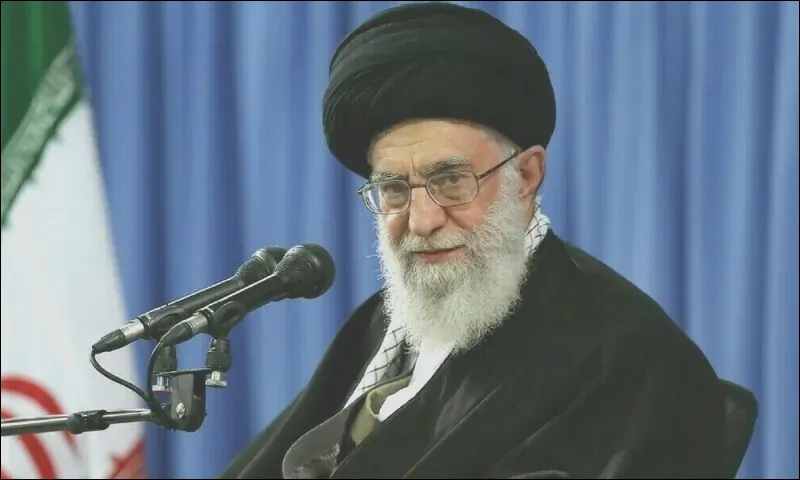
TEHRAN: Supreme Leader Ayatollah Ali Khamenei addressed the ongoing protests in Iran on Saturday, acknowledging the economic issues raised by demonstrators in over two dozen cities. However, he also emphasized that there would be no tolerance for those labeled as “rioters.”
The protests, which started on a Sunday, were initially sparked by public frustration over rising prices and a stagnant economy. Recently, however, they have evolved to express political grievances as well. Khamenei mentioned that “the president and senior officials are actively working to tackle these economic challenges in our sanctions-hit nation.” He recognized the plight of shopkeepers who have taken to the streets to voice their concerns, stating, “Their protests are justified.”
Despite this acknowledgment, he warned against engaging with “rioters,” asserting, “Authorities should engage with protesters, but rioters need to be firmly dealt with.”
The protests have already resulted in the deaths of at least eight people, including members of the security forces, according to official reports. The first fatalities were confirmed on Thursday amid clashes between demonstrators and law enforcement. On Saturday, the Mehr news agency reported that a member of the paramilitary force, Basij, was killed during a protest in western Iran.
Fars news agency also reported on a fatal incident in the holy city of Qom, where a grenade exploded in a man’s hands as he attempted to use it.
The protests have gathered significant momentum in mid-sized cities in western and southwestern Iran, with reports of clashes and vandalism. An AFP count reveals that protests have occurred in at least 25 cities, although exact figures may vary since local media coverage is inconsistent.
Political expressions within the protests have also emerged. On Friday, gatherings took place in several working-class neighborhoods of Tehran, a city with a population of around 10 million. However, the atmosphere appeared calmer on Saturday due to a public holiday, with fewer people out on the streets.
In Darehshahr, about 300 protesters reportedly blocked roads and lit Molotov cocktails before brandishing automatic weapons. The protests began as shopkeepers in Tehran went on strike, demanding better economic conditions, and soon garnered support from university students across the nation.
Many protesters have openly criticized the government, with some reportedly burning the Iranian flag and chanting “Death to the dictator!” and expressing hopes of a return of the Pahlavi dynasty, which ruled Iran until the 1979 Islamic Revolution. This sentiment highlights the growing frustration among citizens.
While officials have adopted a more conciliatory tone regarding economic issues, they remain firm in their stance that chaos and disorder will not be accepted. Though the current demonstrations are widespread, they are smaller in scale when compared to the protests that erupted in 2022 following the death of Mahsa Amini while in police custody. That incident sparked national outrage, leading to a significant loss of life among both protesters and security personnel.
Iran also faced nationwide protests in late 2019 due to a surge in fuel prices, which raised calls for a change in the country’s political leadership.
