
Pakistan’s Leadership on Edge Amidst Rising Tensions with India
Islamabad: Following a deadly terror attack in Pahalgam on April 22, India responded quickly and forcefully, leaving Pakistan’s leadership feeling unsettled and vulnerable. Pakistan’s President, Asif Ali Zardari, shared that during heightened military tensions in May, he was urged by his Military Secretary to find safety in a bunker, indicating the anxious atmosphere prevailing in Pakistan’s top ranks.
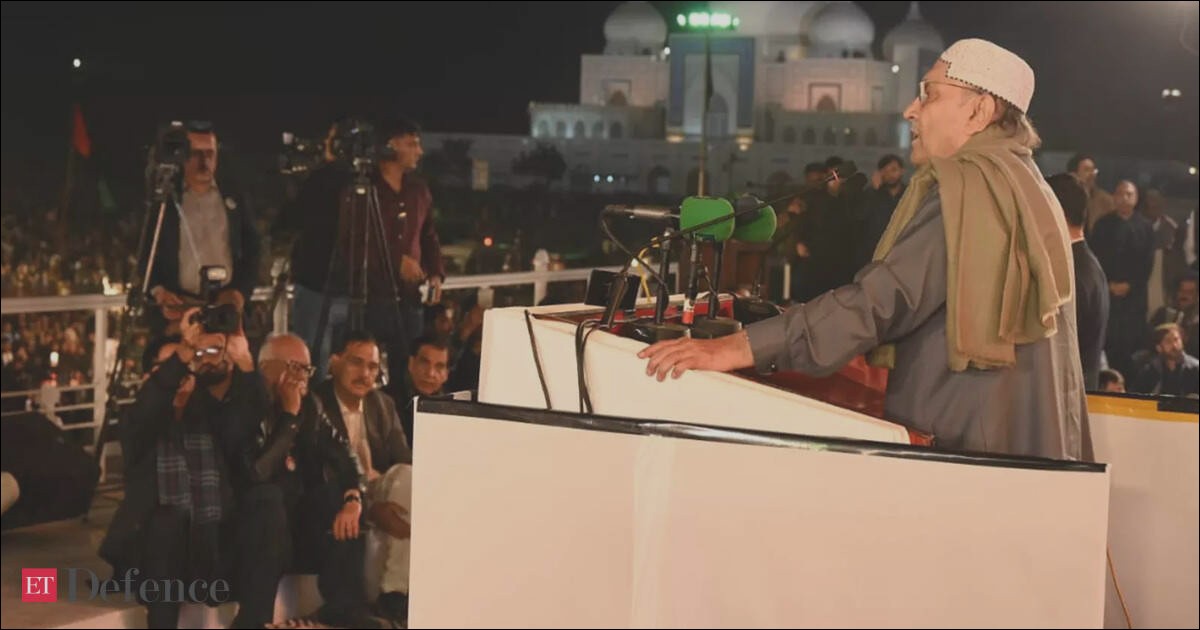
Zardari spoke at an event on Saturday, recalling the advice he received as India’s military conducted precise strikes targeting Pakistan’s military facilities, which were part of a broader operation named “Operation Sindoor.” This operation was triggered by the Pahalgam attack, which resulted in the tragic loss of 26 lives.
Amid the chaos, Zardari described his refusal to retreat to safety. He emphasized his belief in facing danger head-on, saying, “If martyrdom is to come, it will come here. Leaders don’t die in bunkers; they die on the battlefield.” His remarks reflect a strong stance despite the intense pressure the situation brought to bear on him and his officials.
India’s military action began early on May 7, targeting various terror camps in both Pakistan and the areas it administers in Jammu and Kashmir. The conflict escalated, leading to an uptick in cross-border skirmishes.
In an unexpected turn, Pakistan’s Director General of Military Operations (DGMO) reached out to India’s DGMO, proposing a ceasefire. This initiative was met with acceptance from India, marking a rare moment of diplomatic communication amidst rising hostilities. Indian Foreign Secretary Vikram Misri later confirmed that both nations agreed to halt military operations across all domains—land, sea, and air.
As tensions linger, the dialogue between military leaders reflects a crucial step towards reducing possible escalations in conflict.
