
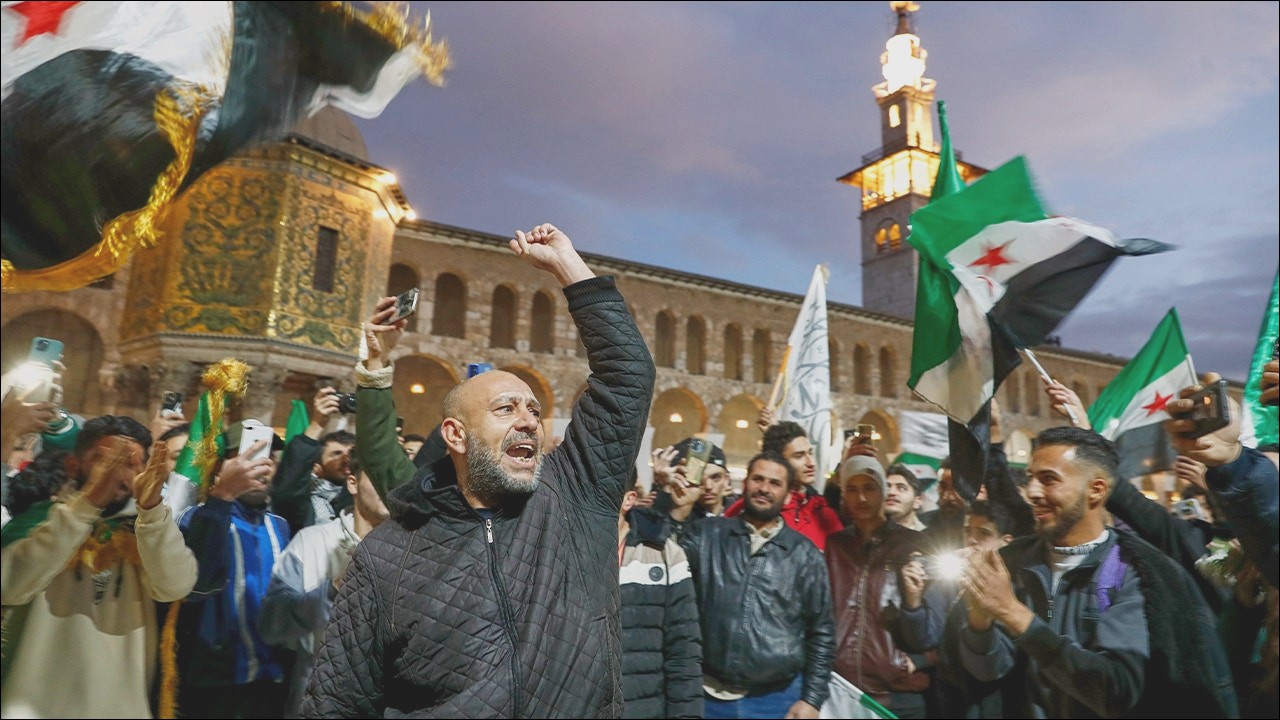
Syria Celebrates a New Chapter Following the Fall of Assad
On Monday, tens of thousands of Syrians took to the streets of Damascus to celebrate the first anniversary of the fall of Bashar al-Assad’s regime. The former dictator fled the capital last year as rebels made swift advances, ending decades of family rule and opening a new era for the country.
Since that pivotal moment, Syria has experienced significant changes in its political landscape, including a major diplomatic breakthrough with the United States. This resulted in a historic visit from interim President Ahmed al-Sharaa to the White House, where he met former President Donald Trump.
The Caesar Syria Civilian Protection Act, known for being one of the strictest sanctions against Syria since 2019, is expected to be rolled back. A repeal is included in the National Defense Authorization Act (NDAA) for 2026. Mouaz Moustafa, head of the Syrian Emergency Task Force and co-drafter of the original sanctions, expressed hope for the future, stating, “Today, on this anniversary of liberation, the lifting of the Caesar Act is the greatest gift for the Syrian people.”
The NDAA is set for a vote soon in the House.
While Syrians celebrate this newfound freedom, the country now faces the complex challenge of rebuilding its economy, reconstructing infrastructure, and seeking justice for families still searching for answers regarding the disappearance of their loved ones under the Assad regime. According to the Syrian Network for Human Rights, more than 170,000 people are still missing in Syria.
This year has also seen outbreaks of sectarian violence, particularly in areas like Sweida, where various groups have clashed. Despite these challenges, some positive developments are emerging. President al-Sharaa has begun holding security officials accountable for past human rights abuses, signaling a potential shift toward justice.
In remarks regarding the situation in Syria, Ambassador Robert Ford noted the unusual step of public trials for security forces charged with violations such as torture and extrajudicial killings.
While the U.S. State Department recently lifted the foreign terrorist designation on Hayat Tahrir al-Sham, the group has experienced a change in leadership under al-Sharaa, formerly known for his connections to extremist groups.
Overall, there is cautious optimism about Syria’s prospects. Rep. Joe Wilson from South Carolina highlighted the dramatic shift from an Assad-dominated Syria to one that could become a U.S. partner in the fight against terrorism. He emphasized that if bold actions are not taken now, the nation risks sliding into chaos once again.
As the Syrian people celebrate their newfound freedom, the road to recovery and justice remains long and complex, but hope for a brighter future is beginning to take root.
