
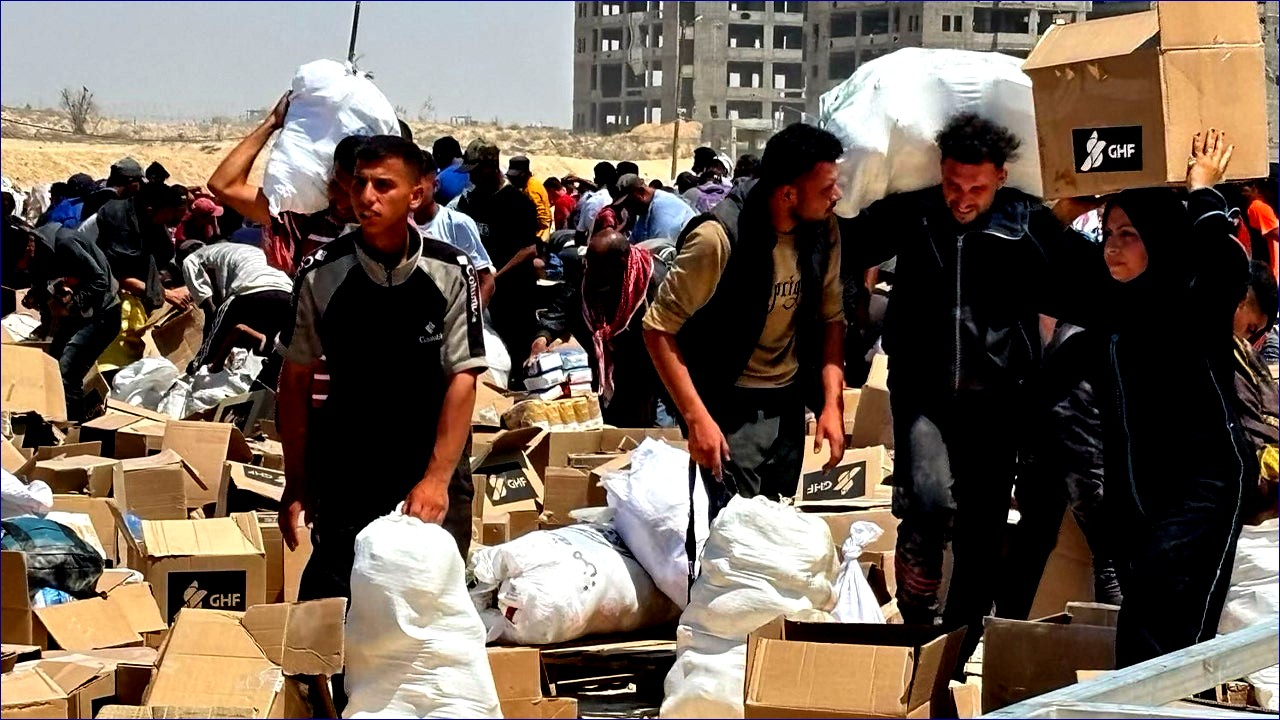
A recent United Nations report has announced that famine has struck parts of Gaza, igniting a heated debate about the conditions in the region. The Integrated Food Security Phase Classification (IPC) issued the report, marking the first time it has declared a famine in the Gaza Governorate. Areas like Deir al-Balah and Khan Younis are said to be facing a severe crisis, while conditions in Northern Gaza may be even worse. Notably, the report omits any mention of Rafah, which has seen significant depopulation.
The IPC is a U.N.-sponsored effort that includes various organizations and expert groups, and is recognized as an authority in assessing food emergencies.
Israeli officials have strongly rejected the IPC’s claims. Prime Minister Benjamin Netanyahu labeled the findings as “an outright lie,” with a spokesperson from the Foreign Ministry arguing that the report is based on “Hamas lies” and asserting that there is no famine in Gaza.
In a detailed projection, the IPC’s report anticipates a worsening situation, estimating that by the end of September, approximately 641,000 people may be experiencing famine conditions. The number of individuals in emergency situations is expected to rise to approximately 1.14 million.
The IPC has urged an immediate ceasefire, safe humanitarian access, and large-scale aid to address the crisis.
U.N. Secretary-General António Guterres criticized the Israeli government, calling the situation “a man-made disaster.” He emphasized that famine represents a failure of humanity, not just a lack of food. He also stressed Israel’s obligations under international law to ensure the provision of food and medical supplies.
Multiple UN agencies involved in the IPC reiterated their call for urgent humanitarian action, with a UNICEF official stating that malnutrition levels in Gaza have reached crisis proportions.
Despite the IPC’s findings, Israel’s Coordination for Government Activities in the Territories (COGAT) dismissed the report, claiming it relies on information from sources affiliated with Hamas.
Amid all of this, Richard Goldberg, a senior advisor, has criticized the report as politically motivated, arguing that it ignores genuine famine situations in other places while focusing on Gaza.
As the humanitarian crisis unfolds, millions of lives remain at stake, with ongoing calls for international support and action to alleviate this dire situation.
