
Infleqtion Secures New UK Government Grant to Boost Quantum Computing
On June 9, Infleqtion, a key player in quantum information technology, announced it has received a second grant from the UK government. This funding aims to enhance the performance of its neutral atom quantum computing platform, Sqale. The goal is to improve gate execution rates by 10 to 100 times, marking a significant leap for quantum hardware that is vital for its commercial viability.
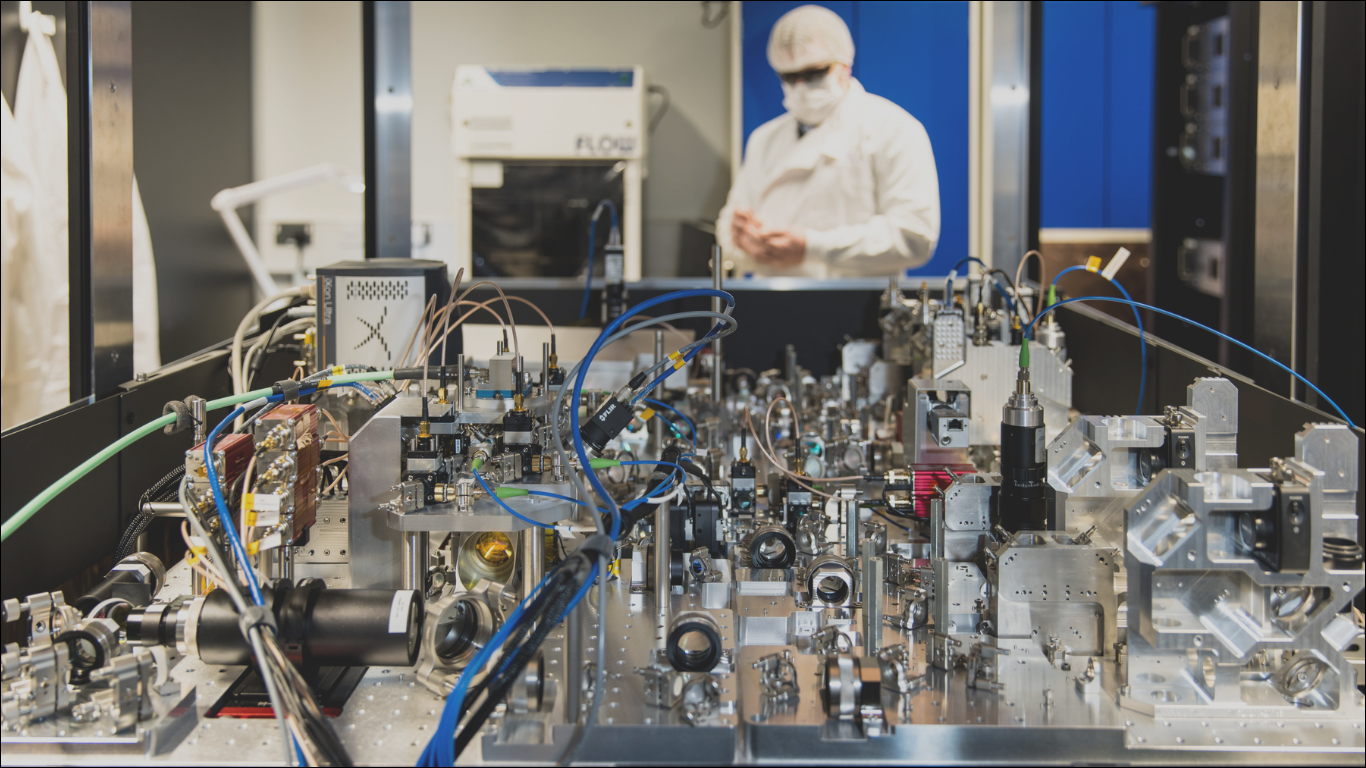
This effort builds on Infleqtion’s strong presence at the National Quantum Computing Centre (NQCC) in Harwell, Oxfordshire, which houses one of the UK’s most advanced quantum test facilities. The Sqale quantum computer positions Infleqtion as a crucial part of the UK’s quantum infrastructure.
Tom Noel, Vice President of Quantum Computing at Infleqtion, stated, “Infleqtion’s UK team is pushing the limits of what’s possible in quantum computing performance. By using the unique strengths of neutral atom technology alongside advanced optical frameworks at the NQCC, we are creating faster, deeper, and more reliable quantum circuits.”
The 12-month initiative, named SQALE2, will collaborate with leading UK research institutions, including the Fraunhofer Centre for Applied Photonics, the National Physical Laboratory (NPL), the University of Strathclyde, and the Quantum Software Lab at the University of Edinburgh.
The funding will support the development of new optical technologies that allow multiple quantum operations to occur simultaneously. This parallel processing method is expected to greatly enhance the speed and efficiency of executing complex quantum algorithms.
Professor Elham Kashefi, Chief Scientist at the NQCC, emphasized, “Advancing gate speed is crucial for unlocking the full potential of quantum computing. This collaboration with Infleqtion and the Quantum Software Lab showcases the UK’s dedication to building scalable and practical quantum capabilities.”
Infleqtion’s platform manipulates individual neutral atoms, which are perfect qubits, using laser light. This method avoids the need for solid-state qubits, providing better stability and control, alongside significant scalability.
Ryan Hanley, President of Infleqtion UK, added, “Neutral atom systems have compelling advantages. This project illustrates that both performance and speed can improve, thanks to the UK’s robust collaborative innovation ecosystem.”
Through its partnership with the Fraunhofer Centre for Applied Photonics, Infleqtion will implement next-generation optical technologies to enable faster gate execution. These improvements are expected to speed up quantum circuitry and enhance gate fidelity, facilitating deeper quantum workflows.
To guarantee transparency and trust in results, the project will include independent verification through partners at NPL, the University of Strathclyde, and the Quantum Software Lab at the University of Edinburgh. These teams will validate performance enhancements using established benchmarks and newly developed evaluation frameworks.
This funding announcement follows a series of initiatives by Infleqtion in the UK, including the deployment of its Sqale quantum computer at the NQCC and partnerships with government and academic entities. It underscores the UK’s increasing importance in advancing scalable and high-performance quantum technologies.
