
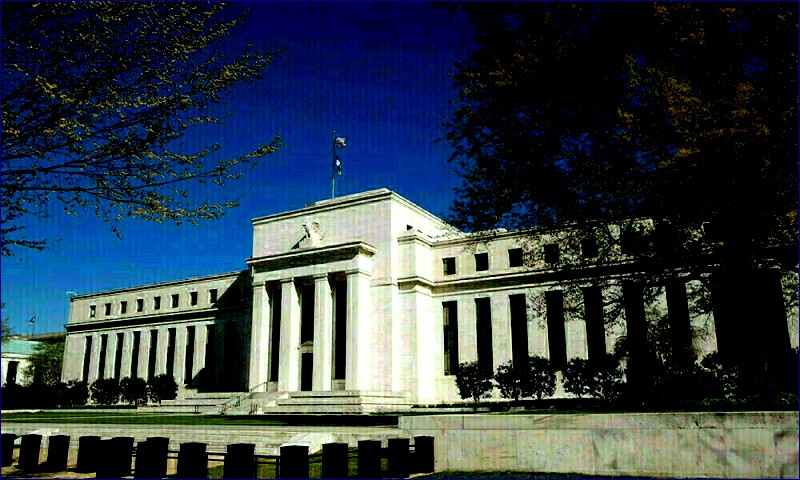
Federal Reserve Expected to Hold Interest Rates Steady Amid Economic Uncertainty
WASHINGTON: As the Federal Reserve prepares for its upcoming meeting next week, analysts predict that interest rates will remain unchanged. However, the real story lies in how the central bank will respond to recent moves by President Donald Trump, which could significantly impact the U.S. economy this year, particularly his calls for lower borrowing costs.
In addition to suggesting interest rate cuts, Trump is also implementing new immigration restrictions and proposing higher import taxes. During a speech at the World Economic Forum in Davos, Switzerland, he made his demand clear: "I’ll insist that interest rates drop immediately, and they should be falling everywhere around the globe." This is not the first time he has put pressure on the Fed, having done so throughout his previous term with little effect.
Shortly after beginning his new term, Trump tightened immigration policies and hinted at impending tax hikes on imports starting February 1. These actions have created more uncertainty about how the economy will react in the coming months.
For Fed Chair Jerome Powell and his colleagues, the challenge will be to navigate this uncertainty and decide how it will influence their monetary policy. Former Fed staff member Vincent Reinhart noted that giving too much guidance could be seen as political, but failing to address current concerns might mislead the public about the potential impacts of increased tariffs or labor shortages.
Reinhart pointed out that the Fed needs to focus on forecasts that account for economic uncertainties, especially since these shifts could dramatically influence monetary decisions. "You can’t shape policy based on assumptions about future tariffs or tax changes," he added.
The direction and speed of Trump’s economic policies will likely affect the Fed’s efforts to manage inflation, which, after reaching a 40-year high in 2022, is now close to the target of 2%. Having cut interest rates by a full percentage point over the past year, the Fed is expected to keep rates in the 4.25%-4.50% range during its next meeting. Recent data supports the Fed’s view that inflation is on a gradual decline, even as the labor market remains strong.
Economists from Bank of America described the January meeting as a "placeholder" amidst all the uncertainty, predicting that the Fed may either resume rate cuts as early as March or maintain its current stance.
The Fed has already acknowledged the potential implications of Trump’s policies, with staff forecasting slower economic growth and higher unemployment. Meeting minutes indicated that many Fed officials expect less progress on inflation and a slower approach to rate cuts through 2025 compared to prior projections.
If inflation does not decrease as expected in the coming months, these predictions may need to be reevaluated. Fed Governor Christopher Waller hinted that quicker rate cuts could be on the table if inflation trends downwards as anticipated.
The exact effects of new tariffs remain uncertain; Trump argues that they will benefit U.S. revenues and production. Meanwhile, some analysts fear that these policy changes could lead to a ‘stagflationary’ environment, where economic growth slows while inflation persists.
In other developments, Trump’s victory has already seen changes at the Fed, including the resignation of Governor Michael Barr from his supervisory role and the decision to withdraw from a climate change-related central bank group.
The specifics of Trump’s plans for tariffs, immigration, and tax changes are still taking shape, and the effects of his early actions may take time to manifest. Economic policy uncertainty has surged since the election, but Trump’s intentions are clear: he aims to fulfill his campaign promises, including potentially limiting how public health agencies communicate with the public and implementing new taxing measures on imports.
Bradley Saunders from Capital Economics anticipates another rate cut at the Fed’s March and June meetings, but the timing and extent of further cuts depend heavily on how Trump’s policies will impact labor growth and inflationary pressures.
