
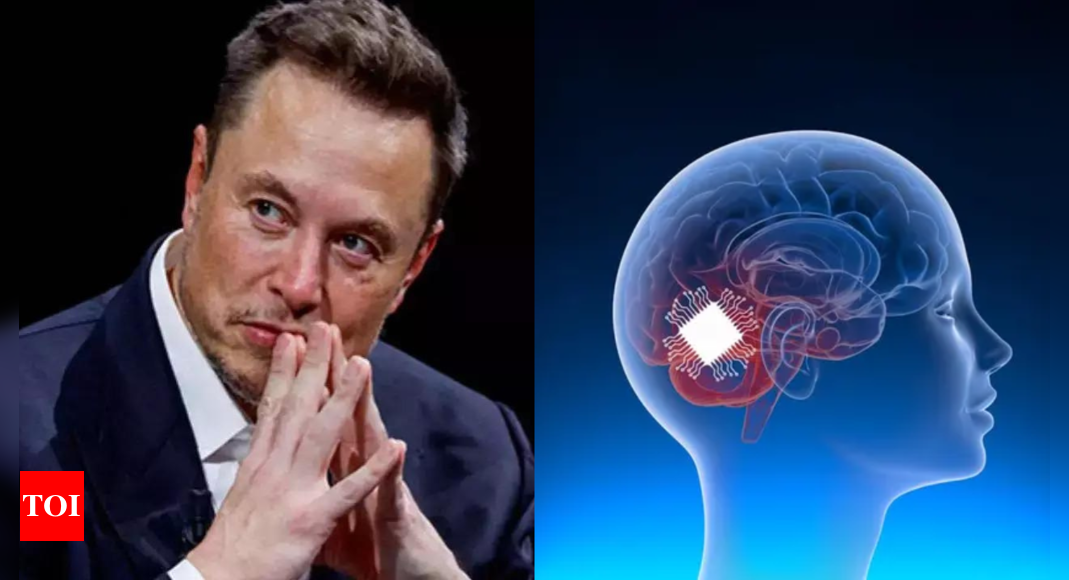
Elon Musk recently shared exciting news about Neuralink, his brain-computer interface company. During a live interview with Mark Penn, CEO of Stagwell, at CES 2025, Musk confirmed that they have successfully implanted their device in a third human patient.
Musk mentioned that they plan to conduct around 20 to 30 more procedures throughout 2025. He explained that the newly implanted devices have been improved and now feature more electrodes. This upgrade means they can transmit information faster and have longer battery life.
In discussing the purpose of Neuralink’s technology, Musk highlighted its potential to help those who have lost connection between their brain and body, particularly individuals with severe mobility issues like tetraplegia or paraplegia. He gave an example of how a revolutionary breakthrough could enable someone like the late Stephen Hawking to communicate just as quickly as anyone else. Musk explained that by reading the brain’s signals, users could control devices like computers or phones purely through their thoughts.
Musk also discussed future advancements in Neuralink’s technology, including the concept of “Blindsight” devices. These devices could potentially allow people who have lost their eyesight to see again by connecting directly with the visual cortex of the brain. This idea has already shown promise in experiments with monkeys.
He expressed confidence that, through a second Neuralink device positioned above a spinal injury, they could send signals from the brain to help someone walk again. Musk emphasized the ongoing goal of enhancing the communication bandwidth between the brain and devices, noting that the current capability is quite low.
Overall, Neuralink’s developments present a hopeful outlook for individuals with disabilities, showcasing the potential for technology to significantly enhance quality of life.
