
Future of Investing: Insights from Financial Leaders at the Israel Business Conference
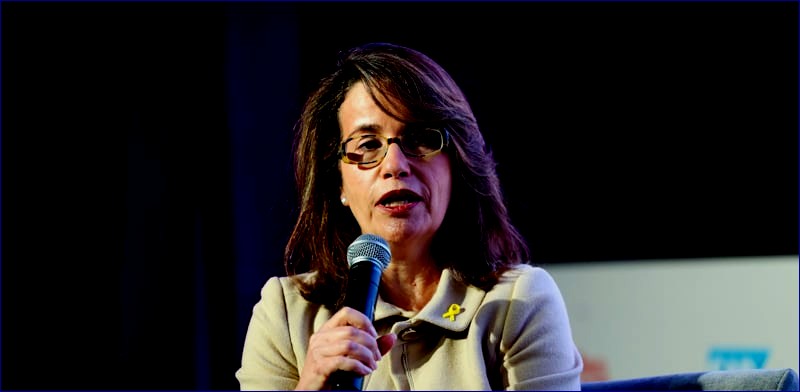
Investing is set to evolve from a passive approach, where people simply track stock indices, to a more proactive strategy that requires ongoing engagement and trend analysis. This perspective was shared by Anath Levin, head of BlackRock Israel, during a recent panel at the Israel Business Conference, which also featured insights from Liat Hazout, CEO of Hapoalim Equity, and Limor Beker, managing director of investment house Hamilton Lane.
Reflecting on the remarkable performance of the market this year—with the Tel Aviv 35 index rising by 21% and Bitcoin experiencing a 112% increase—Levin noted the importance of considering broader trends. "Post-pandemic, we’ve entered a new world where consumption drives inflation, pushing governments to handle increased debt levels while adapting to a changing demographic landscape," he remarked.
Levin emphasized the need for investors to recognize significant shifts in society, highlighting that an aging population will impact not only economies but also politics. He stated, "The connection between the real world and the financial world is becoming clearer, which is why at BlackRock, we advocate for taking calculated risks."
Limor Beker remarked on the advantages of investing in private markets, where stability has been observed during times of market volatility. She noted, "Private markets have historically outperformed traditional markets, especially during challenging periods like the dot-com bubble and the 2008 financial crisis."
Adding to the discussion, Liat Hazout urged investors to think long-term and focus on emerging trends, despite the current peak in growth. "While we could be at a peak, the fundamentals suggest ongoing opportunities in new sectors that will continue to develop," she explained.
Identifying future investment avenues, Levin pointed out that major trends such as geopolitics, artificial intelligence, and infrastructure are critical for guiding investment decisions. He highlighted that infrastructure could serve as a hedge against inflation, as significant investments in this sector are projected for the coming years.
Beker concurred, explaining that there’s a growing trend of funds shifting from public to private markets. "Today, 90% of companies are private, but only 10% of capital invested comes from private sources. This opens great opportunities for private investors to access the best investments," she said.
Hazout also underscored the expected growth in physical infrastructure in northern Israel, anticipating substantial opportunities in residential real estate and defense industries guided by the recent geopolitical climate.
Addressing concerns about market conditions and investment strategies, Levin cautioned against relying solely on traditional models like the 60/40 investment portfolio. He stressed the need for investors to be strategic, actively managing their portfolios and continuously assessing market dynamics.
The overall sentiment from the conference was optimistic, highlighting the resilience of Israel’s tech ecosystem and the potential for a post-conflict recovery in attracting global investments. Both Beker and Levin affirmed their commitment to investing in Israeli companies, regardless of the surrounding challenges.
In conclusion, experts agree that the investment landscape is shifting towards a more active engagement model, emphasizing the need for investors to stay informed and flexible to navigate future opportunities successfully.
