
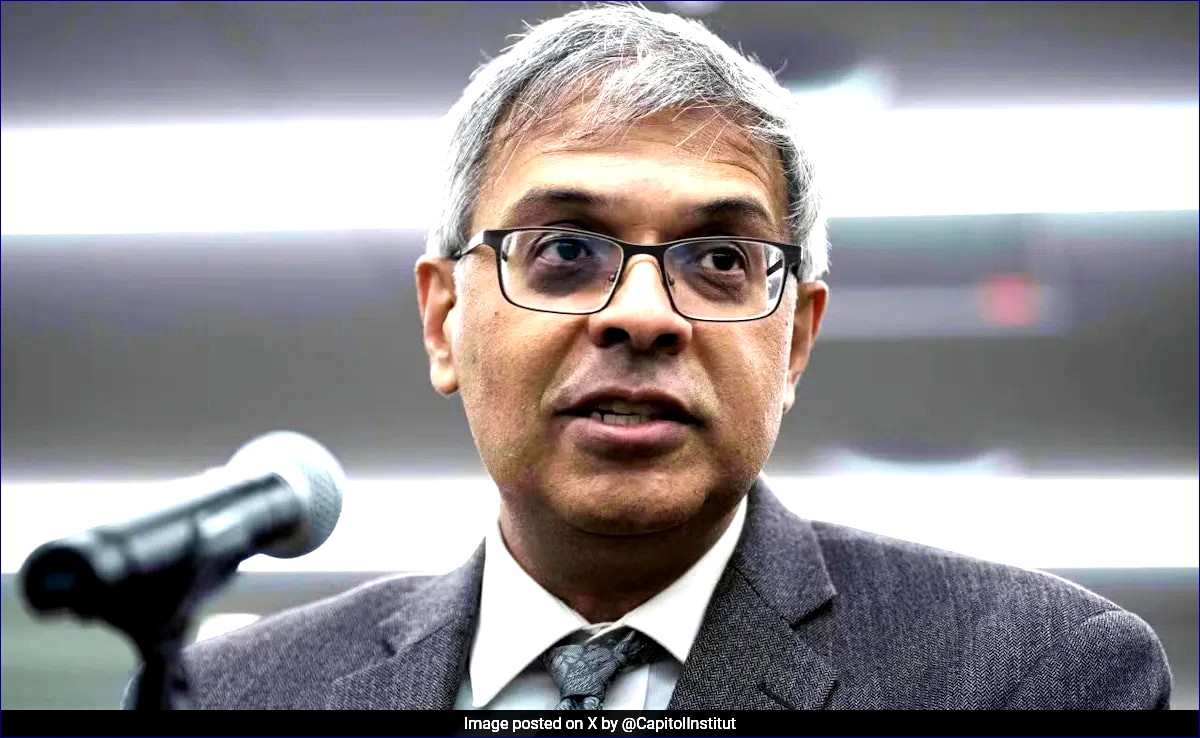
Washington DC: Jay Bhattacharya, a physician and economist trained at Stanford University, is being considered as a leading candidate for the position of director of the National Institutes of Health (NIH) by President-elect Donald Trump’s transition team. The NIH is a key agency with a budget of nearly $50 billion that regulates the country’s biomedical research.
According to reports, Dr. Bhattacharya recently had a meeting with Robert F. Kennedy Jr., who has been appointed by Trump to head the Department of Health and Human Services (HHS). This department is responsible for the NIH and other health organizations, as noted by the Washington Post, which cited three sources.
During his meeting with Kennedy, Dr. Bhattacharya shared his vision for the NIH, which included ideas to direct more funding toward innovative research. He also suggested minimizing the influence of some long-serving officials within the agency. NIH plays a crucial role in providing grants to researchers, managing clinical trials at its Maryland campus, and supporting the development of medications and therapies.
At this point, Trump’s transition team has not made any official announcements on the matter. The final selection for the NIH director will depend on Trump’s decision, as he sometimes disregards advice given by his team. The transition team is reportedly considering other candidates as well.
Who is Jay Bhattacharya?
Born in Kolkata, India, in 1968, Jayanta "Jay" Bhattacharya is a Professor of Health Policy at Stanford and a research associate at the National Bureau of Economic Research. He earned both his MD and PhD in economics at Stanford and leads the Center for Demography and Economics of Health and Aging there.
Dr. Bhattacharya’s research primarily focuses on the health and well-being of at-risk populations, particularly concerning government programs, medical innovations, and economic factors. Recently, he has concentrated on COVID-19 epidemiology and the effectiveness of policies responding to the pandemic.
His broader interests include how population aging affects health and medical spending in developed countries, assessing how insurers tie physician payments to performance, and the impact of medical innovations on health. He has published 135 articles in respected scientific journals across fields such as medicine, health policy, epidemiology, and public health.
Dr. Bhattacharya gained attention as a critic of the federal government’s approach to handling COVID-19. In October 2020, he co-authored the Great Barrington Declaration, which proposed lifting lockdown measures while maintaining targeted protections for vulnerable groups, including seniors. While his proposal garnered support from some Republican leaders and individuals eager to return to normalcy, it faced significant criticism, including from the World Health Organization’s director-general, Tedros Adhanom Ghebreyesus, who called it unethical and impractical.
