
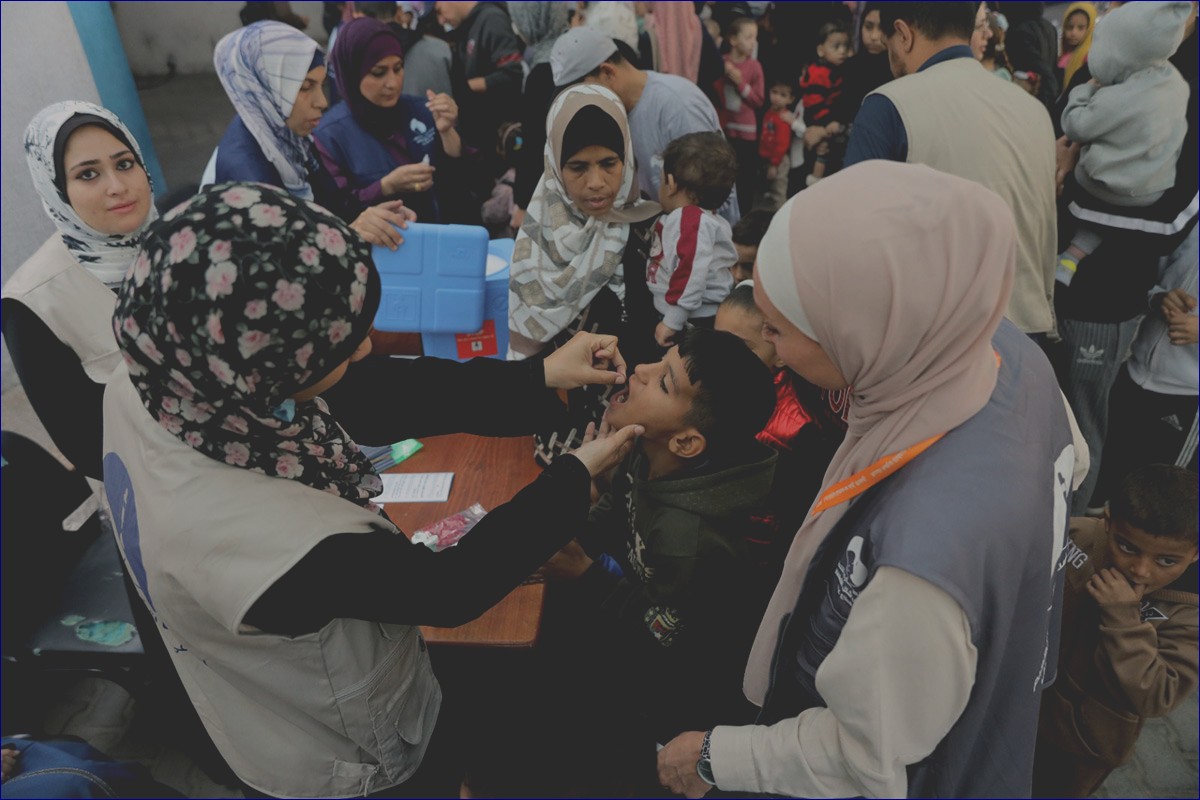
Polio Vaccination Campaign in Gaza Successfully Completed Amid Challenges
6 November 2024 – The second phase of the polio vaccination campaign in the Gaza Strip was successfully completed yesterday. Health workers vaccinated a total of 556,774 children under the age of 10 with a second dose of the polio vaccine. Additionally, 448,425 children aged between 2 to 10 years received essential vitamin A supplements.
Around 94% of the targeted population of 591,714 children under 10 managed to get the vaccine, a significant achievement given the ongoing difficult conditions. The campaign recorded impressive vaccination coverage of 103% in central Gaza and 91% in the southern region. However, in northern Gaza, access issues limited coverage to about 88%. It is estimated that between 7,000 to 10,000 children in areas such as Jabalia, Beit Lahiya, and Beit Hanoun remain unvaccinated, raising concerns about the risk of the poliovirus spreading both in Gaza and to neighboring regions.
The current phase of vaccinations was part of a larger campaign that began in September 2024, carried out in three stages across central, southern, and northern Gaza with humanitarian pauses in place. While the first two phases progressed smoothly, the third phase in northern Gaza faced delays due to intense bombardment and humanitarian access issues. After a thorough analysis by health officials from the Palestinian Ministry of Health, WHO, UNICEF, and other partners, the campaign resumed on November 2. Access during this phase was limited primarily to Gaza City, following the displacement of over 150,000 people from northern Gaza, which ironically helped health workers reach more children than expected.
Thanks to the hard work and commitment of parents, health staff, and the community, the vaccination efforts in northern Gaza were eventually completed. To eliminate the circulation of the poliovirus in Gaza, it is essential to achieve at least two doses of the vaccine for a minimum of 90% of children in each area.
Moving forward, health officials plan to boost immunity levels through routine vaccination services available at local health facilities and will enhance disease monitoring systems to quickly identify any signs of poliovirus transmission. Depending on any changes in disease patterns, additional outbreak responses may be necessary.
To effectively manage vaccination and surveillance not only for polio but for all vaccine-preventable diseases, WHO and UNICEF continue to advocate for a ceasefire. The recent campaign highlights what can be achieved during humanitarian pauses and underscores the need for systematic application of these measures to address critical healthcare and humanitarian needs across the region.
Editor’s Note: The polio vaccination initiative in Gaza is led by the Palestinian Ministry of Health, alongside partners like WHO, UNICEF, and UNRWA. This emergency response is part of ongoing efforts to control a polio outbreak first identified in Gaza on July 16, 2024. Since then, variants of the poliovirus type 2 have been detected in both environmental samples and in a diagnosed case involving a 10-month-old child with paralysis reported in August 2024.
