
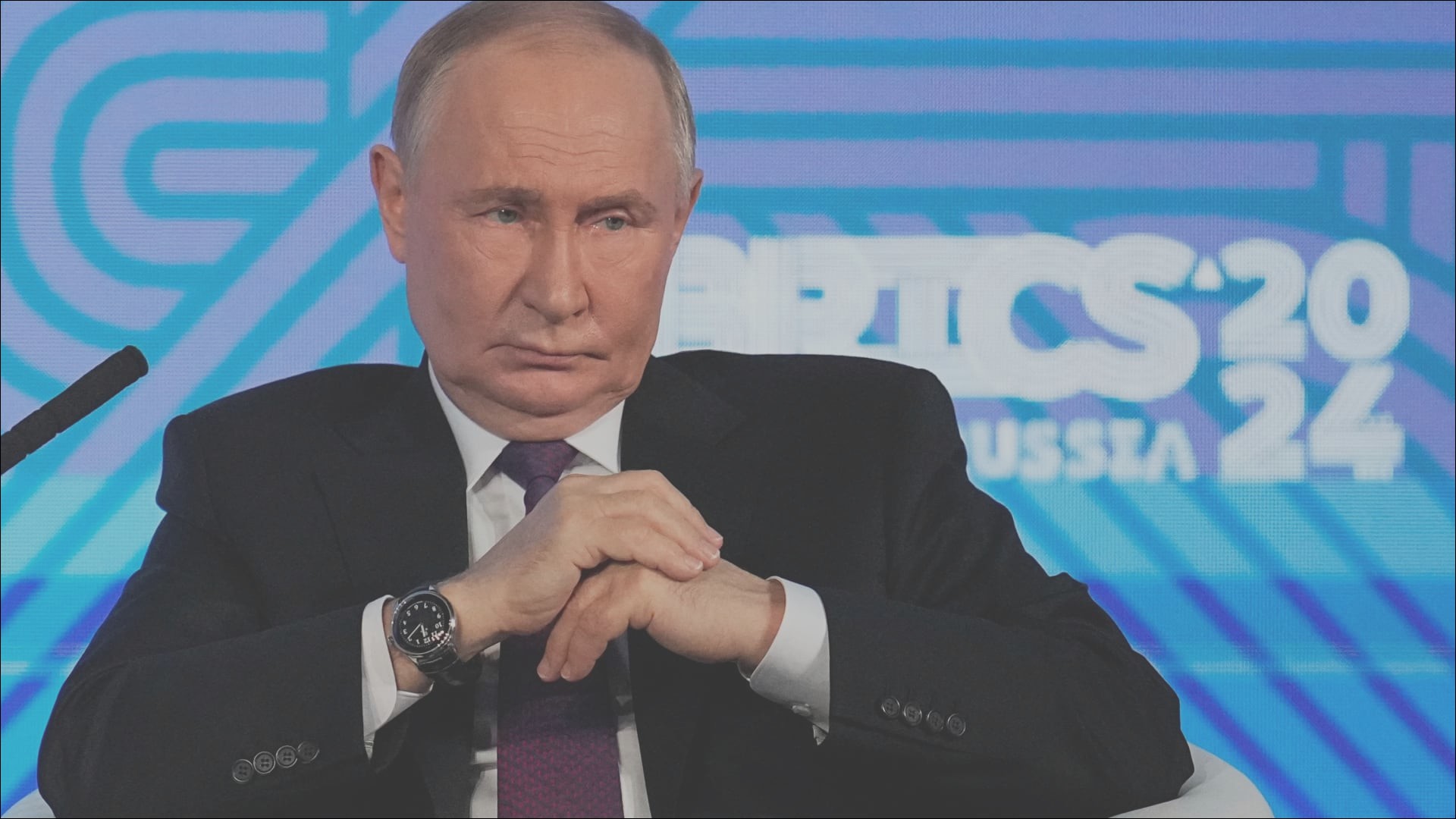
In a bold maneuver that resonates across the geopolitical landscape, Russia is unfurling its ambitions as it plays host to the latest BRICS summit this Tuesday, an event designed not merely to showcase camaraderie but to forge a palpable challenge to Western hegemony. The event finds the nation welcoming its allies, underscoring a clarion call for a “new world order”—an audacious initiative that seeks to disrupt the existing global power dynamics dominated by the West.
Originally formed with the collective might of Brazil, Russia, India, and China, the BRICS alliance has seen South Africa join the ranks since 2010. This evolving coalition of economically emergent nations has emerged as a formidable counterpoint to the established Western powers. The recent induction of Egypt, Ethiopia, Iran, and the United Arab Emirates into the fold earlier this year has only bolstered the bloc’s significance and appeal for countries striving for enhanced trade, investment, and growth opportunities.
Russia, acutely aware of its geopolitical isolation and the sanctions weighing heavily upon it, has set its sights firmly on the so-called “Global South”—a deliberate counter to the “Global North,” epitomized by industrialized nations, particularly the United States. With a strategic vision aimed at courting these economically developing nations across Asia, Africa, the Middle East, and Latin America, President Vladimir Putin has consistently articulated his desire to reshape global governance paradigms.
In the run-up to this high-stakes summit, Putin has been vocal about his aspirations, describing the augmented BRICS coalition as a “strong indication of the growing authority” of the association in global affairs. He envisions this reimagined “BRICS +” format as foundational in mounting a robust challenge to Western dominance, both politically and economically. “The nations within our alliance are, in essence, the catalysts of global economic growth. In the near term, BRICS will be responsible for a significant share of global GDP expansion,” Putin asserted in remarks delivered at the BRICS business forum, preceding the summit.
Elaborating further, he noted, “Our economic progress will increasingly rely less on external interference, embodying a new era of economic sovereignty.”
As October unfolds, Putin has opened the door for dialogue among allies concerning “the parameters of interaction in this emerging multipolar world,” emphatically stating a willingness to engage in discussions about constructing a new global framework with “friends, partners, and like-minded nations.” He alluded to the BRICS and Outreach/BRICS Plus summit, slated for the culmination of three days of strategic conversations involving nearly 40 countries from Asia, Africa, the Middle East, and Latin America—an ambitious endeavor aimed at deepening ties with the Global South.
The dramatic expansion of the BRICS consortium is laden with implications, interpreted by some analysts as a significant narrative shift away from Western influence. Callum Fraser, a security scholar at RUSI, articulated that this evolution reflects a movement that seeks to challenge the economic authority of the West. Yet, the complexities remain palpable; there is uncertainty over the extent to which BRICS+ can coherently contest the influence of the G7 or align their disparate visions of a new international order. The alliance seems to coalesce around a shared aspiration for a quality of life that mirrors Western standards—a goal perceived as elusive through collaboration with the West.
The summit’s overarching theme—“strengthening multilateralism for equitable global development and security”—serves as a backdrop for discussions centering on pressing global and regional issues, alongside the three pillars of cooperation outlined by the Russian chairmanship: politics and security, economic and financial collaboration, and cultural and humanitarian connections. Moreover, the potential expansion of BRICS through the introduction of “partner states” is also on the agenda, although discussions about Russia’s ongoing war in Ukraine loom ominously in the backdrop, with the Kremlin keen to sidestep overt acknowledgment of the conflict.
While the Kremlin has insisted that the Ukraine war will not dominate the summit’s discourse, it recognizes the urgent need to tackle escalating situations in the Middle East and the intersections between BRICS nations and the Global South, all framed within the context of sustainable development.
As Putin engages with notable leaders, including India’s Prime Minister Narendra Modi and China’s President Xi Jinping, key discussions about military and defense cooperation, particularly with Iran, are on the horizon, intimating a deepening strategic partnership—a staunch response following years of military and technical interactions amid the tumult of the Ukraine crisis.
Anticipation lingers as the summit unfolds in Kazan, with the presence of leaders like South African President Cyril Ramaphosa and Egyptian President Abdel Fattah al-Sisi, punctuated by the absence of Brazil’s President Luiz Inácio Lula da Silva due to an unfortunate accident. Saudi Arabia’s tentative invitation to the BRICS coalition, alongside Argentina’s withdrawal from seeking membership, adds another layer of complexity to this gathering of nations, each navigating the currents of a rapidly evolving political landscape.
